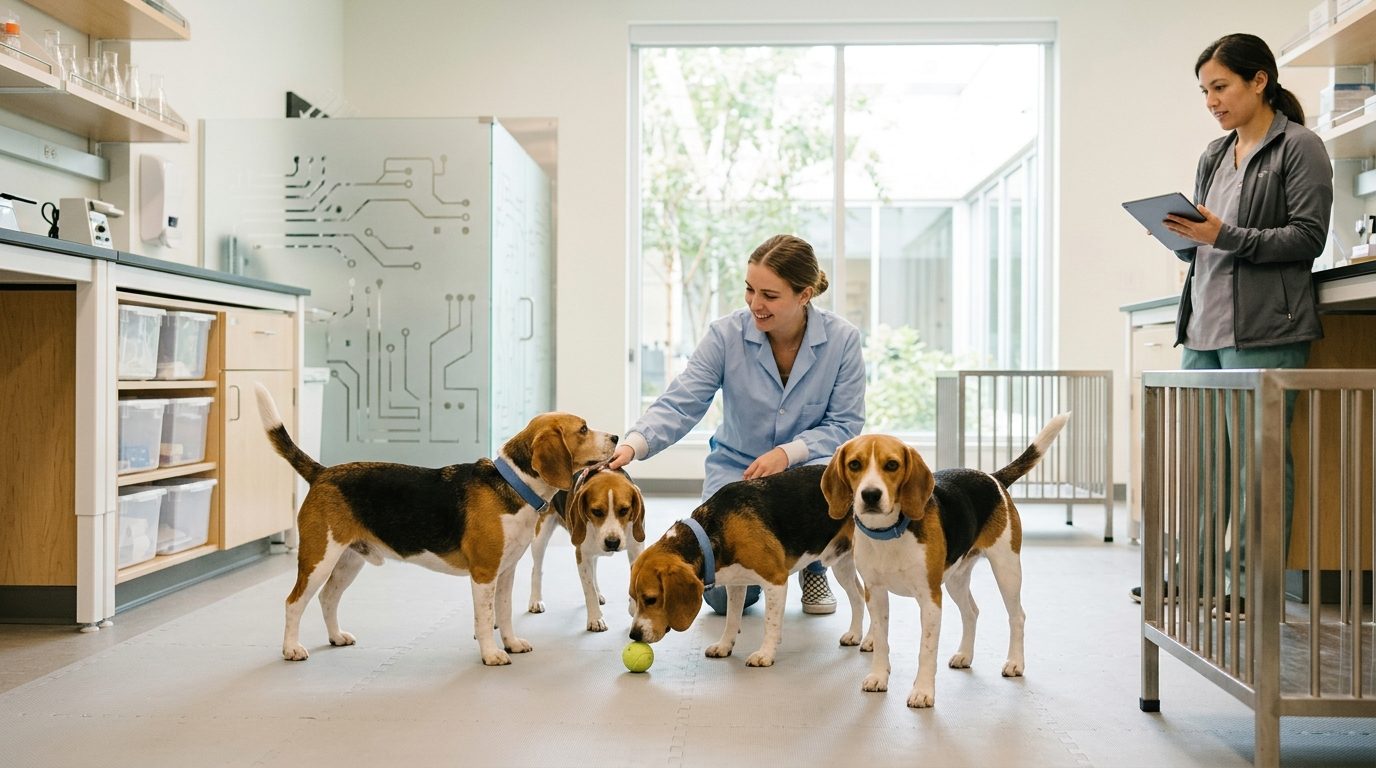
A startup says it has created beagles without a gene linked to allergic reactions in people, raising fresh questions about animal gene editing and consumer safety.
The company describes the dogs as less likely to cause runny noses and watery eyes among allergy sufferers. However, key facts remain undisclosed, including the startup’s name, location, research methods, and testing results.
The limited information also leaves unclear when the dogs were created and whether independent scientists have reviewed the work. Those gaps will shape how researchers, regulators, and animal welfare groups assess the claim.
What the Claim Means
Dog allergies are often blamed on fur, but reactions usually involve proteins produced by an animal. These proteins can spread through saliva, skin flakes, and other biological material.
Removing one related gene could reduce a specific protein. It may not make a dog fully hypoallergenic, because people can react to several substances produced by the same animal.
The startup says it created beagles “without the gene that causes runny noses and watery eyes for allergy sufferers.”
That wording presents a direct link between one gene and common allergy symptoms. Scientists would need controlled studies to confirm whether the edited dogs produce fewer allergens and cause fewer reactions.
Researchers would also need to examine whether the missing gene has other biological functions. A change intended to help people could affect a dog’s health, development, fertility, or behavior.
Evidence Remains the Central Question
The claim cannot be fully evaluated without published data. Important evidence would include genetic tests, veterinary examinations, and comparisons with unedited beagles.
A careful review would seek answers to several questions:
- Which gene was removed or disabled?
- How many dogs were created and monitored?
- Did the edit cause unintended genetic changes?
- Were allergy sufferers tested under medical supervision?
- Did independent researchers verify the findings?
Long-term monitoring would be especially important. Some health effects may not appear during puppyhood and could emerge later or in future generations.
Animal Welfare and Consumer Concerns
Gene editing in companion animals carries concerns that differ from medical research. The animals may be bred and sold as pets, placing commercial pressure on scientific decisions.
Supporters may argue that dogs with lower allergen levels could help families previously unable to keep pets. The work might also reduce abandoned animals caused by unexpected allergic reactions.
Critics are likely to ask whether a consumer benefit justifies altering an animal’s inherited traits. They may also question how many embryos or puppies were involved before viable dogs were produced.
Clear marketing will matter if the startup plans to sell the beagles. Calling a dog allergy-free without strong clinical evidence could mislead buyers and expose vulnerable people to health risks.
Regulation May Vary by Market
Oversight of gene-edited animals differs across countries and may depend on how the animals are produced, used, and sold. Veterinary rules, breeding standards, and consumer protection laws could all apply.
Regulators may seek evidence that the dogs are healthy and that any allergy claims are accurate. They could also examine whether the genetic change can be passed to offspring.
The startup’s announcement points to a possible new market for pets designed around human health needs. Yet the central claim remains preliminary without named researchers, peer-reviewed findings, or independent testing.
The next steps should include public release of the genetic target, study methods, welfare records, and allergy trial results. Until then, the beagles offer an early case study in both the promise and limits of editing companion animals for consumer use.

Kirstie a technology news reporter at DevX. She reports on emerging technologies and startups waiting to skyrocket.