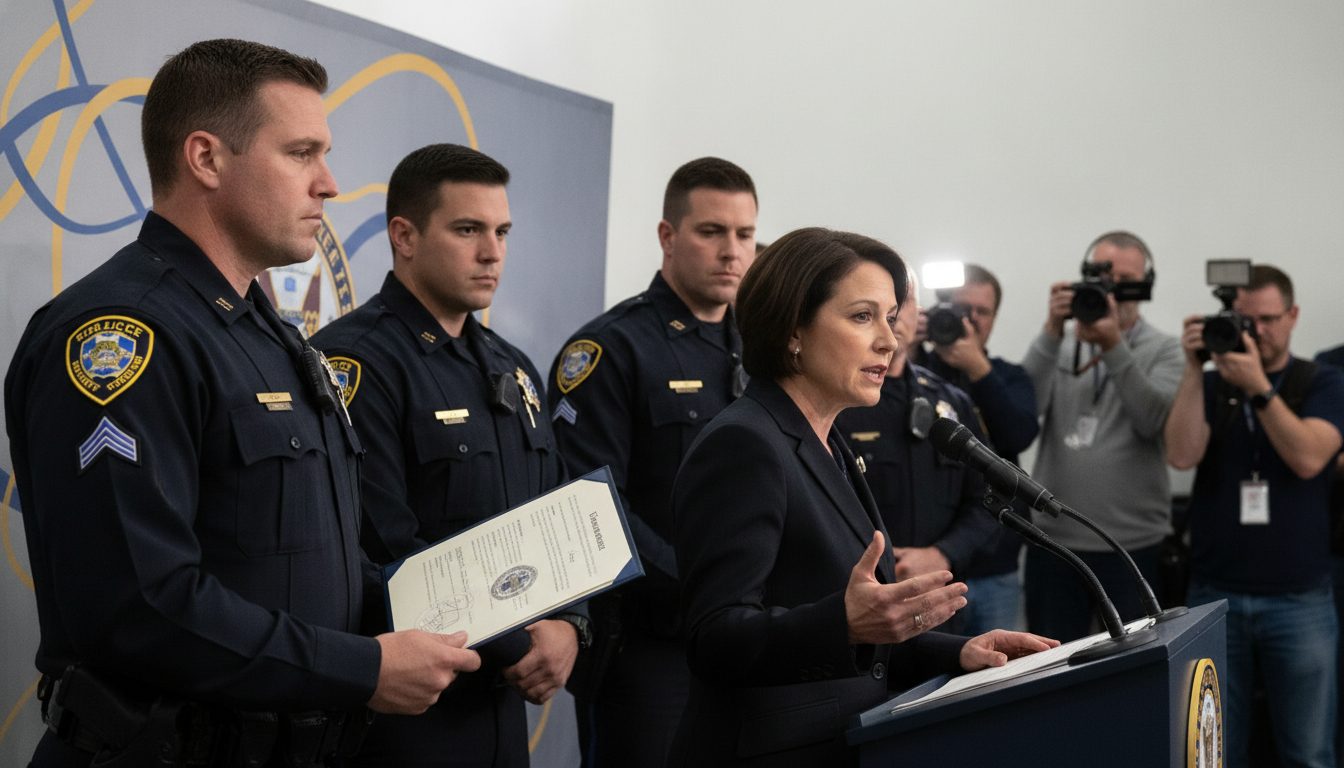
A state Justice Department is taking charge of an officer-involved shooting as local officials pledge to release the officer’s name once allowed by policy. The announcement, made by the police chief, places the case under state review while the department manages public expectations on timing and transparency. The decision aligns with growing calls for independent oversight in use-of-force incidents and sets the stage for a formal release of key details.
“The state Justice Department is leading the investigation and will release the name of the officer who fired his weapon, the police chief said.”
How State-Led Investigations Work
In many states, the attorney general or a Justice Department unit investigates shootings by police. The approach is designed to reduce conflicts of interest and protect the integrity of evidence. State investigators typically secure the scene, collect body-camera video, interview witnesses, and review forensic reports. Local agencies often step back from the fact-finding role but may handle administrative duties like paid leave and internal policy reviews.
Experts say independent probes can improve public trust. They also create distance between the officer’s agency and the criminal inquiry. Yet these investigations are complex and can take months. Evidence processing, lab backlogs, and legal review add time before findings are public.
Transparency, Timing, and Public Records
Releasing an officer’s name after a shooting is standard in many jurisdictions. The timing depends on state law, union contracts, and safety assessments. Some states require release within days. Others allow longer periods if there are credible threats or if the disclosure could compromise the case.
Public records rules also shape what becomes available. Body-camera footage, 911 audio, and incident reports may be released after initial interviews. Agencies often blur faces or mute sensitive audio to protect witnesses or minors. The police chief’s statement signals that the officer’s identity will be disclosed, but it does not specify a deadline.
Community Concerns and Police Perspectives
Community groups often press for faster disclosure and early video release. They argue that delays erode trust and allow rumors to spread. Civil rights advocates say naming officers helps track patterns of force and discipline history. Victim families also seek prompt information, including the officer’s tenure and training record.
Police unions and defense attorneys urge caution. They note that officer safety can be at risk after high-profile cases. They also argue that premature release of details can taint witness accounts and create challenges for jurors. State investigators aim to balance those interests with the public’s right to know.
National Context and Data
Independent oversight has grown since 2020, with several states shifting fatal force cases to state authorities. Some states also require public release of investigative findings and recommendations for policy changes. The approach varies, but the trend points to more uniform standards and clearer timelines.
Data provides useful context. Mapping Police Violence reported over 1,200 killings by police nationwide in 2023. The group found that most incidents involved attempts to arrest or incidents following nonviolent calls. The data also shows wide differences in departmental policies on de-escalation, vehicle pursuits, and foot chases.
What to Watch Next
Several steps usually follow the start of a state-led investigation:
- Collection and analysis of body-camera and surveillance video.
- Witness interviews and forensic reviews.
- Administrative leave for the officer during the inquiry.
- Release of the officer’s name after safety and legal checks.
- A public report or referral to prosecutors after evidence review.
Prosecutors decide whether to bring charges once the state delivers its findings. Separate internal reviews consider policy compliance and training needs. Some agencies also convene civilian oversight boards to discuss recommendations in public meetings.
The police chief’s message sets clear expectations: the state will lead, and the officer’s identity will be made public. The coming weeks will test how quickly investigators can share facts without risking the case. Residents will watch for video releases, a timeline for the officer’s name, and an explanation of any policy changes. The outcome could shape local trust in both the police department and the state’s oversight system.

Deanna Ritchie is a managing editor at DevX. She has a degree in English Literature. She has written 2000+ articles on getting out of debt and mastering your finances. She has edited over 60,000 articles in her life. She has a passion for helping writers inspire others through their words. Deanna has also been an editor at Entrepreneur Magazine and ReadWrite.