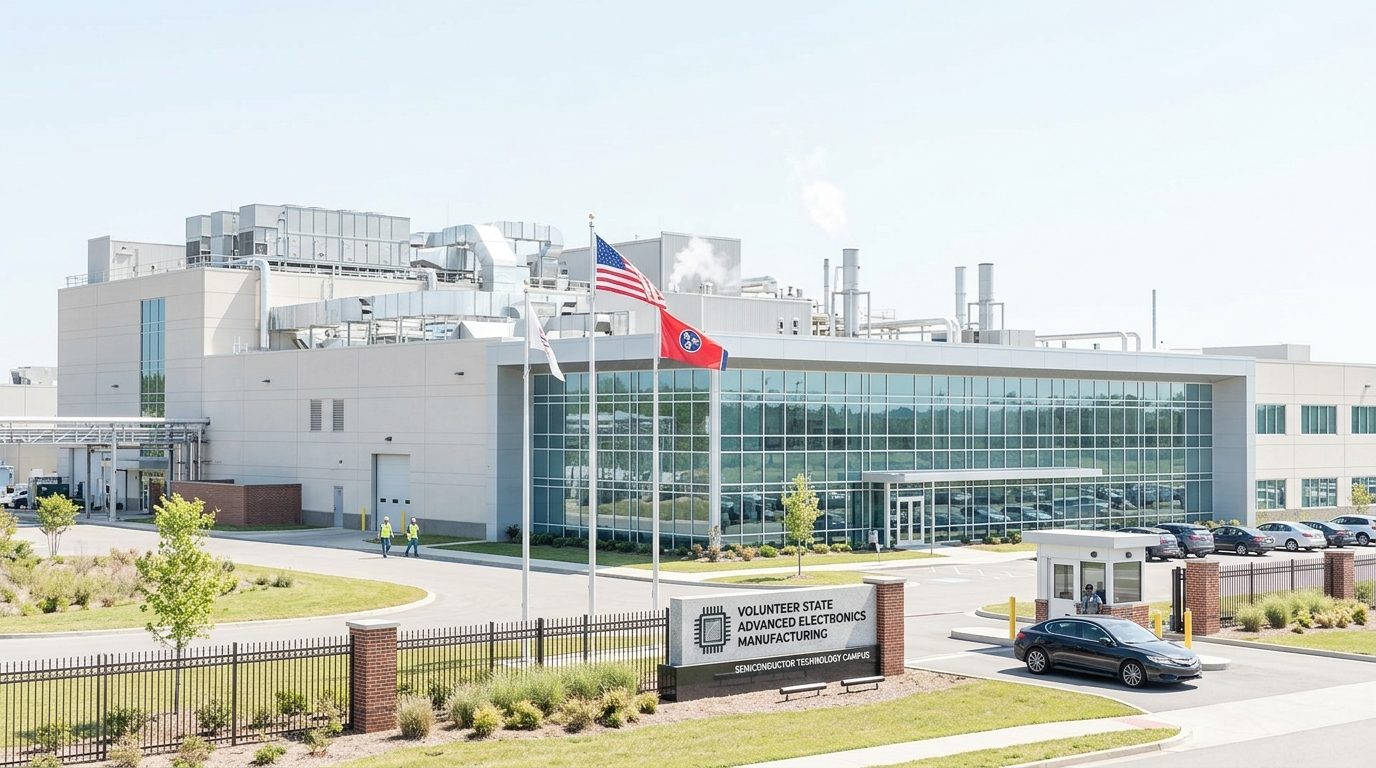
A Tennessee factory tied to Washington’s semiconductor security push faces possible closure after new Trump administration trade measures cost it two remaining customers, according to people familiar with the matter.
The threat raises questions about whether trade policy is working against a wider federal goal: protecting domestic semiconductor supply chains. The factory’s name, location, products and workforce size were not identified. Details about the affected customers also remain undisclosed.
Customers Withdraw After Trade Shift
The two companies were the factory’s last remaining customers, making their departure an immediate threat to operations. Losing both leaves the plant without the demand needed to support continued production.
People familiar with the situation linked the customer losses to the administration’s new trade measures. However, the available information does not identify which rules caused the withdrawals or explain the customers’ decisions.
The sequence points to a difficult policy conflict. Tariffs and other trade restrictions can support domestic producers by raising the cost of imported goods. They can also increase expenses, disrupt contracts or discourage purchases when supply networks cross national borders.
For a factory with only a small customer base, such changes can have an outsized effect. Even measures meant to strengthen American manufacturing may create short-term pressure on plants that depend on specialized materials or international business.
Supply Chain Goals Face a Test
Washington had hoped to protect the Tennessee operation as part of a broader effort to secure the U.S. semiconductor supply chain. Chips are essential to vehicles, communications equipment, industrial machinery, consumer electronics and defense systems.
Recent shortages showed how disruptions at a limited number of plants can halt production across several industries. That experience pushed U.S. policymakers to seek more domestic capacity and reduce reliance on overseas suppliers.
The Tennessee case suggests that protecting capacity requires more than trade barriers. Factories also need steady customers, predictable costs and enough demand to remain financially viable.
- The factory has lost its final two customers.
- Sources connect those losses to new federal trade measures.
- Closure would weaken an operation Washington sought to preserve.
- Key financial, employment and production details remain unknown.
Workers and Industry Await Clarity
A closure could affect workers, local suppliers and the surrounding Tennessee community. The scale of that effect cannot yet be measured because no employment figures were provided.
The report also leaves open whether federal or state officials could intervene. Possible responses may include efforts to find replacement buyers, adjust the trade rules or provide temporary support. No such plan has been announced in the available account.
There is also no public response from the administration, the factory or its former customers in the information provided. Their explanations would be needed to assess whether the trade measures were the sole cause or one factor among several.
The immediate issue is the plant’s survival. The wider concern is policy coordination. If measures designed to protect U.S. industry remove demand from factories considered important to national security, officials may face pressure to revise how those policies are applied.
What happens next will depend on whether the factory secures new business or receives government help. Its fate may also offer an early measure of whether current trade policy supports, or complicates, Washington’s semiconductor strategy.

Senior Software Engineer with a passion for building practical, user-centric applications. He specializes in full-stack development with a strong focus on crafting elegant, performant interfaces and scalable backend solutions. With experience leading teams and delivering robust, end-to-end products, he thrives on solving complex problems through clean and efficient code.