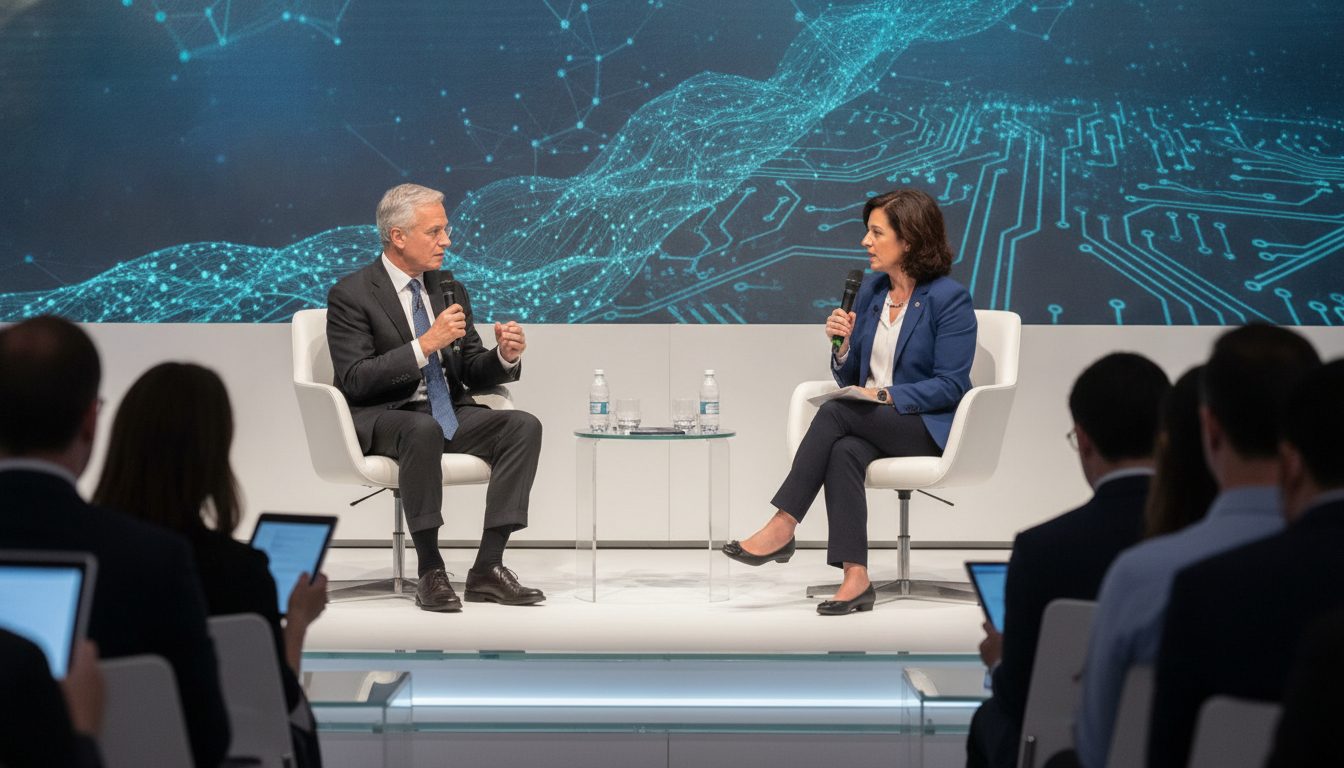
At a Washington Post Live panel, Arizona State University President Michael Crow and President Sally Kornbluth discussed how colleges can prepare future scientists to guide the country through rapid technological change. The conversation centered on what must shift in classrooms and labs so graduates can lead in fields shaped by artificial intelligence, advanced computing, biotechnology, and clean energy.
“Preparing the next generation of scientists to lead in America’s rapidly changing technological landscape.”
The topic reflects a long-running debate over how higher education keeps pace with industry needs. Universities once focused on deep theory and longer research cycles. Today, employers want graduates who can move ideas from the lab to real products while handling ethics, data security, and global competition. The panel highlighted both urgency and opportunity.
Why Training Must Change
Scientific fields are moving faster, and innovation cycles are shorter. Companies now expect hires to work across disciplines like computing and biology or materials and manufacturing. Public funding is also shifting, with new federal programs for semiconductors, climate tech, and regional innovation hubs. That puts pressure on schools to align courses, labs, and internships with these areas.
National data show steady growth in science and engineering jobs over the last decade, outpacing many other fields. Analysts expect strong demand in AI and data roles, battery and grid engineering, and bio-related manufacturing. The panel framed this demand as both a skills gap and a leadership gap.
New Models For Learning
The speakers emphasized practical training that links science to real use. They pointed to project-based courses, expanded internships, and industry-embedded research teams as effective approaches. These models help students learn by doing, not only by reading or lectures.
- Cross-disciplinary projects that tie computing to life sciences and materials.
- Curricula that include ethics, safety, and policy case studies.
- Partnerships that give students access to real data and tools.
Hands-on programs lower the time it takes for ideas to reach the market. They also teach students how to explain complex work to investors, regulators, and the public. That communication skill is now viewed as a core part of scientific leadership.
Access and the Talent Pipeline
Expanding access came through as a central goal. Many capable students start in community colleges or work while studying. Flexible pathways help them enter high-demand fields without taking on heavy debt.
Public universities have scaled online and hybrid options that still include lab kits, local placements, and mentor networks. Private research universities are adding bridge programs and short credentials linked to degree paths. The panelists argued that broad access is not just about fairness. It is also a national strategy to widen the pool of future lab leaders and startup founders.
Ethics, Security, and Public Trust
Rapid change brings risk. The discussion stressed that leadership training must include ethics, data governance, and awareness of global research rules. Students are more likely to work with sensitive data, dual-use tools, or cross-border teams. They need clear guidance on compliance and open science.
Faculty are weaving ethical questions into core classes rather than treating them as electives. Case studies on AI bias, clinical trials, and supply-chain risk help students think through real trade-offs. The goal is to produce leaders who can spot risks early and keep public trust.
Measuring What Works
Universities are tracking outcomes such as internship rates, time to first job, startup formation, and patents linked to student work. Employers report that graduates who have shipped a product or run a field test ramp up faster on the job. National surveys also show that students who complete internships are more likely to secure full-time roles in their field.
The panel pointed to a need for better feedback loops with companies and labs. Advisory boards, shared facilities, and joint appointments can align classroom skills with workplace needs. Clear metrics help schools scale what works and drop what does not.
What Comes Next
The conversation suggested a playbook: teach across disciplines, build real-world projects into every year of study, expand access, and make ethics part of the core. Policy shifts and federal investments could speed adoption, especially where equipment and lab space are expensive.
For students, the message is simple. Learn to code and analyze data, even if your field is not computer science. Practice explaining your work to non-experts. Seek projects that test your ideas outside the classroom.
For universities, the next test is scale. Programs that work for hundreds must reach tens of thousands without losing quality. The stakes are high. The nation will need scientific leaders who can deliver safe, useful technology and strong public trust. The panel made clear that the work starts now, and that the path runs through classrooms, labs, and partnerships that reward real results.

A seasoned technology executive with a proven record of developing and executing innovative strategies to scale high-growth SaaS platforms and enterprise solutions. As a hands-on CTO and systems architect, he combines technical excellence with visionary leadership to drive organizational success.