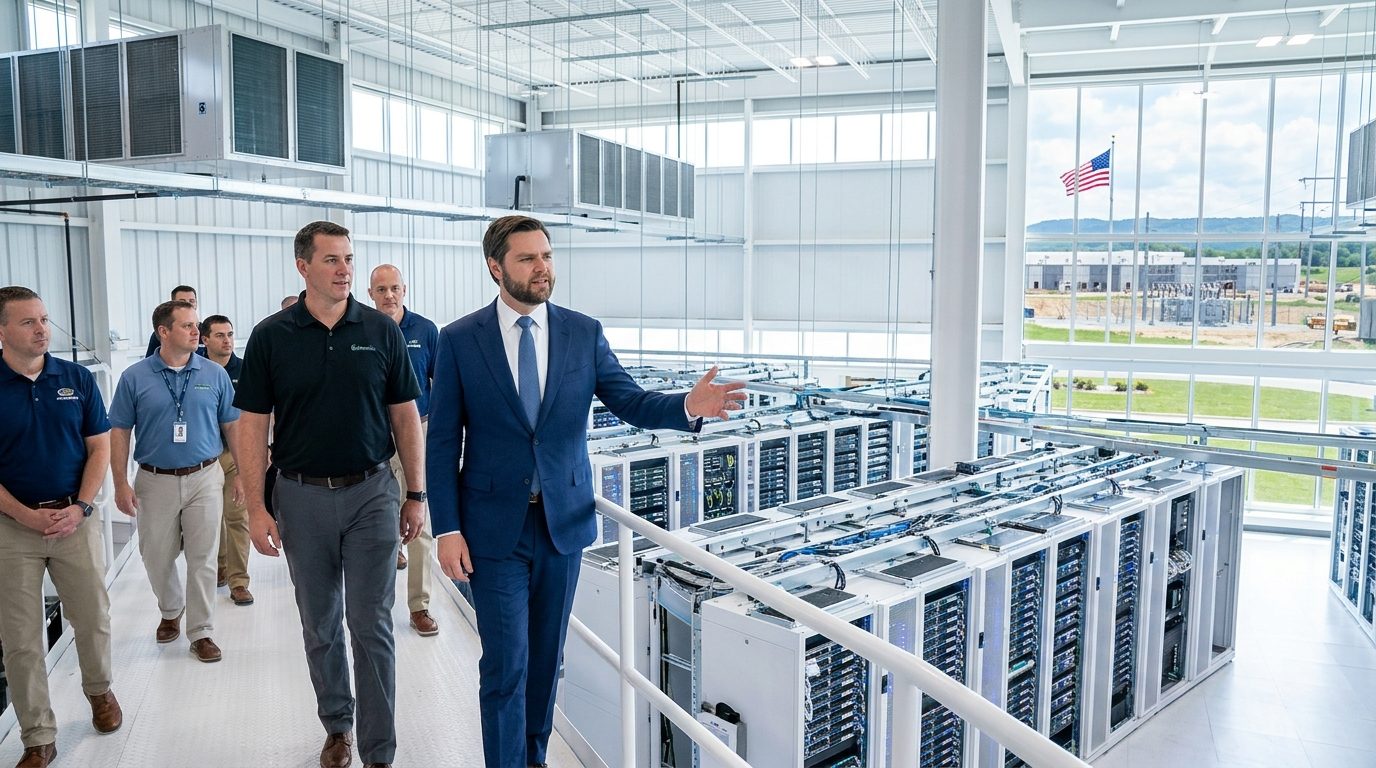
Vice President JD Vance is pressing for more artificial intelligence data centers across the United States, placing digital infrastructure at the center of economic and security policy.
Cybersecurity expert Theresa Payton discussed the proposal on “Fox & Friends First.” She pointed to potential gains from the data center boom, including new investment, stronger domestic computing capacity, and improved control over sensitive systems.
The push comes as AI developers need increasing amounts of computing power. Data centers house the servers, storage equipment, and network systems that support AI models and other online services.
Economic Gains Could Reach Local Communities
Supporters view data centers as a source of construction spending, tax revenue, and technical employment. Projects can also attract supporting businesses, including equipment suppliers, security firms, and maintenance providers.
Payton highlighted the expansion as an economic opportunity. Her assessment reflects a wider policy argument that domestic computing capacity can help the United States compete for AI investment.
Payton highlighted the “security and economic benefits” tied to the expanding data center boom.
The local impact, however, depends on each project. Data centers can create many construction jobs, but permanent staffing levels may be smaller after a facility opens. Tax incentives can also reduce the immediate public revenue generated by a development.
Communities weighing new facilities may focus on several practical questions:
- How many permanent jobs will the project create?
- What tax incentives will state or local officials provide?
- Can the electric grid meet added demand?
- How will operators protect local water and energy supplies?
Domestic Capacity Carries Security Value
Payton also connected data center growth with national security. Keeping more computing infrastructure inside the country can give companies and government agencies greater oversight of physical facilities, networks, and data handling.
That control matters because AI systems may process valuable commercial information or sensitive government material. Domestic facilities remain exposed to cyberattacks, insider threats, and service disruptions, but national rules can provide clearer accountability.
Physical security is only one part of the issue. Operators must also secure software, supply chains, remote access systems, and the equipment used inside each facility. A larger domestic network could increase resilience, yet it also creates more sites that require protection.
Energy and Water Pressures Shape Expansion
The proposed buildout would place additional pressure on power systems. AI servers can require large amounts of electricity, especially during training and heavy use. Cooling equipment may also consume water, depending on a facility’s design.
Those demands may produce tension between national technology goals and local resource limits. Utilities could need new generation, transmission lines, or substations. Residents may question whether industrial users could raise costs or delay other projects.
Developers can address some concerns through efficient cooling, long-term energy agreements, and investment in grid upgrades. Still, public officials must compare those promises with measurable commitments.
Policy Details Will Determine the Results
Vance’s effort signals federal support for expanding American AI infrastructure. The outcome will depend on permitting rules, energy policy, security standards, and cooperation among federal, state, and local authorities.
Supporters, including Payton, see the boom as a way to strengthen the economy and reduce reliance on overseas infrastructure. Critics and local residents are likely to seek firm answers about costs, resource use, incentives, and long-term employment.
The next phase will show whether policymakers can speed construction without weakening security or local oversight. The central test is not simply how many facilities are built. It is whether they provide durable economic value while protecting data, communities, and the power grid.

A seasoned technology executive with a proven record of developing and executing innovative strategies to scale high-growth SaaS platforms and enterprise solutions. As a hands-on CTO and systems architect, he combines technical excellence with visionary leadership to drive organizational success.