Building an impressive AI prototype is relatively easy. The real challenge starts after that. Organizations need engineers who understand the full stack behind AI, from the model up to the infrastructure that keeps it running once real people start using it.
As a result, AI engineer has become one of the fastest-growing job titles on LinkedIn over the past three years, with hiring spanning everything from AI directors to machine learning researchers. AI job postings in the US have grown more than 70% year over year, and roughly 1.3 million AI-related roles have opened up worldwide.
Choosing the right engineer can make or break AI projects. Whether organizations hire full-time engineers or bring in vetted specialists through platforms like Fiverr Pro, the goal is the same: finding people who have proven ability building and running production systems, not just familiarity with the most exciting models.
AI Prototypes Rarely Fail Because of the Model
Plenty of vibe coders can wire up a call to an AI model and have an impressive prototype running in an afternoon. The hard part is getting past the prototype phase when the demo has to evolve into a real product interacting with real data and traffic. This is where most AI initiatives stall.
So the issue is not the model – it’s the person behind it. Getting a model to return a good response can only get you so far if you don’t understand how to build the engineering foundation that gets the project to the finish line. There are many potential issues that require genuine engineering expertise.
A data pipeline that works fine with a small sample can choke on messy, real-world inputs. Infrastructure that ran a demo for five people can quickly crash under production traffic. Latency and cost, barely a concern in testing, can spike to the point where the product becomes too slow or too expensive to run. And the application still has to plug into existing systems, APIs, and workflows that the demo probably didn’t even consider.
To tackle these challenges, you need capable AI engineers who think like software engineers and treat the engineering work as the actual job, not as secondary to model selection.
Production AI Requires More Than Machine Learning Expertise
Shipping AI applications that actually work requires a broad skill set that looks a lot more like software engineering rather than data science. Machine learning knowledge matters, but it’s only a piece of the puzzle – and often not the hardest one to solve.
Solid Python skills are necessary to build application logic around a model, not just to train it. A good understanding of APIs and backend development is what lets that logic connect to the rest of the product and hold up under real traffic.
Most production AI applications also lean on retrieval-augmented generation (RAG), pulling in external data to keep outputs accurate and relevant. That’s a skill that’s become less of a niche technique and more of a requirement.
Then comes the operational layer. MLOps practices like containerization or CI/CD pipelines are what make it possible to update and scale models without disrupting what’s already live.
A single AI engineer will likely not be an expert in all of these areas, but they will understand enough of each to know where the risks are and when to bring in additional expertise.
The Best AI Engineers Think Like Software Engineers
Good AI engineers aren’t chasing the latest AI framework. Their work is built on solid engineering fundamentals that carry over directly to AI work.
They know how to write clear, maintainable code with documentation and logic that they can easily pass on to the next engineer. Collaboration is a big part of the job. The best AI engineers know how to work closely with product and DevOps teams to ensure smooth handoffs and deployments.
Testing matters too, and it’s trickier with AI. Outputs aren’t always deterministic, so you can’t just run the same test twice and expect the same result. Good engineers build evaluation checks that catch bad outputs early and keep an eye out for model drift before it quietly affects performance.
Good engineers can also manage technical debt. Prototypes accumulate shortcuts fast. Knowing which ones are safe to leave and which ones will cause real problems later is a judgment call that comes from experience.
Hiring Channels Should Match Technical Requirements
There’s no single best way to hire AI engineers. There are several dependable hiring channels, and the best one depends on the unique characteristics of each project, including timeline, technical complexity, and internal capabilities.
For organizations that have clear goals and need to move quickly, a curated freelance marketplace makes a lot of sense. Fiverr Pro connects businesses with top professionals in the field who add immediate, vetted expertise without the overhead of adding permanent headcount.
Developer communities like GitHub can likewise be great for finding talent. It’s particularly useful for evaluating candidates before a formal interview. An open-source repository is the most transparent way to see how someone approaches problems, not just how they answer interview questions.
For organizations seeking to build a long-term AI engineering function, engaging a technical recruiting firm would likely be the best move. IQTalent specializes in finding and screening for niche AI expertise, making it a better fit when hiring multiple engineers or building out an entire team.
Production Experience Is the Best Predictor of Success
If there’s one signal to prioritize in hiring, it’s production experience. Look for evidence that a candidate has actually delivered systems that ran in production. Past projects are the strongest predictors of future success.
From there, dig into what those projects actually involved. Prioritize candidates with real experience scaling AI workloads, monitoring performance, managing data quality, handling updates, and working within security and compliance requirements.
A good way to surface this is to encourage reviewers to ask candidates about tradeoffs they made in previous production deployments. Instead of “how accurate is your model” ask “what tradeoffs did you make?” Learning about decisions they made under pressure in past deployments tells you a lot more than an accuracy number ever will.
AI Engineering Is Becoming an End-to-End Discipline
What separates AI engineers from other technical roles is how they increasingly bridge multiple domains. An AI engineer is more than just a model builder.
They touch software engineering, infrastructure, microservice integrations, data engineering, security, and product development, sometimes all in the same week.
AI technologies are evolving at such a pace that no single skill set will likely remain relevant on its own. That should drive hiring towards adaptability, strong engineering fundamentals, and production thinking as AI allows employees to do more with less.
Conclusion
Moving from prototype to production takes more than picking the latest model or framework. It takes engineers who understand the engineering work behind it.
Whether sourcing specialists through Fiverr Pro or expanding an internal team, hiring engineers with proven production experience often separates a successful deployment from a proof of concept that never leaves the lab.
FAQ
What skills should production AI engineers have?
They need to code well, usually in Python, and know how to build and connect APIs. Beyond that, they should be comfortable deploying to the cloud, running MLOps workflows, and getting AI models to actually work inside a real application.
How do production AI engineers differ from machine learning engineers?
Machine learning engineers mostly build and tune models. Production AI engineers pick up from there. They deploy those models, integrate them into products, and keep them running and scaling with real users.
Where can companies find experienced AI engineers?
It depends on the job. Fiverr Pro is great for finding pre-vetted specialists on a defined project for a flexible engagement. GitHub is useful for spotting real technical skill through someone’s open source work. Recruiters make more sense when you’re hiring for the long haul or need niche expertise at scale.
Why do AI projects struggle after the prototype stage?
Usually it’s not the LLM – it’s everything around it. Infrastructure that can’t handle real traffic, messy data, no monitoring, weak governance, or systems that just don’t talk to each other well. Fixing that takes engineering skill, not just a better model.
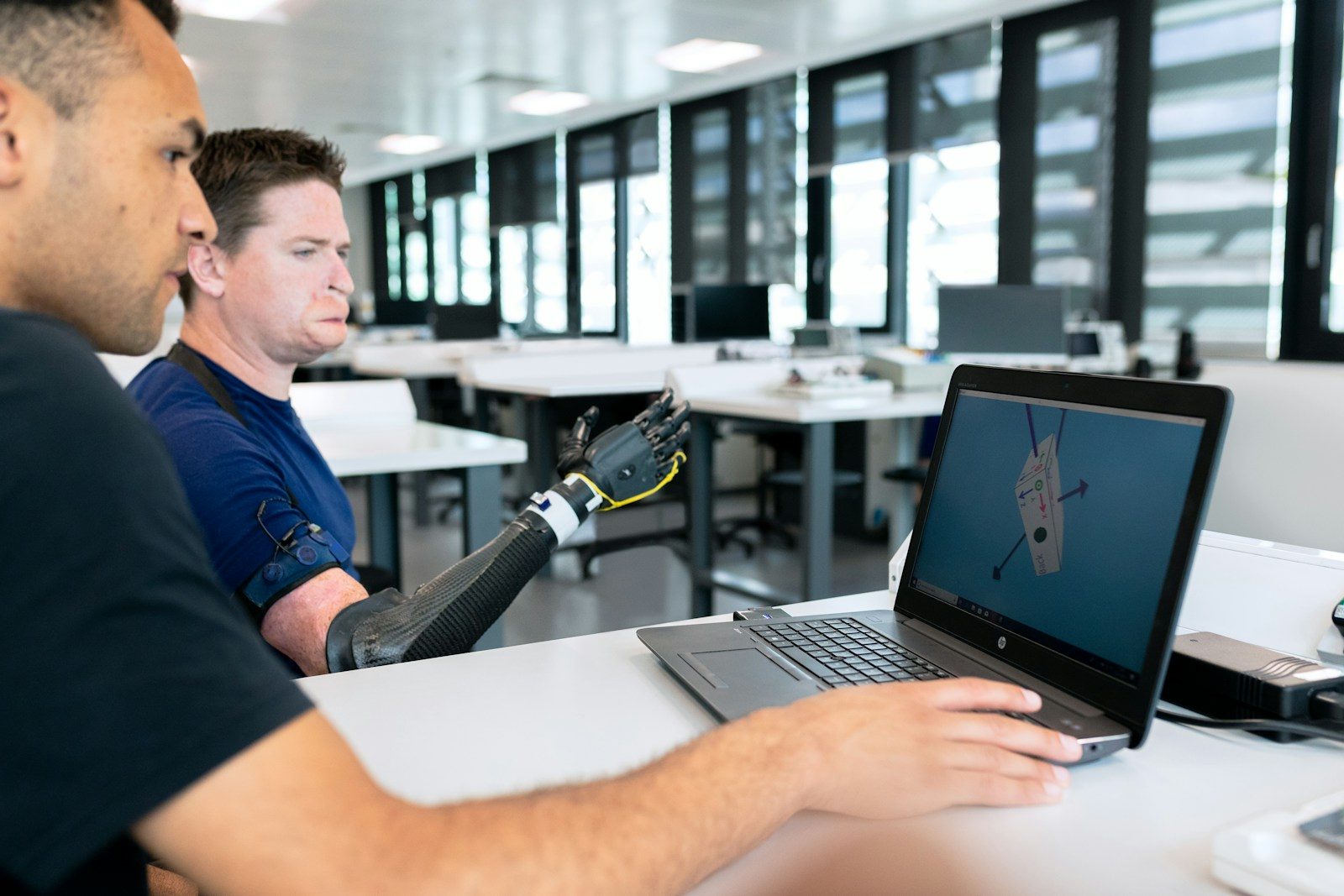
Photo by ThisisEngineering: Unsplash\n
That demand only intensifies as the rise of agentic AI pushes teams to hire engineers who can ship autonomous systems, not just train models.
\n
The engineers you hire will increasingly own calls like the GPT-5.6 vs Grok 4.5 decision, matching model choice to the workload and the budget.

Finn is an expert news reporter at DevX. He writes on what top experts are saying.