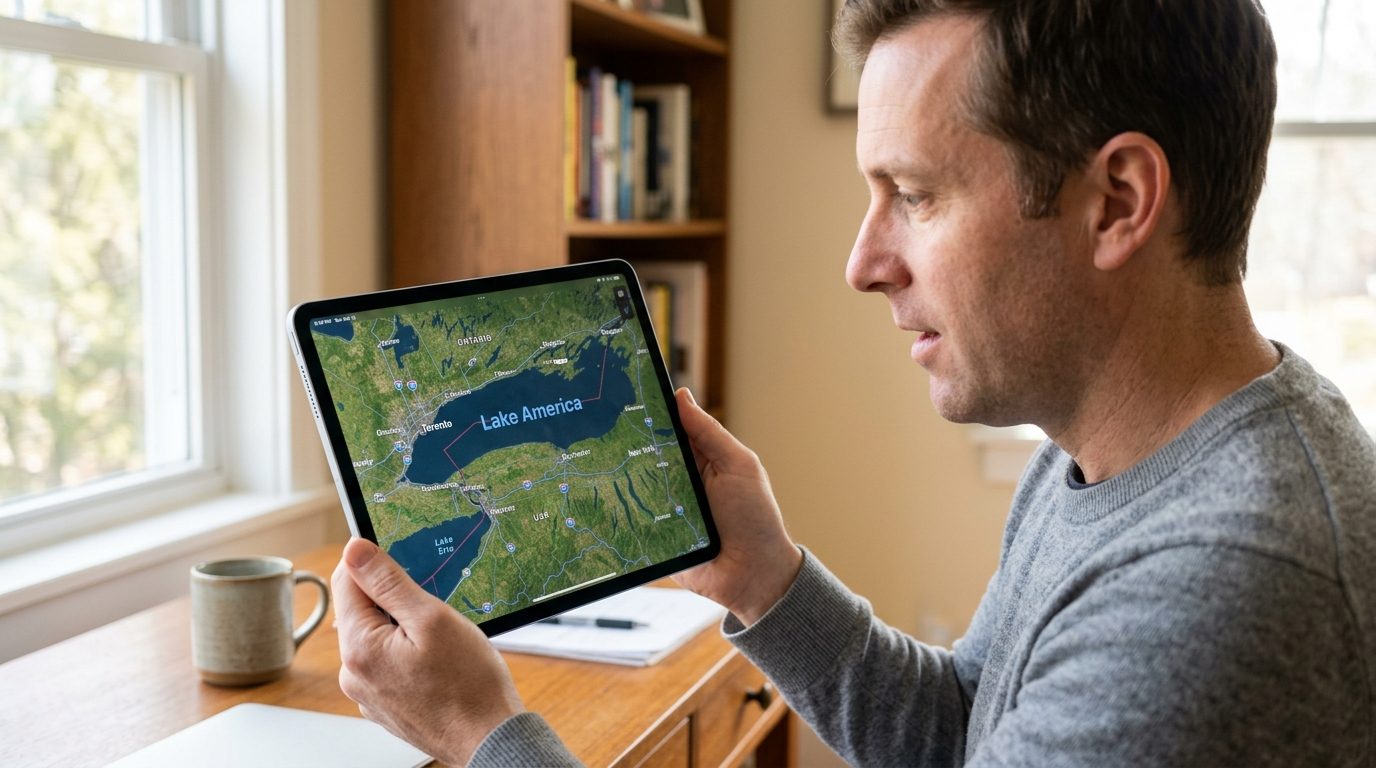
Apple has relabeled Lake Ontario as “Lake America” for U.S. users of its maps app, extending a politically charged naming dispute into another major digital service.
The change followed a similar move by Google and came days after President Donald Trump ordered a new name for the shared body of water. The order arrived during an escalating trade conflict between the United States and Canada.
A Shared Lake Gets a U.S. Label
Lake Ontario is one of the five Great Lakes and forms part of the border between the United States and Canada. New York lies along its southern and eastern shores, while Ontario borders it to the north and west.
That shared geography makes the new label politically sensitive. A name displayed only to American users does not alter Canadian usage or settle how the lake is recognized internationally.
Apple’s decision means people may now see different names for the same lake, depending on where they access the company’s maps. Such location-based labels allow technology companies to follow local government policies without applying them worldwide.
The timing also ties the change to a wider dispute. Trump’s order came as trade tensions with Canada were rising, giving the renaming symbolic weight outside digital mapping.
Google Moved First
Apple followed Google within days, showing how quickly presidential naming decisions can reach widely used consumer platforms. Both companies operate map services used for navigation, travel planning and geographic searches.
Their decisions also show the influence private platforms have over everyday geographic language. Most users no longer consult printed atlases. Instead, they rely on labels selected and displayed by a small number of technology companies.
The immediate effects include:
- U.S. users may see “Lake America” instead of Lake Ontario.
- Canadian and other international users may receive a different label.
- Search results, directions and place references could vary by location.
Neither the reported Apple change nor Google’s earlier action means that Canada has accepted the new name. The available information also does not identify any Canadian government response.
Maps Become Part of the Trade Dispute
Geographic names often carry political meaning, especially when locations cross borders or are claimed by more than one country. Digital maps can make those disputes more visible because labels may change immediately for millions of people.
In this case, the issue is unusual because Lake Ontario is an established international name for a body of water shared by close neighbors. Replacing it for one national audience risks turning a familiar geographic label into a statement of U.S. policy.
The move may also create practical questions for schools, tourism groups, shipping interests and businesses that use common names across the border. Different labels can complicate communication even when the physical location remains clear.
Apple’s action places another major platform in line with Trump’s order, while stopping short of imposing the label on every user. The next developments to watch include Canada’s response, the duration of the U.S.-only change and whether other mapping services follow. More broadly, the dispute shows how trade tensions can spread into language, technology and the basic labels people see on a map.

A seasoned technology executive with a proven record of developing and executing innovative strategies to scale high-growth SaaS platforms and enterprise solutions. As a hands-on CTO and systems architect, he combines technical excellence with visionary leadership to drive organizational success.