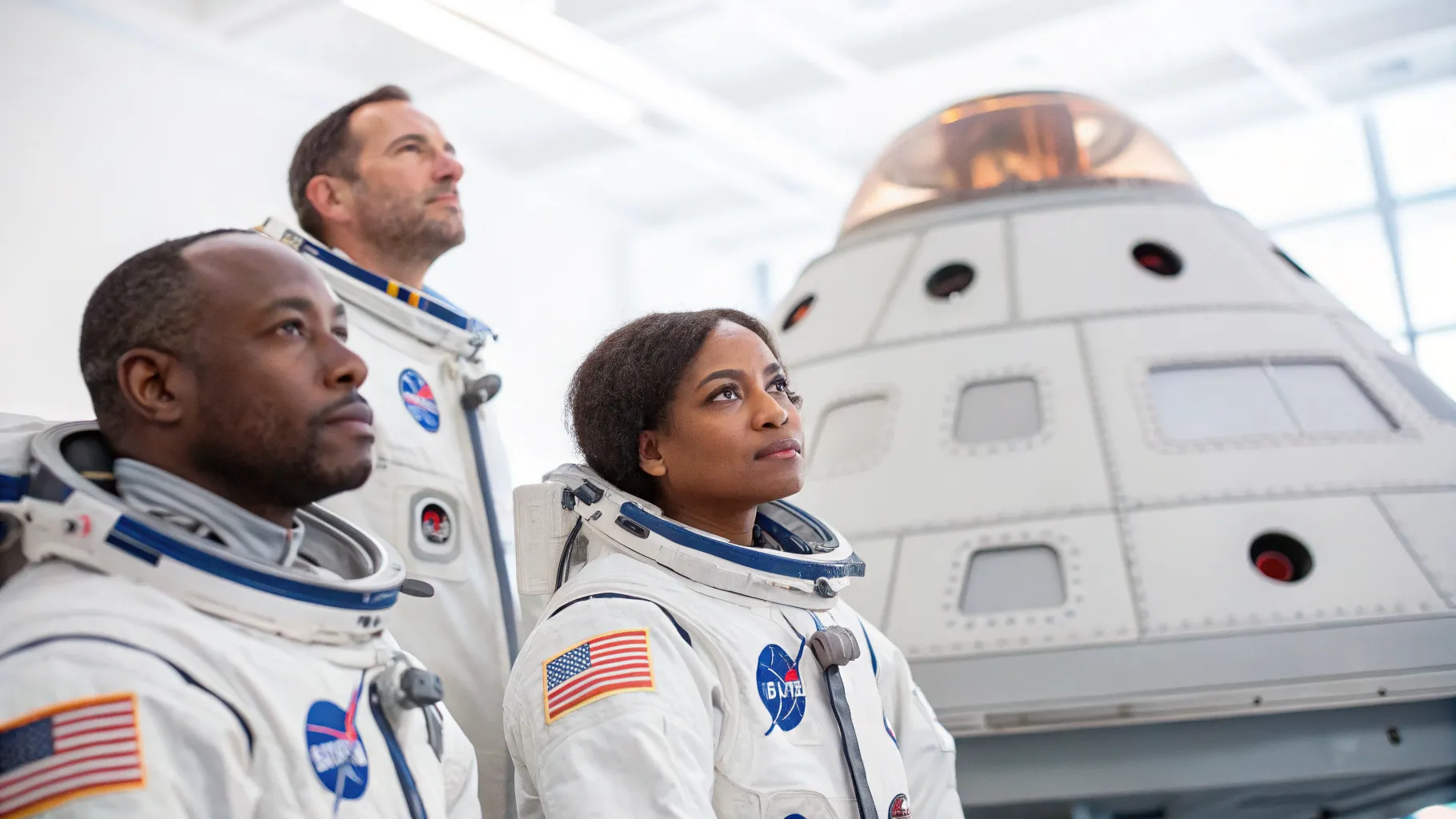
The next crewed mission around the Moon is set to rewrite spaceflight history. NASA’s Artemis II team brings together the first woman, the first Black astronaut, and the first non-American to travel to the lunar environment. The flight, planned as the program’s first crewed test of the Orion spacecraft around the Moon, signals a turning point for who gets to take part in deep-space exploration and how that work is shared across nations.
From Apollo to Artemis: A New Chapter
The last time humans journeyed to the Moon was in 1972 with Apollo 17. Across the Apollo era, only 24 astronauts traveled to the lunar vicinity, and all were American men. Artemis aims to change that history while testing new systems for future landings and longer missions.
Artemis II is a roughly 10-day flight that will send crew around the Moon to test life-support, communications, navigation, and high-speed reentry. NASA rescheduled the mission to no earlier than 2025 as teams address technical work on the Orion spacecraft and Space Launch System rocket. The agency has said the added time will help ensure crew safety.
Who Is Flying and Why It Matters
The four-person crew includes mission specialists and leaders from NASA and the Canadian Space Agency. Their flight will mark several firsts that many say are long overdue in human spaceflight.
“The Artemis II mission crew includes the first woman, the first Black person, and the first non-American astronaut to travel to the lunar environment.”
Christina Koch, a veteran of a 328-day stay on the International Space Station, will become the first woman to head to the Moon’s neighborhood. Victor Glover, a U.S. Navy pilot who previously flew the Crew-1 mission, will become the first Black astronaut to make the trip. Jeremy Hansen, a Canadian Space Agency astronaut and former fighter pilot, will be the first non-American to fly to the lunar environment. Former NASA chief astronaut Reid Wiseman will command the mission.
The crew selection reflects a broader push to open deep-space missions to a wider pool of talent. It also cements a long-running partnership between NASA and Canada tied to the Gateway lunar station and robotic systems, including Canada’s next-generation space arm.
Testing Hardware and Confidence
Artemis II will build on the uncrewed Artemis I flight in 2022, which sent Orion around the Moon and back to Earth. That mission reached speeds near 25,000 miles per hour during reentry and validated the heat shield and avionics through a 1.4-million-mile journey. The next step is proving those systems with people on board.
Key objectives for Artemis II include:
- Demonstrating Orion’s environmental control and life-support systems with crew aboard.
- Checking voice and data links at lunar distances.
- Practicing navigation and trajectory maneuvers for future landings.
- Validating recovery operations after splashdown.
Engineers are also addressing lessons from Artemis I, including close inspections of the Orion heat shield and updates to avionics. The crew has been training in splashdown procedures, simulated lunar trajectories, and emergency scenarios.
A Broader Coalition in Space
The international makeup of the crew is a sign of how lunar exploration is changing. Through the Artemis Accords, more than two dozen countries have agreed on guidelines for peaceful, transparent space activity. Canada’s role earned a seat for Hansen, mirroring the way European and Japanese partners gained access to the Space Station through long-term commitments.
Analysts say this approach spreads cost and risk, while building political support. It also raises expectations that future lunar missions will include astronauts from several nations, including partners supplying key hardware for the Gateway and surface systems.
What Success Could Unlock
If Artemis II meets its goals, NASA plans to move to Artemis III, aiming to land astronauts near the Moon’s south pole. That region may hold water ice in shadowed craters, a resource that could support longer stays and fuel production. A successful Artemis II also sets the stage for building the Gateway outpost and testing surface technologies.
There are hurdles ahead. Schedules depend on resolving technical issues in Orion and SLS, readiness of spacesuits, and progress on lunar lander systems developed with industry. Cost and policy debates will continue. Yet the crew’s flight is a needed step to prove the path.
Artemis II is more than a test. It is a message about who takes part in exploration and how partners share the journey. As the team readies for launch, the mission will be watched for its technical results and for what its crew represents: a wider, more inclusive future in deep space.

A seasoned technology executive with a proven record of developing and executing innovative strategies to scale high-growth SaaS platforms and enterprise solutions. As a hands-on CTO and systems architect, he combines technical excellence with visionary leadership to drive organizational success.