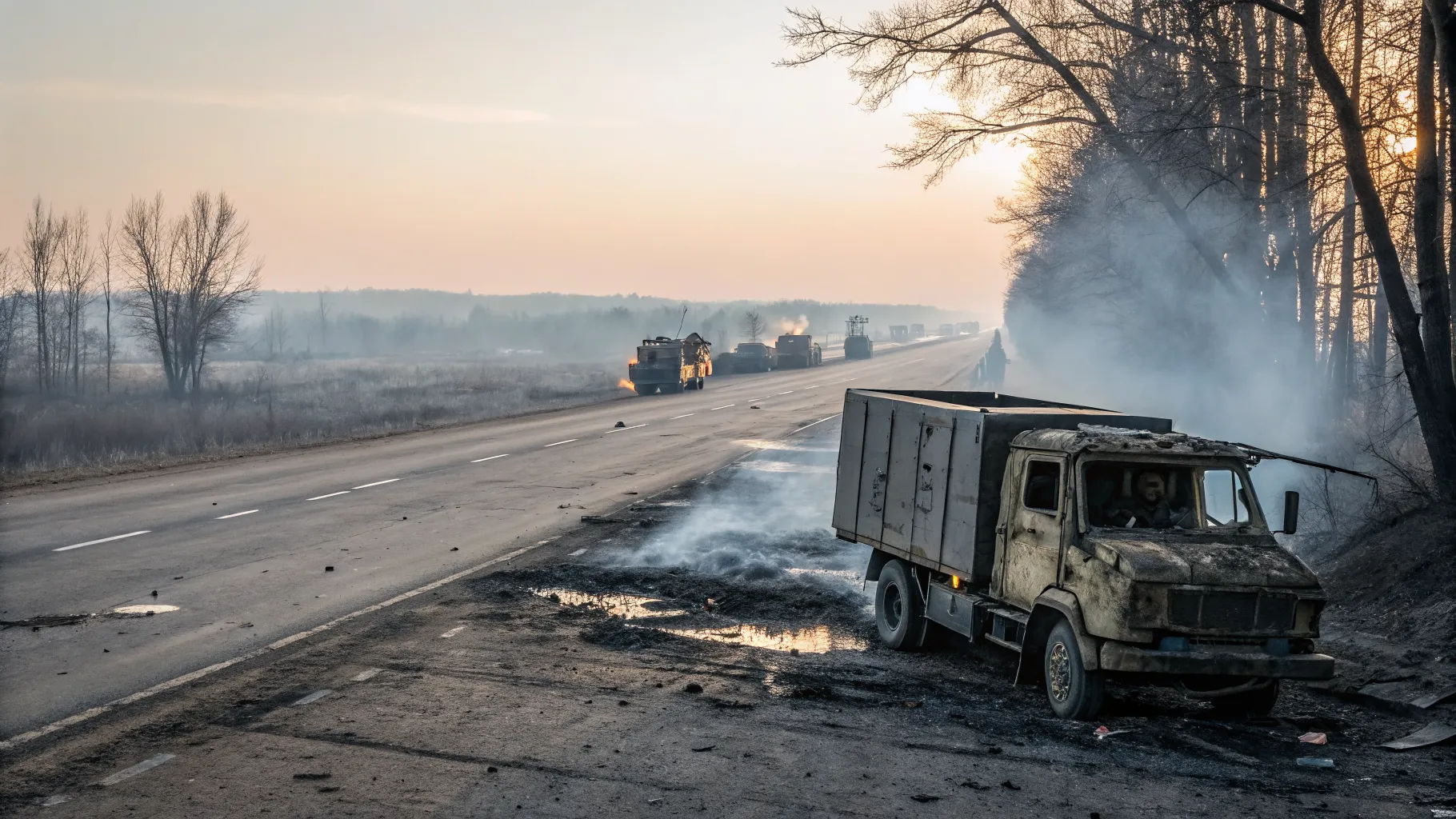
BBC analysts have reviewed a wave of videos showing attacks in occupied Ukraine on Russian supply trucks, highlighting a campaign aimed at disrupting ammunition, fuel, and food deliveries to frontline units. The review points to a systematic effort to hit logistics hubs and road convoys in areas held by Russian forces, raising fresh questions about the pressure on military supply lines as the war grinds on.
The analysis focuses on attacks filmed and shared from occupied regions, where supply vehicles serve as the daily lifeline for troops. By examining dates, locations, and damage patterns, the assessment offers a window into how strikes on transport are shaping the fight, and why the targets matter now.
“BBC Verify has analysed videos of attacks in occupied Ukraine on Russian trucks carrying ammunition, fuel and food.”
Why Supply Lines Matter
Modern warfare depends on steady flows of materiel. Trucks move shells to artillery units, carry fuel to armored vehicles, and deliver rations to troops spread over long fronts. When those flows slow, units fire fewer rounds, maneuver less, and face shortages that sap combat effectiveness.
Ukraine has long aimed at depots, rail nodes, and bridges. Striking moving convoys extends that strategy deeper into daily operations. It also complicates Russian planning by forcing longer routes, added escorts, and more dispersed storage.
What The Videos Indicate
The reviewed clips appear to show precision strikes on parked or moving trucks, secondary explosions consistent with ammunition loads, and fires linked to fuel cargo. Several videos suggest hits near road junctions or staging points rather than on open highways, hinting at attempts to catch vehicles as they queue or regroup.
- Targets: ammunition carriers, fuel tankers, food trucks
- Locations: occupied regions under Russian control
- Effects: explosions, vehicle fires, disrupted convoys
Visual clues—license plates, road markings, distinctive terrain, and weather—help tie footage to likely places and timeframes. In some cases, nighttime flashes and delayed blasts suggest cook-off from munitions stored on board.
Methods And Limits Of Verification
Open-source verification relies on matching imagery with satellite maps, comparing shadows to estimate time, and checking repeated posts for consistency. Video metadata is often stripped, so corroboration comes from multiple angles: landmarks, language on signage, and crater patterns.
These methods do not capture the full picture. Casualty counts are rarely clear. One strike may be filmed from several accounts, creating the risk of double counting. Some clips may be staged or misattributed. Analysts weigh each post against others and mark uncertain cases as unverified.
Military And Civilian Impact
Hitting supply trucks can slow artillery fire and armored thrusts. It also forces stockpiles to be moved farther from the line, lengthening the time it takes to resupply units. Russian forces may respond with more air defense coverage over roads, increased convoy discipline, or a shift back to rail where possible.
There is also a civilian angle. Supply routes run through towns and near farms. Fires from fuel tankers pose risks to nearby communities. Any escalation around logistics hubs may increase danger to residents living close to occupied transport corridors.
Historical Context And Comparisons
Targeting logistics has deep roots, from Allied raids on Axis freight in World War II to more recent campaigns against supply convoys in Iraq and Syria. In each case, attacks on transport reduced operational tempo and forced changes in resupply tactics.
In Ukraine, the scale and spread of front lines make trucks especially important between rail terminals and forward positions. Video evidence of convoy strikes suggests a focus on those “last-mile” links that keep units supplied day to day.
What To Watch Next
Observers will look for signs that Russian forces change routing patterns, add armored escorts, or move to night-only convoys. A rise in decoy vehicles or enhanced camouflage would also indicate adaptation.
On the other side, more geolocated evidence of destroyed trucks and depot fires would show continued pressure on logistics. Satellite imagery and independent assessments may help measure the cumulative effect over time, such as reduced shell usage or slower unit rotations.
The early picture from the reviewed videos points to a sustained effort to hit the supply backbone that keeps Russian forces operating in occupied regions. How each side adapts will shape the pace of operations in the months ahead. For now, the footage signals a clear target set: the trucks that feed, fuel, and arm the war.

Rashan is a seasoned technology journalist and visionary leader serving as the Editor-in-Chief of DevX.com, a leading online publication focused on software development, programming languages, and emerging technologies. With his deep expertise in the tech industry and her passion for empowering developers, Rashan has transformed DevX.com into a vibrant hub of knowledge and innovation. Reach out to Rashan at [email protected]