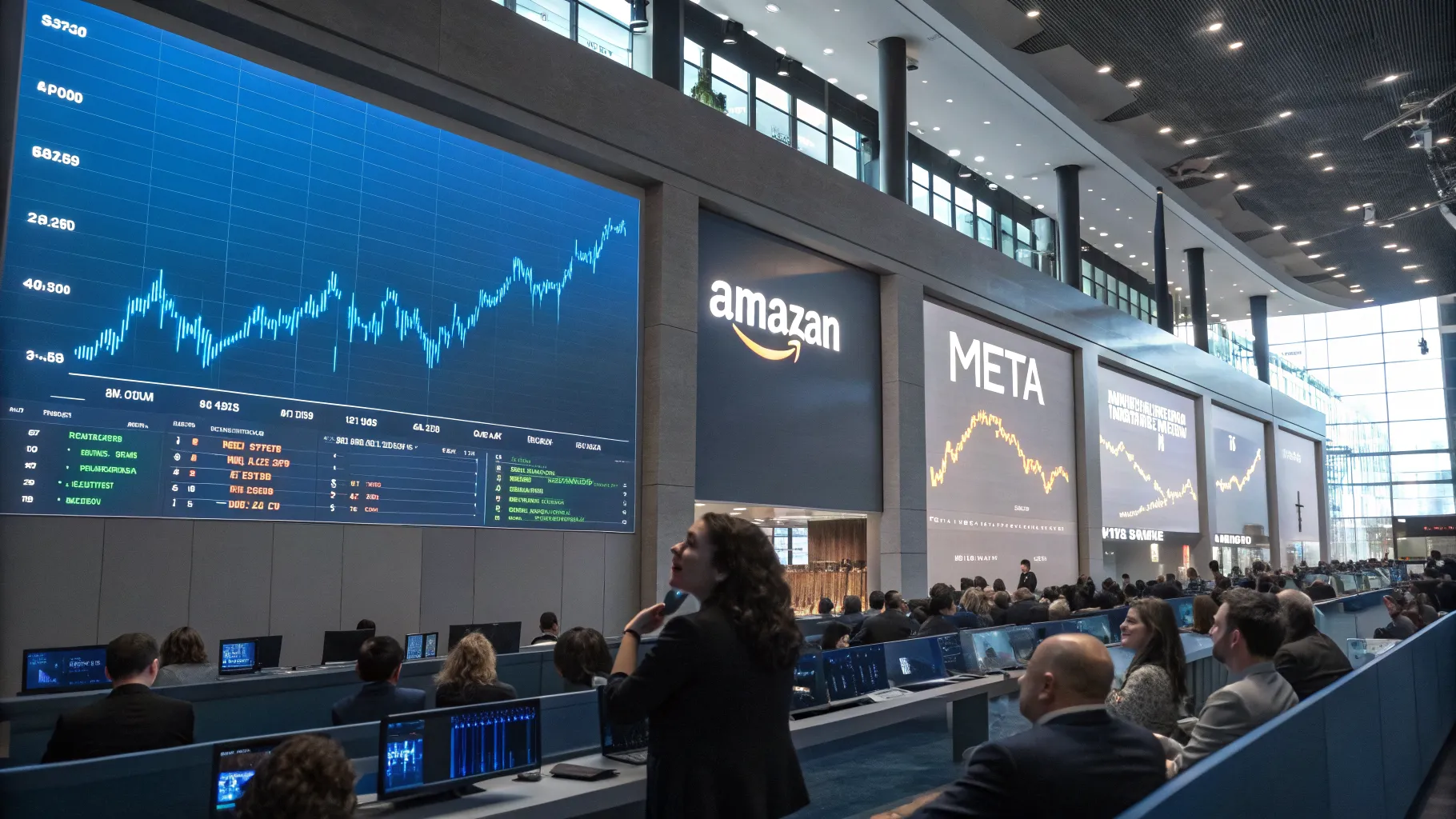
Shares of major technology companies jumped after the United States and China agreed to a temporary pause in their trade conflict, easing market nerves and lifting risk appetite. Amazon and Meta led the move higher, as investors bet that lower trade tension could steady supply chains and advertising demand.
Traders responded within hours of the announcement, pushing the so‑called “Magnificent Seven” higher in broad trading. The gains came as both governments signaled a cooling of rhetoric, offering a brief window for talks. Investors saw the development as a sign that policy risk may ease, at least for now.
Market Reaction and the Core Message
Amazon and Meta stocks led the “Magnificent Seven” Big Tech stock surge after the US and China announced a temporary trade war truce.
The reaction concentrated in companies most exposed to global retail, cloud services, and digital ads. A trade pause can reduce tariff uncertainty, steady component sourcing, and support consumer sentiment. That mix tends to reward large-cap technology with global footprints.
Why a Truce Matters for Tech
The United States and China have clashed over tariffs, export controls, and supply chain security in recent years. Past rounds of duties raised costs for hardware makers and complicated logistics. Export rules on advanced chips and equipment also weighed on parts of the sector.
A temporary truce signals fewer near-term surprises. For cloud and e-commerce firms like Amazon, steadier cross-border shipping and vendor planning can improve delivery times and inventory management. For Meta, calmer macro news often supports ad budgets, as brands plan campaigns with less fear of sudden shocks.
Who Stands to Benefit
The “Magnificent Seven” includes Apple, Microsoft, Alphabet, Amazon, Nvidia, Meta, and Tesla. These firms sell products or services that rely on global supply chains, international customers, or both. A pause in tension helps on multiple fronts.
- Hardware makers may see smoother component flows and fewer shipping delays.
- Software and cloud providers benefit from steady enterprise spending plans.
- Online ad platforms gain if marketers feel more confident about consumer demand.
Amazon’s dual exposure to retail and cloud means any relief in freight costs and corporate IT budgets can compound. Meta is sensitive to advertising cycles, and improved visibility can lift pricing and volume.
Caution Flags Remain
A pause is not a full agreement. Key disputes over tariffs, data security, and advanced semiconductors remain. Companies are still diversifying suppliers and building inventory buffers, which can raise costs. Export controls on high-end chips are still in place and could tighten again.
Investors also face broader risks. Inflation, central bank policy, and currency swings can offset trade relief. If talks stall, volatility could return quickly, hitting the same stocks that rallied on the truce.
What History Suggests
Previous easing periods during the trade dispute often sparked short market rallies. Gains held when talks produced clear timelines or tariff rollbacks. They faded when statements lacked detail or new restrictions appeared.
The market will look for concrete steps such as tariff suspensions, expanded licensing frameworks, or formal working groups on tech exports. Clear milestones would add weight to the current rebound.
What to Watch Next
Corporate guidance will offer early clues. Executives may update shipment plans, capital spending, and ad demand outlooks if the truce improves visibility. Supply chain lead times and freight rates are key signals for hardware and e-commerce.
Policy headlines matter as well. Markets will monitor any drafts on tariff relief, export licensing changes, or data transfer protocols. Even a small move in these areas can shift earnings estimates for Big Tech.
For now, investors welcomed a break in the standoff and pushed the largest tech names higher. The rally reflects relief, not resolution. The next phase depends on whether officials turn the pause into practical steps. If they do, the gains in Amazon, Meta, and their peers could broaden. If not, the sector may face another swing as policy risk returns to the forefront.

Senior Software Engineer with a passion for building practical, user-centric applications. He specializes in full-stack development with a strong focus on crafting elegant, performant interfaces and scalable backend solutions. With experience leading teams and delivering robust, end-to-end products, he thrives on solving complex problems through clean and efficient code.