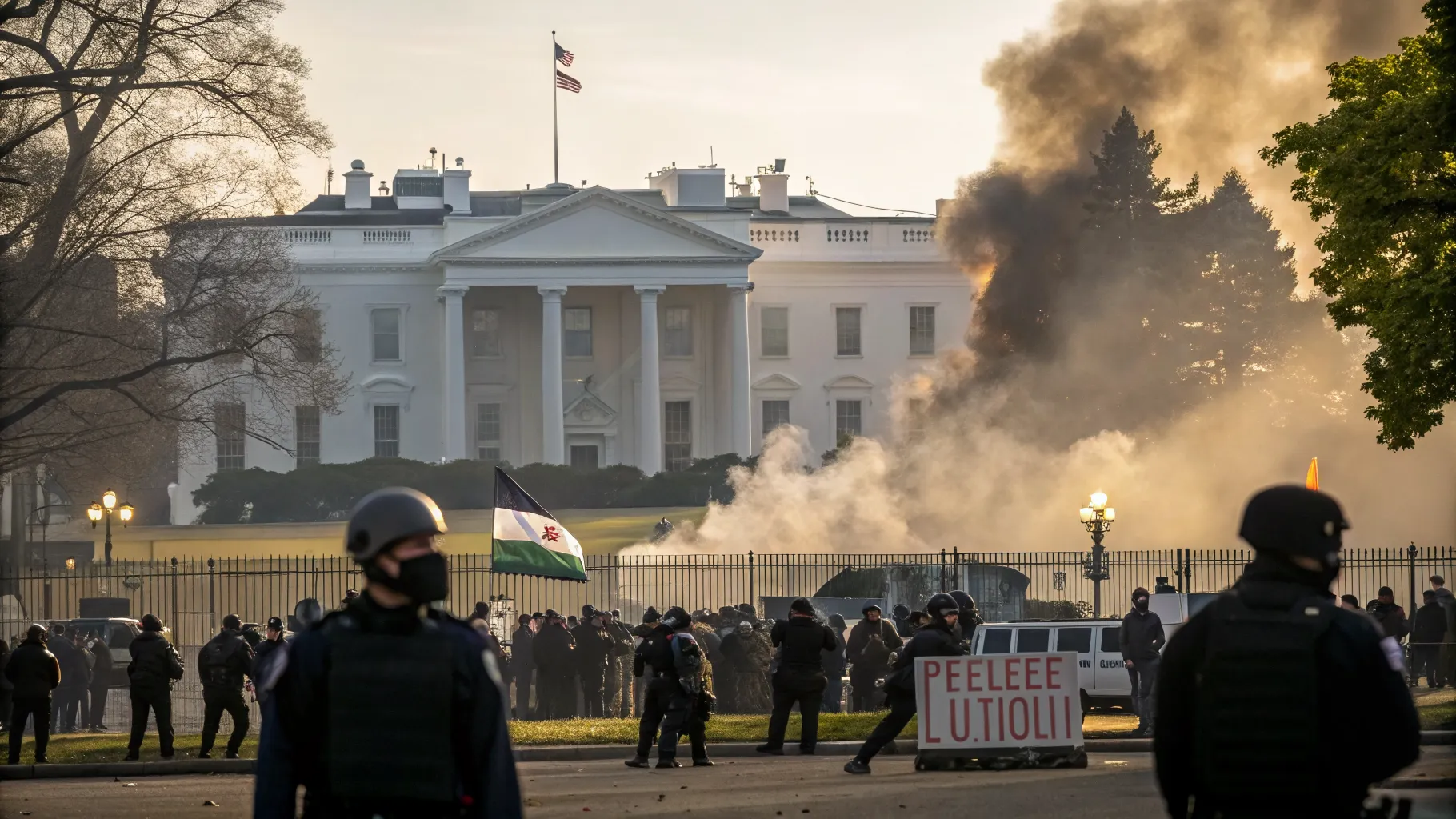
Two stories from different continents drew swift reactions this week. Reports of gunfire outside the White House raised new questions about security in the U.S. capital. In India, a rising political movement leaned into an insult, adopting a label meant to demean them as a badge of identity.
The incidents, while unrelated, both center on control—over a physical perimeter in Washington and over political narrative in New Delhi. Each shows how fast public confidence and public image can turn under pressure.
Security Jolt Near the White House
“U.S. Secret Service exchanges fire outside the White House.”
Reports of an exchange of gunfire near a White House perimeter prompted concern and immediate scrutiny. The Secret Service is tasked with protecting the president, the first family, and the seat of the executive branch. Any use of force near the grounds triggers internal reviews and outside interest.
Such incidents can lead to road closures, brief lockdowns, and rapid communication with local police. They also raise questions about protocols at checkpoints, the speed of response, and the decision to engage. Officials typically examine body-camera footage, radio logs, and witness accounts to assess whether officers followed policy.
While details remained limited, the setting alone matters. The White House complex is among the most monitored locations in the country. Protective layers include fences, access screening, surveillance, and visible and plainclothes officers. Even so, perimeter events occur from time to time, often involving people seeking attention or testing boundaries.
Security analysts say the public looks for quick, clear updates after such incidents. Transparency can help keep rumors from spreading. The Secret Service often releases initial statements, then follows with fuller summaries once facts are confirmed.
Political Rebranding in India
“Cockroaches.”
In India, an upstart political movement took ownership of a slur used by critics, calling themselves “cockroaches.” The move is an example of reappropriation, a strategy where targeted groups reclaim a term to blunt its sting and rally supporters. The goal is to flip an insult into a symbol of resilience and visibility.
Reclaiming harsh labels can be risky. It can energize a base while alienating undecided voters. For smaller parties, however, it can deliver free attention and a sense of unity. The tactic also signals defiance: if rivals use dehumanizing language, the movement answers by refusing shame and amplifying the slight.
India’s political field is crowded and highly regional. New entrants often rely on sharp slogans, social media, and street-level organizing to stand out. Adopting a loaded term may help generate headlines, but the next test is policy substance. Voters tend to remember identity battles, yet they decide based on jobs, prices, and public services.
Why Words and Security Both Matter
These developments share a common theme: control under stress. In Washington, the question is how well institutions manage risk and communicate during a scare. In India, the question is who gets to frame a movement’s story.
- Security events near high-profile sites demand fast facts and procedural clarity.
- Political labeling fights demand message discipline and credible plans.
Both situations play out in real time on social platforms. Rumors thrive in the absence of verified information. Officials and organizers face the same challenge: set the narrative early or be defined by others.
What Experts Watch Next
Security specialists will look for a timeline of the White House incident once authorities release findings. Key points include the first call, the duration of the engagement, and any changes to perimeter procedures. They will also assess training, staffing, and coordination with local police.
Political strategists in India will watch whether the “cockroaches” label remains a rallying cry or fades after a news cycle. The test is conversion: can attention turn into volunteers, funding, and votes? Endurance depends on consistent messaging and clear policy priorities.
Together, the two stories show how fast-moving events can redefine trust. In the U.S., that trust rests on visible, measured security. In India, it rests on whether bold rhetoric connects to daily needs. The immediate next steps are review and response. Officials near the White House will likely publish a factual account and any policy updates. India’s upstart movement will try to turn a reclaimed insult into a lasting identity backed by plans on jobs, inflation, and services. The public will be watching for clarity, competence, and follow-through.

Deanna Ritchie is a managing editor at DevX. She has a degree in English Literature. She has written 2000+ articles on getting out of debt and mastering your finances. She has edited over 60,000 articles in her life. She has a passion for helping writers inspire others through their words. Deanna has also been an editor at Entrepreneur Magazine and ReadWrite.