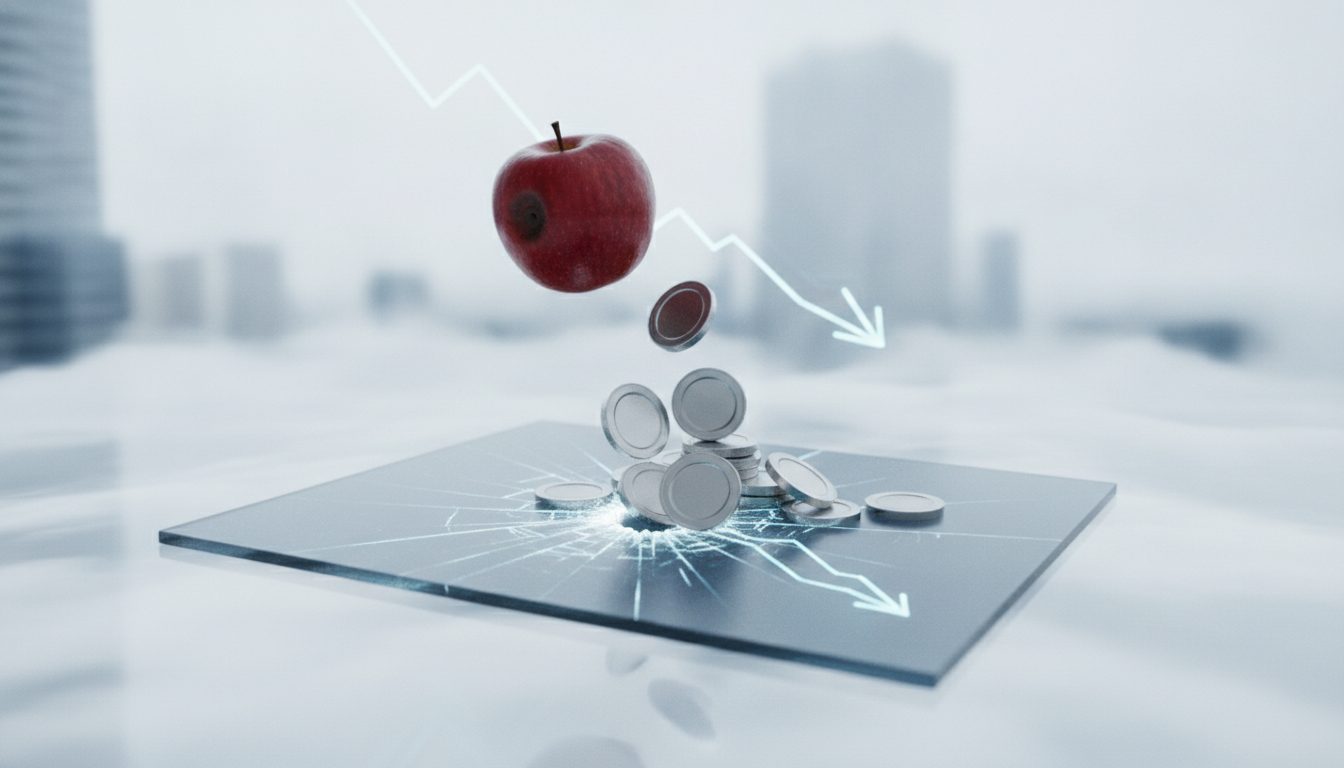
Apple shares slid in the latest trading session after the company warned of slower sales in the coming months. The move jolted Wall Street and raised fresh questions about demand for the iPhone maker’s hardware lineup. Investors reacted quickly as the warning pointed to a softer revenue path, cutting into market confidence around one of the market’s most closely watched stocks.
The shift comes as traders weigh a cooler consumer backdrop, currency swings, and a maturing smartphone market. The selloff marked a sharp turn for a company that has long been seen as a barometer for tech spending. It also set the stage for a deeper debate over how Apple balances hardware cycles with growth in services.
What Sparked The Selloff
“Shares of Apple plunged on a warning of slower sales in the coming months.”
That warning hit a market primed for steady growth from Big Tech. Investors tend to price Apple on expectations for stable iPhone demand, steady Mac and iPad refreshes, and rising services revenue. A signal that revenue may slow can prompt funds to reprice the stock quickly, especially after a strong run.
Sales warnings often reflect several pressures. Consumer upgrades may be stretching over longer periods. Regional demand can weaken when economic data softens. A strong dollar can weigh on overseas sales once converted back into U.S. currency. Supply chain timing can also shift deliveries between quarters, affecting near-term comparisons.
A Look Back At Similar Moments
Apple has faced growth pauses before. In prior years, iPhone unit cycles lengthened as users held onto devices longer. When Apple cut guidance in early 2019 due to softness in China and currency effects, the stock also dropped. Over time, the company leaned more on services, wearables, and pricing strategies to stabilize results.
History shows that market reactions to Apple warnings can be swift, but the long-term path depends on product cadence, regional trends, and expense control. Investors will look for signals in upcoming launches, holiday demand, and any signs of recovery in key markets.
What Analysts Will Watch Next
The next few quarters will test Apple’s mix of hardware and services. Services, including App Store fees, iCloud, advertising, and media, carry higher margins. A larger services base can steady earnings during softer hardware cycles. Still, services depend on a healthy device base and user engagement.
- Product timing and upgrade intent for flagship phones
- Trends in China and Europe demand
- Foreign exchange impact on reported revenue
- Gross margin guidance and cost discipline
- Services growth and average revenue per user
Supply chain conditions also matter. Shipping windows, component availability, and freight costs can sway quarterly figures. If logistics ease and consumer sentiment improves, the sales picture could brighten faster.
Industry Context And Competitive Pressures
Global smartphone shipments have swung with economic cycles, inflation, and carrier promotions. Many buyers now replace phones every three to four years. That pattern can create lulls between major feature upgrades. Competitors are pushing camera improvements, AI features, and bundled services to spur demand.
Wearables and accessories have become a second engine for many device makers. Apple has led that category, but it also faces copycats and tighter consumer budgets. Any slowdown in hardware can spill into accessories, though it may be offset if services engagement grows.
Investor Sentiment And Possible Paths Ahead
When a company with Apple’s scale signals slower sales, portfolio managers often trim risk. Some rotate into rivals or into sectors with clearer near-term growth. Others see pullbacks as a chance to buy, betting on the company’s ecosystem and future releases.
Key questions now center on how quickly demand stabilizes and whether services can shoulder more of the earnings load. If Apple can keep users engaged and spending on content, storage, and subscriptions, the earnings hit from softer hardware could be limited.
Apple’s warning reset expectations and reminded investors that even market leaders face slow patches. The next updates on guidance, product launches, and regional trends will be crucial. If consumer sentiment steadies and the product cycle strengthens, confidence can return. If not, investors may press for sharper cost control and clearer signals on growth from services and new features. For now, the market will watch demand trends, currency moves, and any signs that the sales slowdown is easing.

Deanna Ritchie is a managing editor at DevX. She has a degree in English Literature. She has written 2000+ articles on getting out of debt and mastering your finances. She has edited over 60,000 articles in her life. She has a passion for helping writers inspire others through their words. Deanna has also been an editor at Entrepreneur Magazine and ReadWrite.