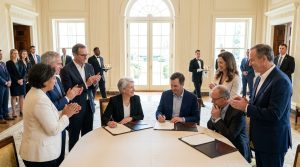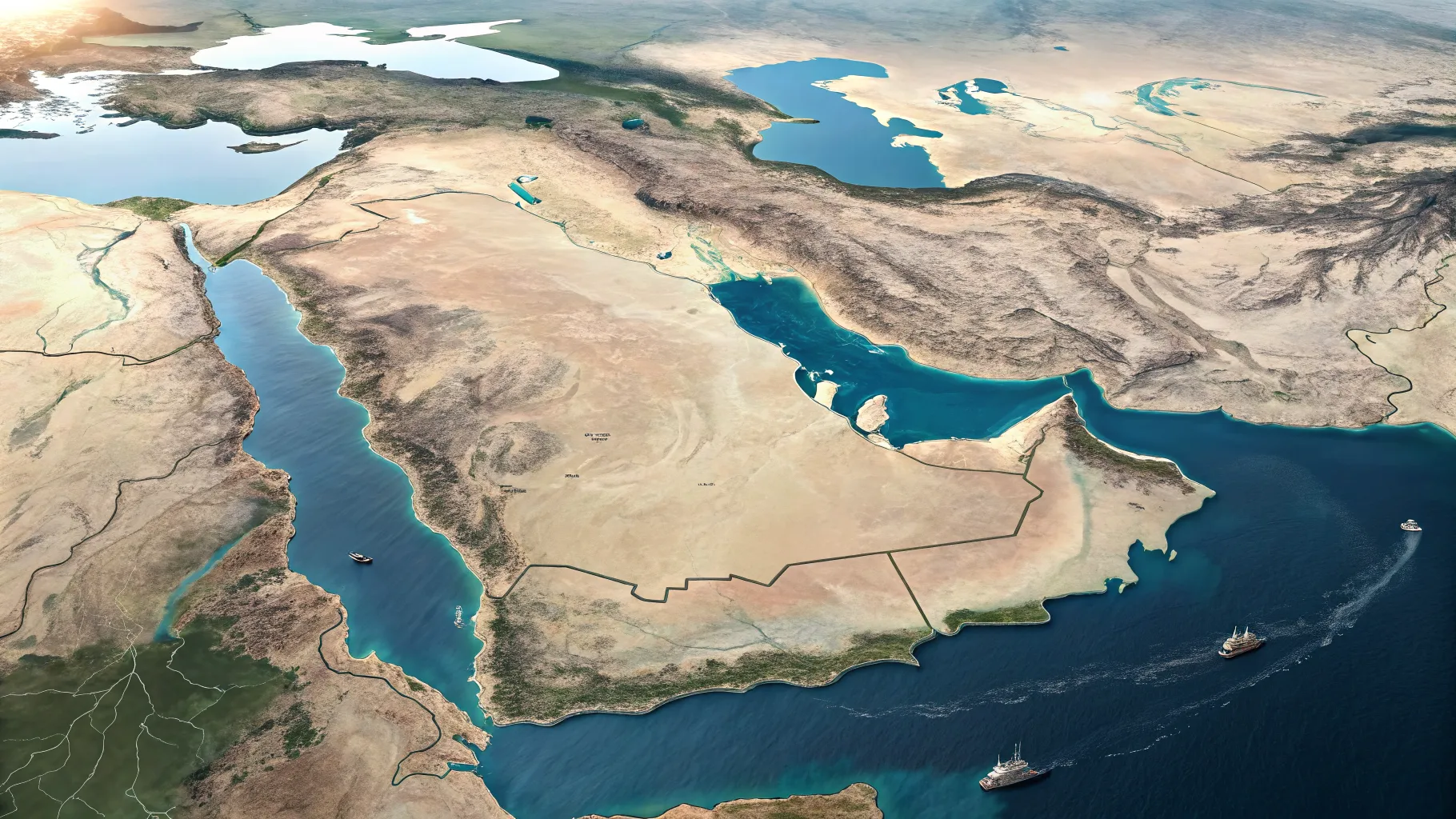
Former U.S. President Donald Trump said an agreement with Iran to open the Strait of Hormuz and address related issues was largely negotiated and would be announced soon. The statement, made as regional tensions remain high, drew quick interest from energy markets and diplomatic circles. It raised new questions about back-channel talks and the possible easing of maritime risks in one of the world’s most important shipping lanes.
The claim arrives amid long-running disputes over Iran’s nuclear program, U.S. sanctions, and a series of security incidents affecting commercial vessels in the Gulf. It also touches a vital artery for global oil flows and a pressure point for prices and supply routes.
Why the Strait of Hormuz Matters
The Strait of Hormuz is a narrow passage linking the Persian Gulf with the Arabian Sea. It is a critical route for crude oil and liquefied natural gas exports from the Gulf states. Energy analysts estimate that roughly one-fifth of the world’s oil trade has transited the strait in recent years, making any disruption a global concern.
Iran has at times threatened to restrict traffic in response to sanctions or military pressure. The United States and its allies have patrolled the area to keep shipping lanes open. Shipping insurers, meanwhile, track security alerts closely, as even short-lived incidents can raise costs and reroute cargo.
What Trump Said—and What’s Unclear
“An agreement with Iran to open the Strait of Hormuz, among other issues, was largely negotiated and would be announced soon.”
Trump did not provide details on who participated in the talks or what “other issues” might include. There was no immediate confirmation from Iranian officials or the current U.S. administration. Without a formal text or joint statement, analysts caution that the timeline and scope remain uncertain.
Iran’s foreign ministry has often insisted that freedom of navigation depends on regional security and the lifting of sanctions. Any deal that touches shipping, sanctions relief, or nuclear constraints would likely involve complex trade-offs and regional input.
Historical Context and Recent Flashpoints
U.S.-Iran relations have swung over the past decade. The 2015 nuclear deal set limits on Iran’s nuclear activity in exchange for sanctions relief. The United States withdrew from that deal in 2018 and reimposed sanctions. Since then, maritime tensions have flared in the Gulf and adjacent waters, including tanker seizures and drone incidents.
Past efforts to calm shipping risks have included multinational patrols, de-escalation talks, and third-party mediation by regional states. However, durable agreements have been hard to secure without parallel progress on nuclear and sanctions issues.
Energy Market Stakes
News of any easing in the strait could nudge oil prices lower by reducing perceived risk. The opposite is also true: a setback could trigger price spikes. Traders watch for signals from Tehran, Washington, and Gulf capitals. Insurers and shippers monitor naval activity and reported attacks or boardings.
- About one-fifth of global oil trade passes through the strait.
- Shipping disruptions can quickly raise freight and insurance costs.
- Regional security and sanctions policy drive risk assessments.
Perspectives From Analysts and Officials
Energy security experts say any workable deal would require clear guarantees for merchant vessels and a mechanism to verify compliance. That could involve escorts, shared communications, or third-party monitoring. “Maritime safety hinges on predictable rules and reliable enforcement,” said one Gulf-based shipping adviser.
Iranian officials have previously tied maritime stability to reduced sanctions pressure. U.S. officials, for their part, often argue that long-term calm requires curbs on Iran’s nuclear program and its regional activities. European diplomats have tried to keep dialogue channels open, even when formal negotiations stall.
What to Watch Next
Confirmation will depend on public statements from Washington and Tehran. Signs to track include changes in shipping advisories, insurance premiums, naval deployments, and any mention of sanctions relief or nuclear steps tied to maritime security.
If an agreement surfaces and holds, it could ease immediate risks for global trade and energy prices. If it unravels, renewed tensions could rattle markets and deepen mistrust among regional players.
For now, Trump’s claim places fresh attention on a narrow waterway with outsized influence on global supply chains. The next few days will show whether a framework exists—and whether the parties can turn words into durable guarantees at sea.

Senior Software Engineer with a passion for building practical, user-centric applications. He specializes in full-stack development with a strong focus on crafting elegant, performant interfaces and scalable backend solutions. With experience leading teams and delivering robust, end-to-end products, he thrives on solving complex problems through clean and efficient code.