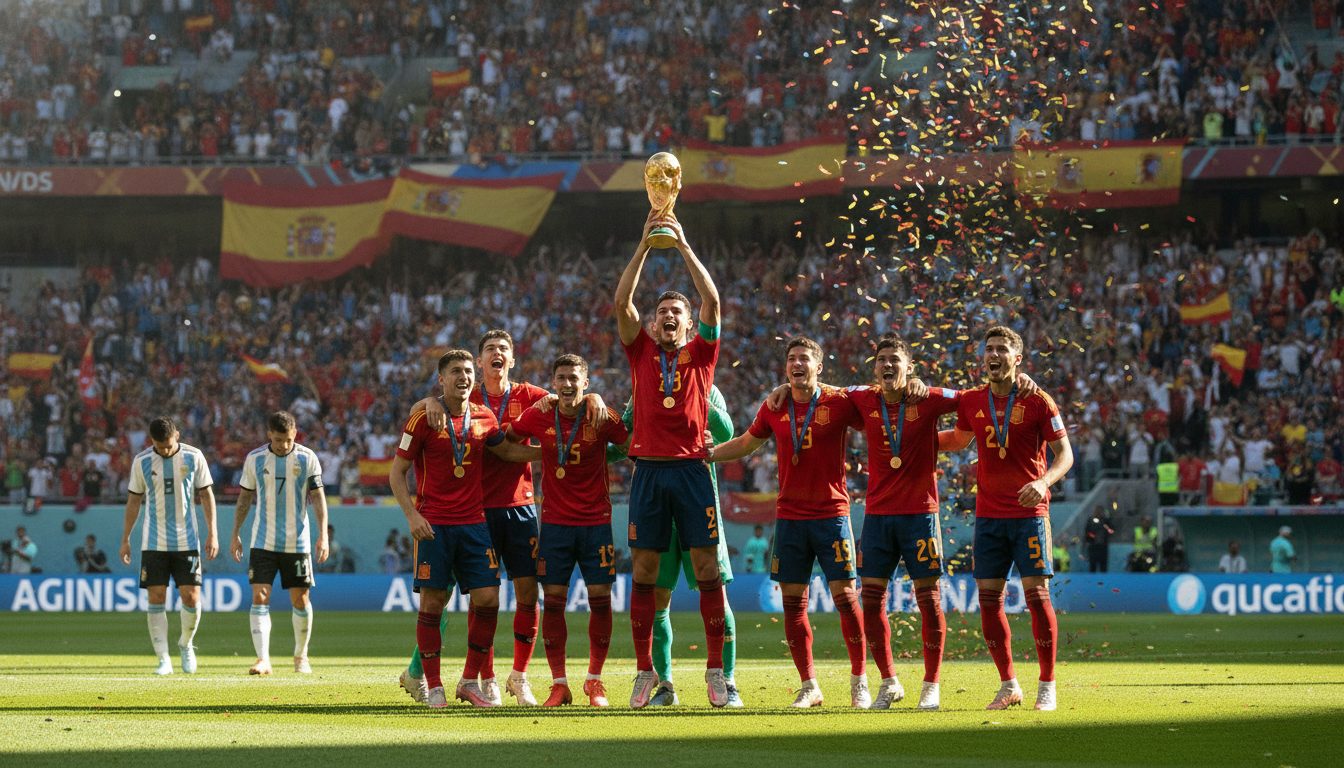
Spain lifted football’s top trophy on Sunday, edging Argentina 1-0 after extra time in a tense World Cup final. The narrow win ended a nerve-filled match between two giants of the game. The title returns to Spain, which had sought to reclaim the sport’s highest honor after years of rebuilding and renewed ambition.
The contest stretched into extra time after a tight 90 minutes. Chances were scarce, pressure was high, and both teams managed long spells of cautious play. The decisive moment arrived late, capping a final that tested concentration, fitness, and resolve. The result gives Spain a fresh chapter in its football history and leaves Argentina to review missed chances on the biggest stage.
“Spain reclaimed football’s biggest prize on Sunday, defeating Argentina 1-0 after extra time in a tense World Cup final.”
How The Game Was Won
Finals often come down to one break. This one did. Spain found the winner deep into extra time, when space finally opened and the tempo dipped. That shift allowed a decisive run and finish that had been missing earlier. The opening goal forced Argentina to chase, but by then Spain’s back line had settled. The clock did the rest.
Spain’s shape stayed compact. The midfield pressed passing lanes and slowed Argentina’s transitions. Argentina responded with patient buildup and periods of controlled possession. Both sides kept numbers behind the ball. The result was a strategic duel with few clean looks on goal.
The Tactical Battle
Spain leaned on short passing, field discipline, and control of central areas. The approach limited turnovers and reduced the risk of counters. It also demanded patience. The extra time goal rewarded that patience, arriving after sustained pressure rather than a single counterpunch.
Argentina sought to stretch Spain with width and diagonal runs. The aim was to drag Spain’s midfield out of shape. At times it worked, creating half chances and set pieces near the box. But Spain’s defenders won key aerial duels and cleared crosses under pressure. As extra time progressed, fatigue tilted the balance to the team with more control of the ball.
High Stakes And Higher Nerves
World Cup finals often turn into tight, physical matches decided by fine margins. This one followed that pattern. A single lapse or moment of brilliance can decide it. Spain produced that moment at the right time. Argentina’s reaction was spirited but rushed, and it did not create the clean chance needed to equalize.
Set pieces were a constant factor. Corners and free kicks offered rare paths through two organized defenses. Spain defended the near post well and managed second balls. Argentina blocked shots and relied on fast recoveries from fullbacks. The tactical discipline on both sides kept the scoreline low.
What The Result Means
The victory resets Spain’s place in the sport. It affirms a model built on control, movement, and patient buildup. The win will boost confidence in its development pipeline and coaching approach. For Argentina, the loss stings, but it also highlights a team that reached the last match of the tournament. The foundation remains strong, even if the final step proved one bridge too far this time.
- Spain’s extra time winner capped a disciplined plan.
- Argentina’s structure held for long stretches but faded late.
- The final showed the value of control under pressure.
Broader Context And Next Steps
International football often swings on small details. Tournament play compresses recovery time and magnifies mistakes. Teams that manage tempo and avoid errors thrive in knockout rounds. Spain did that here. It kept the ball, limited risks, and stayed fresh for the decisive window in extra time.
For Argentina, the analysis will focus on chance creation in high-stakes matches. The team defended well and stayed organized, but it needed a bit more incision in the final third. Coaches at this level study how to adjust late without losing structure. That balance is hard to find under fatigue and pressure.
Looking ahead, both teams face a short runway to the next cycle. Key questions will shape what comes next. Can Spain maintain intensity while introducing new players. Can Argentina add finishing punch without weakening its core. The answers will define the next round of qualifiers and major tournaments.
Spain leaves with the trophy and a clear identity. Argentina leaves with lessons and the drive to return. As the celebrations fade, the work begins again. Fans will watch for fresh call-ups, tactical tweaks, and the next chance to test these ideas against top opposition. For now, one goal in extra time separates joy from regret, and it belongs to Spain.

Deanna Ritchie is a managing editor at DevX. She has a degree in English Literature. She has written 2000+ articles on getting out of debt and mastering your finances. She has edited over 60,000 articles in her life. She has a passion for helping writers inspire others through their words. Deanna has also been an editor at Entrepreneur Magazine and ReadWrite.