


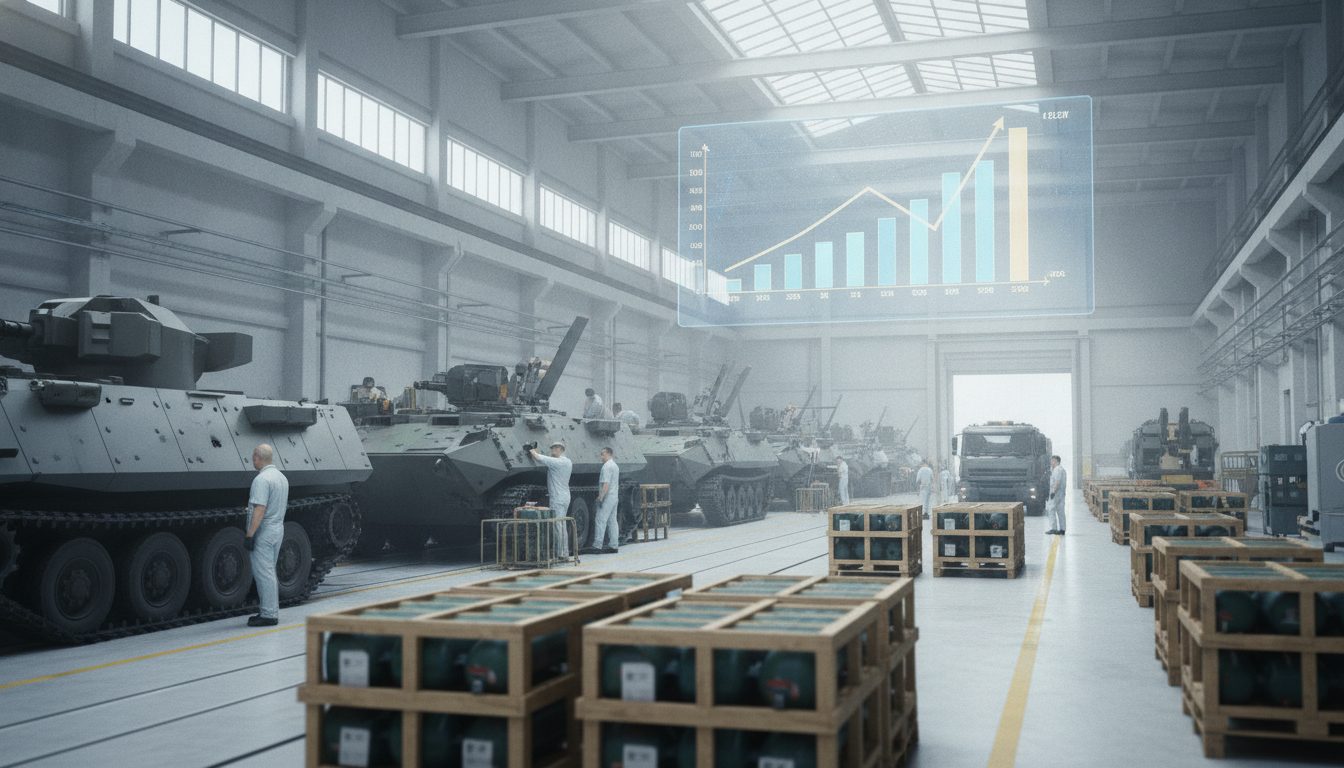
European defense contractors are reporting another strong quarter as military budgets rise and governments rush to refill stockpiles. Companies across the sector cite larger order books and steadier production plans, reflecting a region-wide push to rebuild deterrence after years of underinvestment.
The latest updates show higher revenue tied to new contracts for ammunition, air defense, and electronic systems. Orders are flowing from national governments and joint programs. Executives say the upswing is broad, touching primes and smaller suppliers across Western and Central Europe.
One executive summed up the trend:
“The continent’s defense upcycle translated into another quarter of higher revenue and swelling order books.”
Why Spending Is Rising
Russia’s full-scale invasion of Ukraine sparked a reassessment of European security. Many capitals moved to raise defense spending and speed procurement. The focus has been on munitions, ground systems, air defense, and intelligence tools. Leaders also stress readiness and logistics, not just new platforms.
Observers note that several NATO members have outlined plans to lift spending to at least 2 percent of economic output. Some have created special funds to fast-track purchases and expand industrial capacity. The European Union has promoted joint buys to reduce bottlenecks and align standards.
Orders Surge, Backlogs Grow
The surge in demand is most visible in backlogs. Firms report multi-year order books, giving them more certainty to add shifts, train staff, and lock in materials. This momentum supports long-term planning, which has been rare in the sector during past cycles.
Executives point to a few hot spots:
- Ammunition and missiles, driven by high usage rates and depleted stocks.
- Air and missile defense, as governments seek layered shields for cities and bases.
- Command, control, and sensors, for faster targeting and better interoperability.
Suppliers say new frameworks and multiyear agreements help convert urgent needs into predictable output. That, in turn, supports capital investment in new lines and automation.
Strains On Supply Chains And Labor
The upswing brings pressure too. Factories face tight labor markets, especially for welders, machinists, and software talent. Some rely on apprenticeships and in-house training to fill gaps. Others pull retired workers back into service to mentor new teams.
Materials remain a risk. Propellants, specialized steels, and microelectronics are in high demand. Executives warn that any snag at a single supplier can ripple across projects. Firms seek second sources and stock critical inputs to reduce delays.
Policy Choices Shape The Next Phase
Governments are debating how long to sustain higher outlays. Budget laws and election cycles could test commitments. Industry leaders urge clear, multi-year signals to avoid a boom-bust pattern that wastes money and skills.
Analysts say domestic production is gaining favor. Countries want assured access to key items and are cautious with export controls. Joint procurement aims to spread work across borders, but industrial politics can slow decisions.
Investor View And Market Impact
Shareholders watch three signals: order intake, margin health, and delivery cadence. Rising backlogs help. Margins depend on mix, inflation adjustments, and execution. On-time deliveries are key to unlocking milestone payments.
Some companies cite better visibility into the second half of the year, thanks to framework deals that bundle replenishment with longer-term upgrades. Others stay cautious, noting that ramping complex systems can strain quality and cash.
What To Watch Next
Several trends will shape results in the months ahead. First, the pace of ammunition output, which remains central to meeting front-line needs. Second, air defense procurement, where demand is high and supply is tight. Third, workforce growth, which will set the ceiling for sustained production.
Longer term, digital integration and maintenance services may carry steady revenue beyond initial deliveries. Governments also push for standard parts and shared logistics to lower costs and speed repairs.
For now, the sector keeps climbing on the back of firm demand and bigger backlogs. The quote rings true as another quarter closes with rising revenue and orders. The next test is execution: building fast, on budget, and at scale. If supply chains hold and policy stays steady, Europe’s defense industry could lock in a durable cycle, with broader effects on jobs, technology, and security across the continent.

A seasoned technology executive with a proven record of developing and executing innovative strategies to scale high-growth SaaS platforms and enterprise solutions. As a hands-on CTO and systems architect, he combines technical excellence with visionary leadership to drive organizational success.























