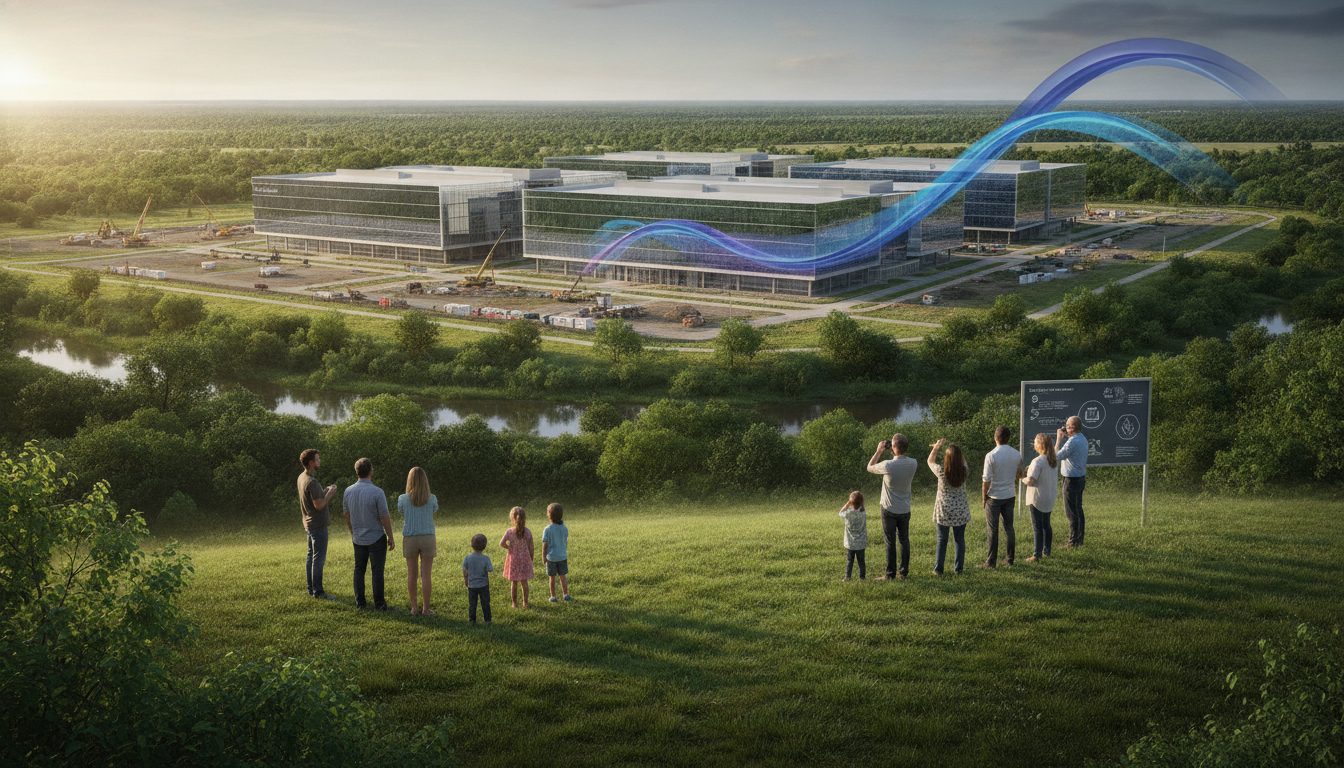
Meta is moving to expand its computing capacity in the Gulf South, announcing a major buildout at its data center site in Richland Parish, Louisiana. The company said it is increasing the facility’s size to support growing demand for its platforms and new technologies. Local leaders see fresh investment and construction work ahead, while residents are watching for details on jobs, energy use, and public costs.
The company did not disclose a timeline or dollar figure in the announcement. The move signals continuing competition among large tech firms to secure space, power, and cooling for artificial intelligence, advertising, and social media services. The expansion adds weight to Louisiana’s push to attract data infrastructure beyond petrochemicals and ports.
The Announcement
Facebook’s parent company, Meta, is more than doubling the size of its data center in Richland Parish, Louisiana.
The plan highlights Meta’s long-term bet on centralized computing hubs. The facility will likely add new server halls, electrical systems, and cooling equipment. Those changes often require close coordination with utilities, parish planners, and state agencies.
Economic Stakes for Richland Parish
Large data centers bring significant construction activity. That means contracts for builders, electricians, and suppliers. Permanent staffing is smaller than during construction, but technical roles can pay well and anchor related services.
Local officials often weigh these benefits against tax breaks and infrastructure upgrades. Parishes and states have used property tax abatements and sales tax exemptions to recruit similar projects in other regions. Residents will look for clear terms on any incentives and on shared infrastructure, such as roads and substations.
- Short-term gains typically come from construction spending.
- Long-term gains depend on stable operations and vendor ecosystems.
- Community expectations include training, hiring pipelines, and transparency on incentives.
Power, Water, and Grid Planning
Adding capacity increases demand for electricity and cooling. Utilities may need to build feeders, transformers, or even new substations. That work can take years and must align with reliability standards and hurricane-season resilience.
Cooling methods affect water use. Some facilities rely on evaporative systems, while others prefer air cooling or hybrid designs. Neighbors often ask how much water a site will draw, what seasons see peak use, and whether reuse or alternative sources are part of the plan.
Energy sourcing also draws attention. Meta has previously announced renewable energy deals for other locations. Observers will watch for similar steps in Louisiana, including power purchase agreements or investments that add new clean generation to the local grid.
Community Concerns and Expectations
For residents, the main questions are practical. How many local jobs will be available, and in which fields. What traffic changes will construction bring. Will noise from generators or cooling towers be contained. Communities often ask for environmental reviews, public briefings, and clear reporting on energy and water impacts.
Labor groups sometimes press for apprenticeship and training commitments. Schools and colleges can benefit if the company funds technical programs that prepare students for data center operations and maintenance roles.
What It Means for Meta’s Strategy
The expansion aligns with a wider industry trend. Social platforms, video, and AI workloads need large clusters of servers connected by high-speed networks. Scaling in one location can be cheaper and faster than building many smaller sites. It can also improve efficiency through shared cooling and power systems.
At the same time, concentrating capacity increases exposure to regional risks. In Louisiana, that includes severe weather and heat. Companies often invest in hardened structures, redundant power, and detailed emergency plans to manage those risks.
What to Watch Next
Key milestones will show how the project unfolds and how it affects the parish.
- Formal permits, environmental filings, and utility interconnection plans.
- Public details on hiring, training, and local vendor participation.
- Announcements on renewable energy deals or efficiency measures.
- Construction timelines and traffic management plans.
Meta’s decision to more than double its Richland Parish site signals confidence in long-term demand for data services. It also places fresh pressure on local infrastructure planning. The next phase will hinge on coordination among the company, utility partners, and public agencies. For residents and businesses, the takeaways will depend on transparency, steady progress, and whether the buildout delivers durable jobs and community benefits while managing energy and water use.

Deanna Ritchie is a managing editor at DevX. She has a degree in English Literature. She has written 2000+ articles on getting out of debt and mastering your finances. She has edited over 60,000 articles in her life. She has a passion for helping writers inspire others through their words. Deanna has also been an editor at Entrepreneur Magazine and ReadWrite.