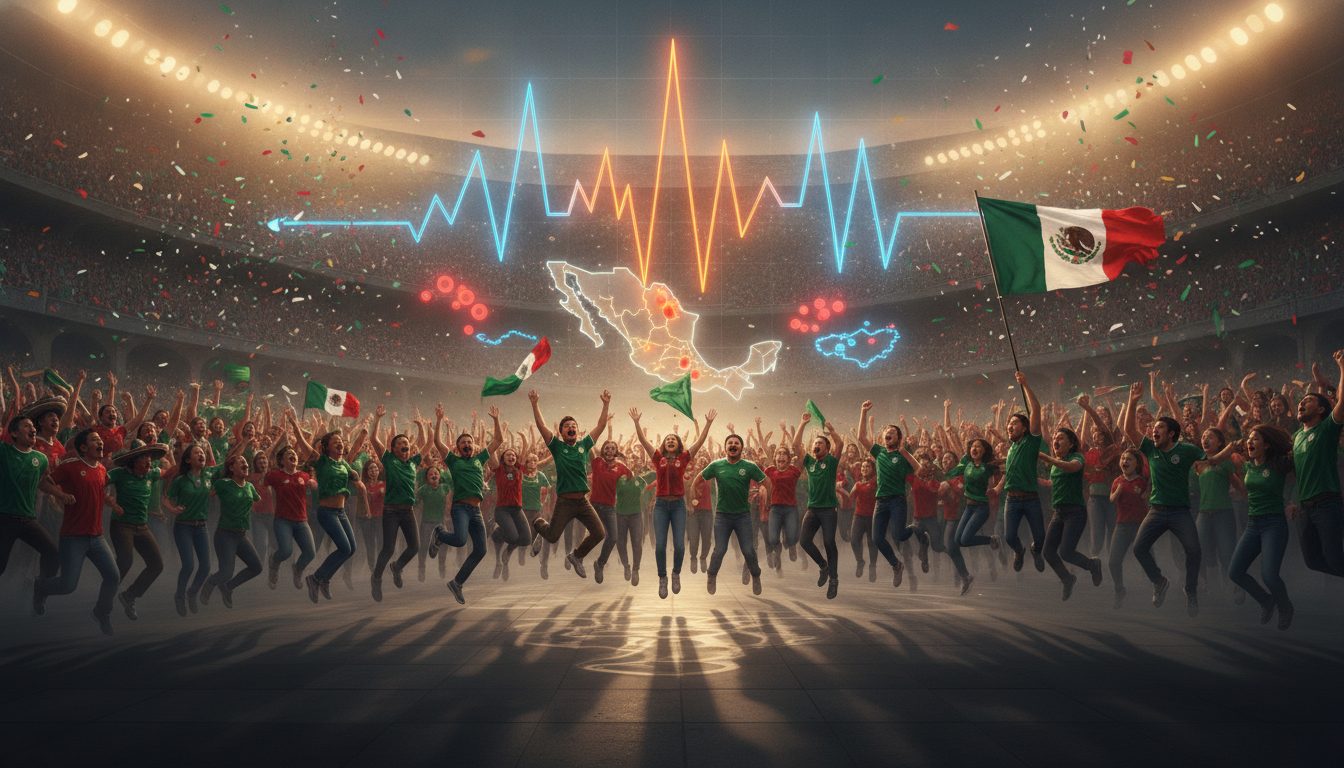
Thrilling scenes followed the Mexican national team’s latest win at the 2026 World Cup, as celebrations shook the ground hard enough to register on seismic warning systems. The vibrations, linked to mass jumping and chanting after the victory, were detected in parts of the country soon after the final whistle. The readings drew quick attention from sports fans and scientists, who compared the signals to past “fan quakes.”
Officials stressed there was no natural earthquake. Instead, the shaking came from thousands of supporters moving at the same time. The event highlights how large crowds can produce brief, localized tremors during high-stakes matches.
“Fans’ euphoric reactions to the Mexican national team’s recent victory in the 2026 World Cup caused a series of unusual vibrations that were detected by seismic warning systems.”
How Celebrations Can Shake the Ground
Seismologists have long known that synchronized human movement can show up on sensitive instruments. When a crowd jumps in rhythm, the force travels through soil and concrete. That signal is small but clear on modern sensors.
These signals differ from natural quakes. They are shallow, short, and limited to areas near stadiums, plazas, and viewing sites. They often track game moments, like goals or the final whistle.
Experts say instruments today can detect vibrations far below what people feel. That is why many fans never notice anything unusual, even as monitors record spikes.
A Pattern Seen Before
Mexico has seen this before. During the 2018 World Cup, a goal against Germany set off readings tied to celebrations in Mexico City. Local monitoring groups at the time reported an “artificial quake.”
Similar events have been logged in other sports. The 2011 “Beast Quake” in Seattle followed an NFL touchdown run and was recorded by nearby stations. European soccer matches have also shown brief spikes when stadiums erupt.
- Short, local vibrations match key moments in games.
- Signals are small and fade quickly.
- They do not indicate fault movement or deep seismic activity.
What The Readings Mean For Safety
Seismic networks are built to spot early signs of natural earthquakes. When crowds trigger instruments, analysts label the signals as non-earthquake events. Alerts for the public are not issued for crowd-driven shaking.
The recent readings in Mexico fit that pattern. The data show quick pulses linked to coordinated movement, not to tectonic stress. There were no reports of damage, and services continued as normal.
Engineers note that modern stadiums are designed with dynamic loads in mind. Teams and venue operators monitor crowd flow to reduce stress on structures and nearby transit lines.
Why Sports Keep Showing Up On Sensors
High-stakes matches bring large crowds together in tight spaces. Music, chants, and the rhythm of cheering can push movement into sync. That is when instruments pick up the strongest signals.
The 2026 tournament brings bigger screens, denser fan zones, and extended viewing hours. That can amplify local shaking, especially on rigid surfaces like concrete plazas and elevated walkways.
Studies of past events suggest weather and soil type also matter. Dry ground and hard surfaces tend to carry vibrations farther than soft, wet soil.
What To Watch As The Tournament Continues
Monitoring networks will keep logging signals as major matches unfold. Analysts will separate natural events from human-caused vibrations. That improves early warning accuracy and public trust.
Local officials may adjust traffic, transit, and crowd control plans around large fan gatherings. Temporary barriers and staggered exits can limit peak loads after dramatic moments.
For researchers, these events are useful. They help test sensor sensitivity, data filters, and urban vibration models. That work can strengthen earthquake detection in the long run.
The celebration that followed Mexico’s win showed the power of shared moments. It also showed how sensitive today’s instruments have become. As the World Cup advances, brief signals tied to cheers may flare again, but they do not point to danger. The focus remains on keeping fans safe, stadiums sound, and early warning systems sharp for real seismic threats.

Rashan is a seasoned technology journalist and visionary leader serving as the Editor-in-Chief of DevX.com, a leading online publication focused on software development, programming languages, and emerging technologies. With his deep expertise in the tech industry and her passion for empowering developers, Rashan has transformed DevX.com into a vibrant hub of knowledge and innovation. Reach out to Rashan at [email protected]