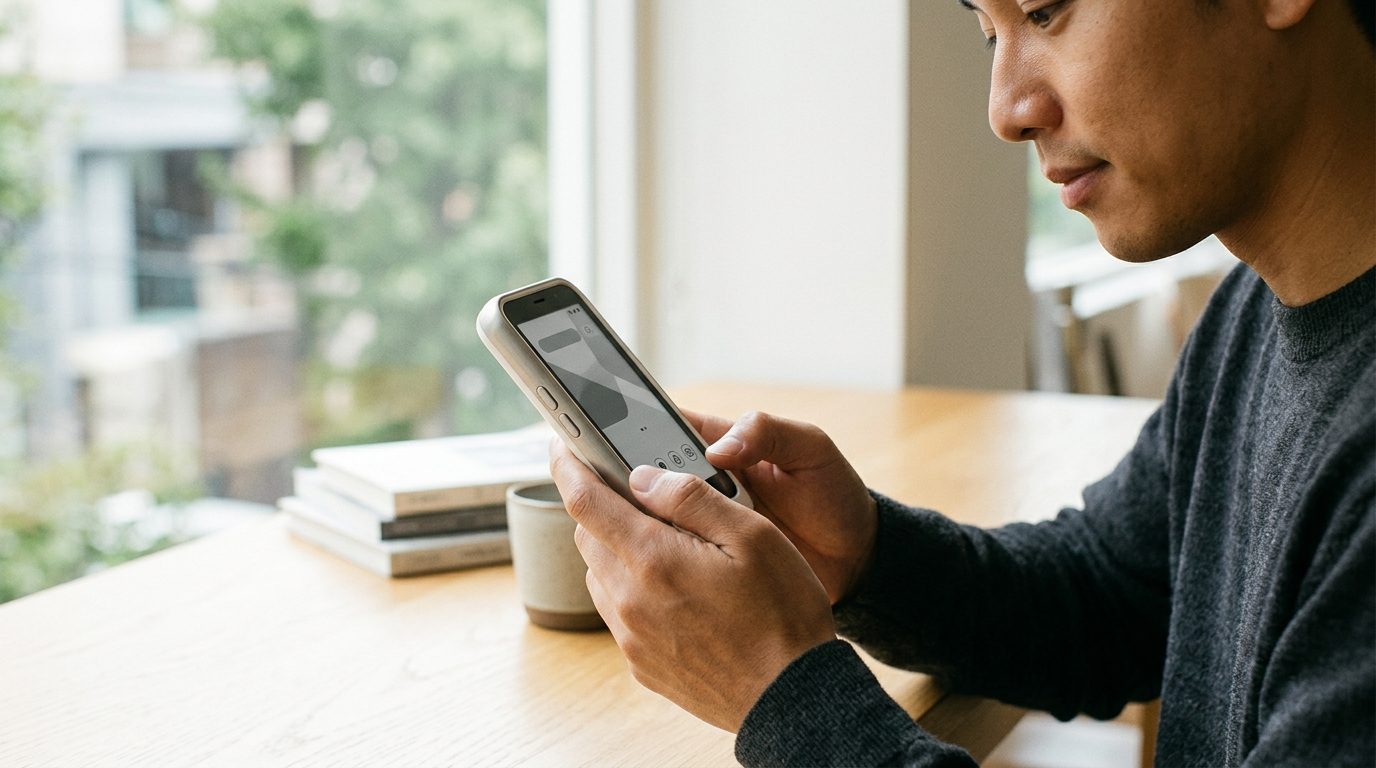
The Minimal Company is taking a new direction with its latest phone while keeping its central promise: helping users spend less time looking at screens.
The Los Angeles-based company specializes in stripped-down mobile devices. Its phones offer only a small set of essential tools and leave out features that can demand constant attention. The newest model marks a major change from the company’s earlier approach, though details about its design, price, and release date remain limited.
A Different View of Mobile Design
Most smartphone makers compete by adding faster processors, sharper cameras, larger displays, and more software. The Minimal Company starts with a different question: how much technology does a person need in a pocket?
Its products are built around a limited set of functions. That approach may appeal to people who want reliable communication without endless notifications, social feeds, games, or video services.
The company’s guiding idea is to put “just a handful of essential tools” into a phone. The wider goal is not to remove technology from daily life. It is to reduce the amount of attention that a device consumes.
Latest Model Signals a Major Shift
The new model represents a departure for the company. That creates a difficult design test. A device can gain useful features, but each addition may weaken its focus on lower screen use.
The company must balance several priorities:
- Provide enough functions for work and personal communication.
- Limit features that encourage repeated or prolonged use.
- Keep the device practical for people accustomed to smartphones.
- Show that a major product change still supports reduced screen time.
This balance matters because minimal phones often ask buyers to accept trade-offs. Users may gain fewer interruptions and simpler controls. They may also lose access to services that have become common in travel, banking, work, and social communication.
Screen Time Remains the Core Measure
The latest phone’s success will depend less on the number of features than on how those features affect behavior. A device may look simple while still encouraging frequent checking. Software choices, notification controls, and access to attention-heavy applications can shape actual use.
The Minimal Company’s location in Los Angeles also places it near creative and technology industries built around digital engagement. Its strategy runs against the standard business model of keeping users active for longer periods.
That position could give the company a clear identity. It also limits its audience. Some customers need a full smartphone for navigation, authentication, payments, messaging, and specialized work applications. Others may welcome a device that narrows those choices.
What the Company Must Explain Next
More information will be needed to judge whether the new model delivers on its stated vision. Key questions include which tools are included, which services are excluded, and how the phone prevents distraction.
Pricing and availability will also shape its prospects. A simplified device must offer enough value to compete with basic phones, used smartphones, and software settings that already help users limit screen time.
The new model places The Minimal Company at an important point. Its change in direction may broaden the phone’s usefulness, but added capability could challenge its purpose. The clearest test will be whether customers can do what they need while spending less time on the device.

Rashan is a seasoned technology journalist and visionary leader serving as the Editor-in-Chief of DevX.com, a leading online publication focused on software development, programming languages, and emerging technologies. With his deep expertise in the tech industry and her passion for empowering developers, Rashan has transformed DevX.com into a vibrant hub of knowledge and innovation. Reach out to Rashan at [email protected]