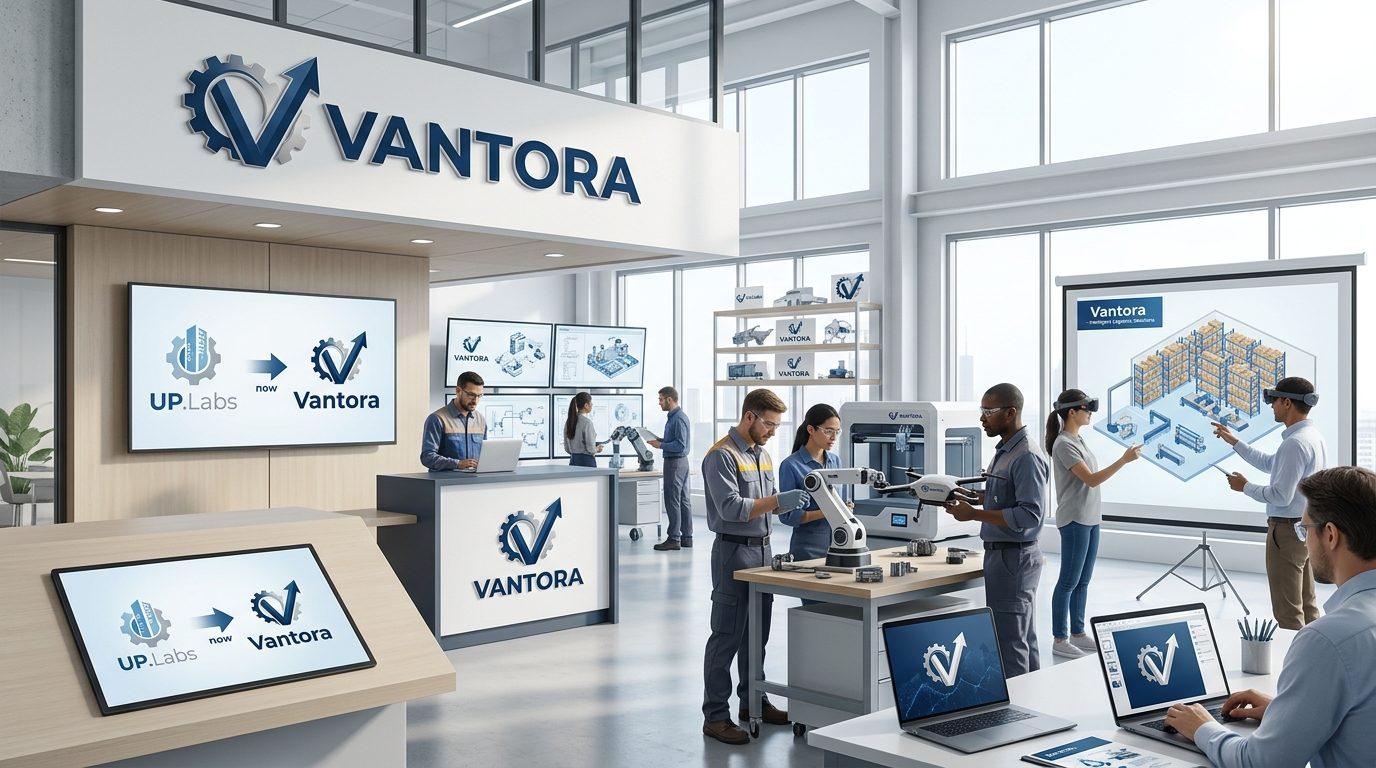
UP.Labs is now operating as Vantora, adopting a new corporate identity while continuing to build startups for industrial companies. The change gives the venture builder a distinct brand as it works with large corporations on new businesses aimed at industrial needs.
The brief announcement does not identify a date for the change, explain the reason for the new name, or list current corporate partners. It also offers no financial details. Still, the move signals continuity in the company’s main strategy rather than a shift away from startup creation.
A Venture Model Focused on Industry
Vantora operates in a specialized part of the startup market. Instead of only funding outside founders, the company builds new ventures for established industrial corporations.
This model can connect a corporation’s operational knowledge with the speed of a startup team. Industrial companies often have customers, technical expertise, and access to large markets. A venture builder can add product development, recruiting, and early business testing.
Such partnerships may target costly or slow industrial processes. Potential areas can include manufacturing, logistics, maintenance, and supply chain operations. Vantora has not disclosed which sectors or technologies are central to its current work.
The approach also differs from traditional consulting. Consultants usually advise an existing business. A venture builder typically helps create a separate company, product, or operating team that can pursue a new commercial opportunity.
Why the New Identity Matters
A company name can shape how customers, founders, and investors understand its role. The Vantora identity may help separate the business from its earlier UP.Labs name while supporting its focus on corporate venture creation.
However, the announcement leaves several practical questions unanswered:
- Whether the rebrand changes ownership, leadership, or staffing
- How existing partnerships will operate under the Vantora name
- Whether its investment strategy or target industries will change
- How many startups the company has launched or plans to build
Those details will determine whether the change is mainly cosmetic or part of a wider business plan. For corporate partners, continuity in contracts, governance, and venture support will matter more than the name itself.
Industrial Startups Face Distinct Challenges
Building startups for industrial corporations can offer advantages, but it also brings risk. Industrial products may require long testing periods, expensive equipment, strict safety reviews, and integration with older systems.
Corporate-backed startups may gain early access to facilities and prospective customers. They can also face slower decision-making or conflicting goals. A parent company may seek strategic value, while a startup team often needs rapid growth and operational freedom.
Clear governance can help manage those tensions. Partners must decide who owns intellectual property, who funds later stages, and whether the new venture can sell to corporate competitors. Vantora has not provided information about how it addresses these issues.
What to Watch Next
The next test for Vantora will be execution under its new name. New venture launches, named industrial partners, and measurable commercial results would give a clearer view of its scale and performance.
Key measures may include the number of startups formed, outside funding secured, products deployed, and revenue generated. Startup survival and adoption by industrial customers would also offer useful evidence.
For now, the central message is direct: UP.Labs has become Vantora, while its stated mission remains building startups for industrial corporations. Further disclosures about partnerships and results will show whether the rebrand marks a broader growth phase.

Senior Software Engineer with a passion for building practical, user-centric applications. He specializes in full-stack development with a strong focus on crafting elegant, performant interfaces and scalable backend solutions. With experience leading teams and delivering robust, end-to-end products, he thrives on solving complex problems through clean and efficient code.