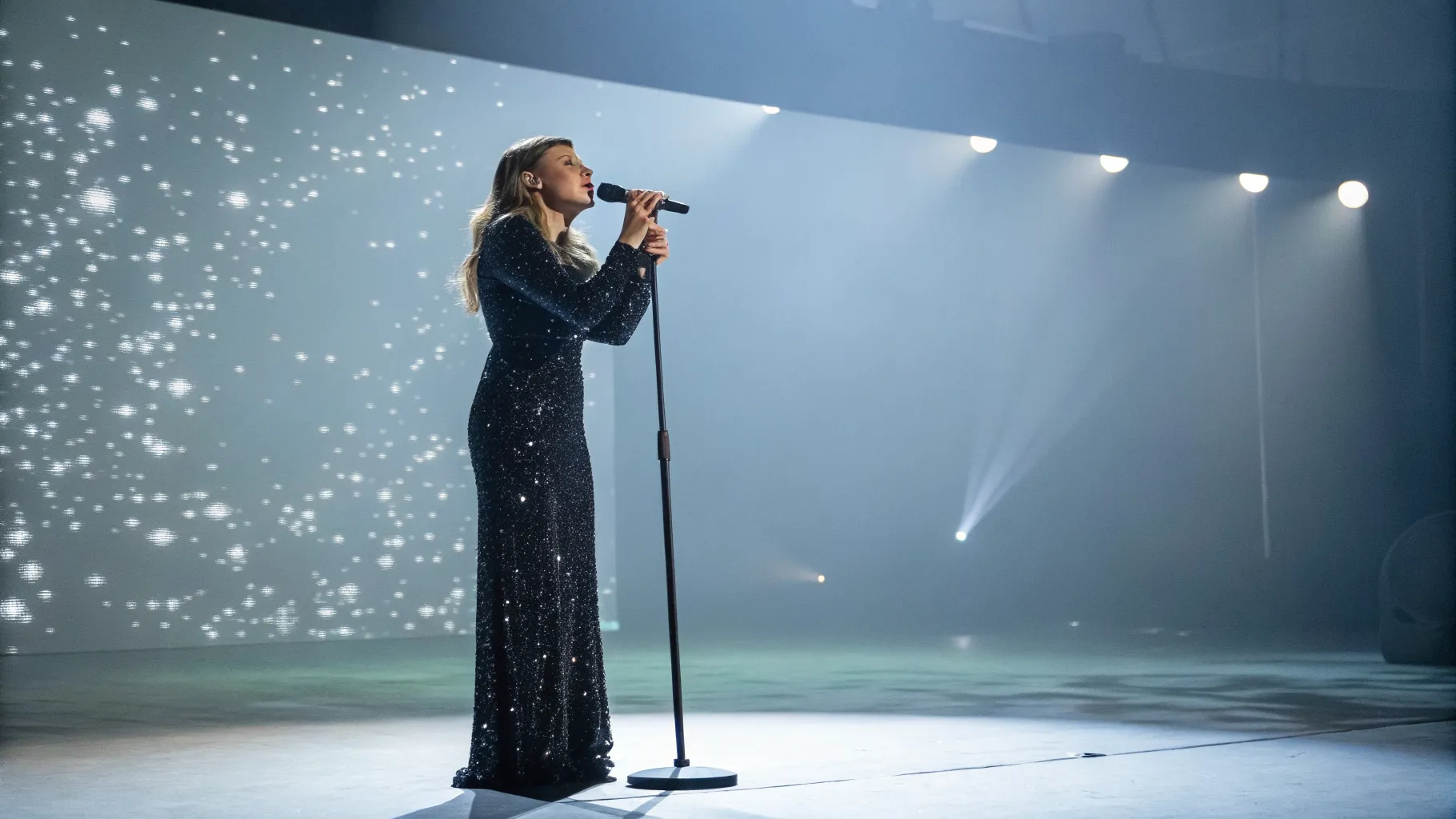
Amy Bedford has drawn a clear line in the debate over artificial intelligence in music, saying the Eurovision Song Contest was “too big, too important and too loved” for her to use AI. Her stance adds fresh urgency to a growing industry conversation about what counts as authentic performance on one of the world’s most watched stages and why creators are being pressed to declare their methods.
Her comments come as artists, producers, and fans weigh the role of algorithms in songwriting, production, and even vocals. With Eurovision drawing more than 160 million viewers worldwide in recent years, any shift in creative practice can shape expectations far beyond a single night of television.
Authenticity at the Heart of a Global Show
Eurovision’s appeal rests on live performance, national pride, and the surprise of original staging. That mix fuels tensions when new tools enter the studio or the rehearsal room. For Bedford, the scale and emotional ties around the event demand a human touch.
Eurovision was “too big, too important and too loved” for her to use AI.
Supporters of her view say the contest’s magic comes from risk, improvisation, and the quirks of live music. They argue that outsourcing melody ideas or vocal textures to software could dull that connection. Others counter that audiences care most about the final result, not the process, and that many tools already shape modern sound.
Where AI Already Touches Music
AI now appears in common studio tasks. It can assist with lyric prompts, instrument emulation, arrangement ideas, and audio cleanup. Streaming platforms recommend songs with machine learning, and mastering services can automate polish once reserved for engineers. None of this guarantees better art, but it can speed production and lower costs.
Critics warn that training models on existing catalogs can raise questions about consent and compensation. Creators fear sounding the same if they lean too much on shared tools. Fans worry about credit: who wrote the hook, the artist or an algorithm?
What Rules and Traditions Allow
Eurovision requires live lead vocals on stage, a condition that already signals limits on synthetic performance. While arrangements and backing tracks can be complex, the core vocal must be sung on the night. That standard, coupled with a long history of national selection shows and juries, puts authenticity at a premium.
Music contests worldwide are updating guidelines to reflect new realities. Some prohibit fully AI-generated submissions. Others ask for disclosures when tools are used. Organizers try to balance creative freedom with trust, especially when viewers vote.
Competing Views Among Artists and Producers
Bedford’s position places her among artists who see AI as a step removed from the live craft. Many producers, however, frame AI as a studio aid no different than a metronome or pitch correction. They say the human still guides taste, structure, and story.
- Artists worried about AI: loss of voice, confusion over credits, and weaker connection with fans.
- Artists open to AI: faster workflows, new textures, and access to production techniques once out of reach.
The middle ground centers on disclosure. If creators explain what tools they used, audiences can judge the result with clear expectations, and juries can apply consistent standards.
What Bedford’s Stance Signals
By rejecting AI for Eurovision, Bedford reflects a belief that the contest’s scale demands human-led work from concept to chorus. It also hints at a wider trend: as live events compete for attention, the promise of real-time, human performance becomes a selling point. Viewers can stream studio-perfect tracks at any moment; what they gather for is the risk that only people bring.
That does not end the debate. AI will remain in the studio, and lines will shift as tools improve. But for now, creators linked to high-profile shows face a choice: keep the process manual, or explain where the machines helped.
As the next contest season approaches, watch for updated guidance from organizers, clearer credits in songwriting, and more artists stating their methods upfront. Bedford’s decision sets a marker. The result could be a split approach—strict human performance for the live stage, with carefully disclosed assistance in the studio—aimed at protecting trust while letting creativity evolve.

Rashan is a seasoned technology journalist and visionary leader serving as the Editor-in-Chief of DevX.com, a leading online publication focused on software development, programming languages, and emerging technologies. With his deep expertise in the tech industry and her passion for empowering developers, Rashan has transformed DevX.com into a vibrant hub of knowledge and innovation. Reach out to Rashan at [email protected]