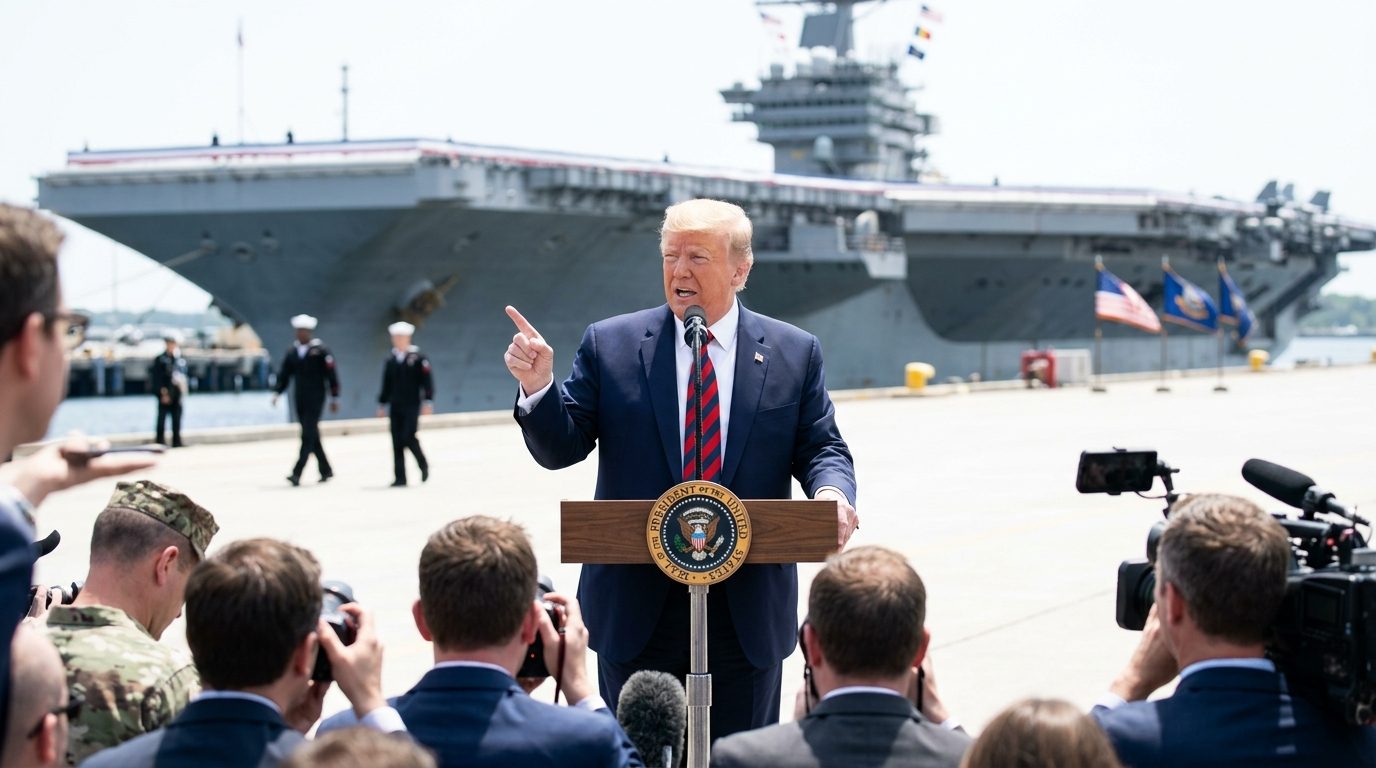
President Donald Trump rejected concerns from military families about conditions aboard the USS Abraham Lincoln, saying its deployment had lasted “not nearly long enough.” His response, given when NBC News asked whether the mission had continued too long, placed renewed attention on the strain extended operations can put on sailors and their families.
The comment offered a firm defense of keeping the aircraft carrier at sea. However, it did not address the specific conditions raised by service members’ relatives or explain how long the deployment should continue.
Trump Backs a Longer Mission
NBC News correspondent Monica Alba reported the president’s response. Asked whether the deployments had gone on too long, Trump gave a brief answer.
“Not nearly long enough.”
The statement signaled that Trump viewed the duration as justified by military needs. No further explanation, timetable, or operational details accompanied the remark.
Presidents often avoid discussing exact carrier movements because such information can carry security risks. Still, the short response left open questions about the administration’s assessment of personnel welfare, shipboard conditions, and mission goals.
Families Focus on Conditions and Time Away
Aircraft carriers operate with thousands of sailors and aviation personnel. Their missions can require long periods away from home, with limited space and demanding work schedules aboard ship.
Families often manage the effects on land. These can include child care, household duties, missed events, and uncertainty about return dates. Extensions can increase that pressure, especially when schedules change with little warning.
The dispute centers on two priorities that military leaders regularly must balance:
- Maintaining forces where commanders and policymakers believe they are needed.
- Protecting morale, readiness, and family stability during extended operations.
Trump’s answer emphasized the first priority. The families’ concerns draw attention to the second.
Carrier Deployments Carry Strategic Weight
The USS Abraham Lincoln is a nuclear-powered aircraft carrier. Ships of its class serve as mobile air bases and are used to deter threats, support combat missions, and reassure allies.
That role makes carrier deployment decisions central to national security policy. Keeping a carrier on station can provide military options without relying solely on land bases. It can also send a visible political message to rivals.
Yet longer operations can create costs. Equipment requires maintenance, while crews need training, rest, and time with their families. If deployments are extended repeatedly, those pressures may affect retention and future readiness.
Key Questions Remain Unanswered
The president did not identify the family complaints he was rejecting. He also did not say whether military leaders had recommended an extension or whether sailors had received a revised return schedule.
Further clarity could come from the White House, the Pentagon, or Navy officials. Useful details would include the mission’s expected length, the reasons for any extension, and support available to affected families.
Trump’s comment leaves a clear policy signal: the administration does not consider the deployment excessive. The larger issue is whether military demands can be met without placing avoidable strain on crews and households. Future deployment orders, return dates, and Navy readiness assessments will show how officials manage that balance.

A seasoned technology executive with a proven record of developing and executing innovative strategies to scale high-growth SaaS platforms and enterprise solutions. As a hands-on CTO and systems architect, he combines technical excellence with visionary leadership to drive organizational success.