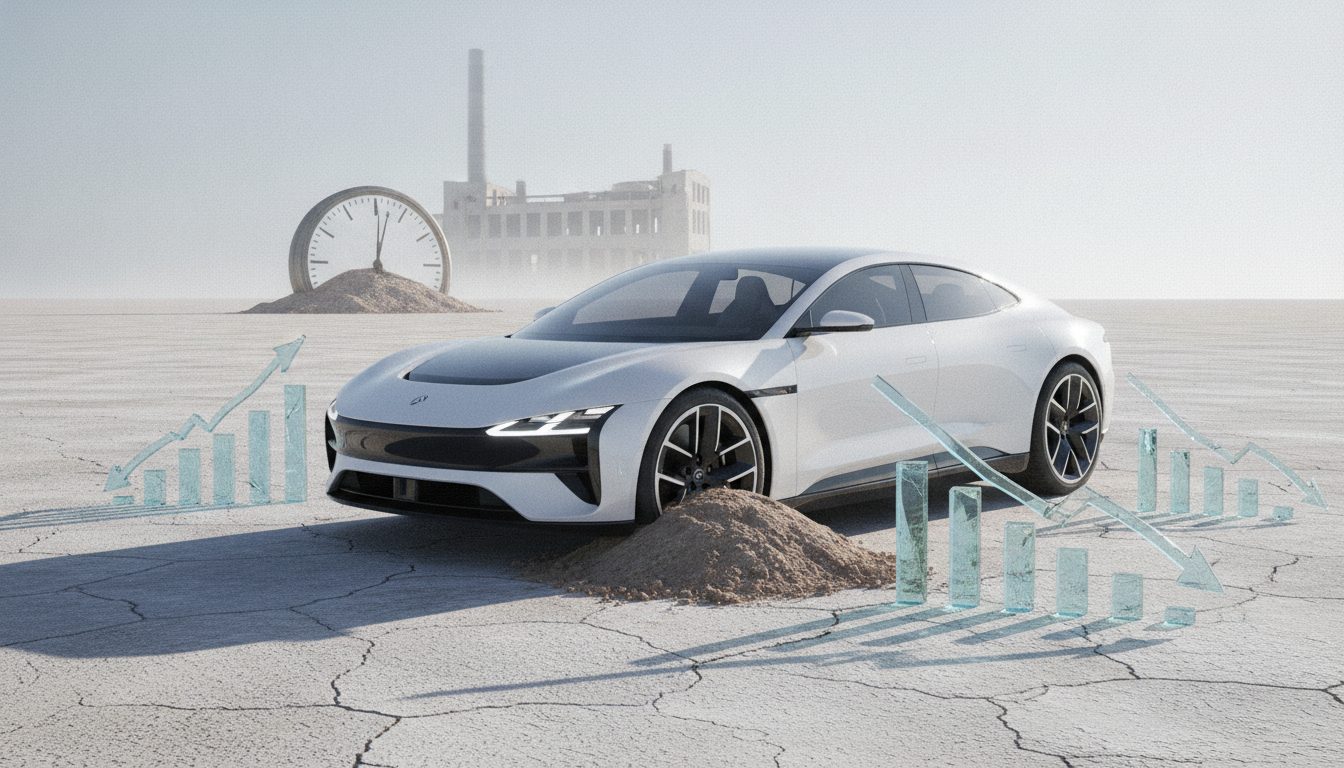
Faraday Future is still fighting for survival after years of delays, leadership churn, and evaporated deals, even as the luxury EV startup once carried a multi-billion-dollar valuation. The Los Angeles-based company has produced only a tiny number of cars since its 2014 debut, while racing to secure funding and keep its stock listing. Its future now hinges on stabilizing cash flow, rebuilding credibility, and proving there is lasting demand for its six-figure flagship, the FF 91.
How the Promise Collided With Reality
Founded with the ambition to rival Tesla at the high end, Faraday Future announced bold plans, a showcase concept, and a new factory in Nevada. The project stalled amid funding shortfalls. The company later shifted production plans to a refurbished plant in Hanford, California. In 2021, it went public through a SPAC deal, which temporarily eased funding pressure.
The FF 91 entered limited production in 2023 and targeted ultra-luxury buyers with a price tag that topped many supercars. But production has remained slow. Public filings and company updates over the past two years indicate minimal deliveries, far below early projections.
“From cash crunches to vaporizing partnerships with major manufacturers despite a multi-billion dollar valuation and shipping just a handful of vehicles over the last 12 years, Faraday Future (FF) has had an awfully rough go of building an electric car brand.”
Funding Gaps and Strategic Reversals
Cash shortages have been a recurring theme. The company paused and restarted programs as new funding rounds closed, often on tight timelines. It has repeatedly warned investors about its ability to continue as a going concern. Reverse stock splits helped keep shares trading on Nasdaq, but also signaled strain.
Leadership turnover added uncertainty. Multiple CEOs have cycled through, while founder Jia Yueting remained a central figure. Internal probes and regulatory scrutiny in 2022 damaged confidence and delayed plans. Each setback drove up costs and pushed out milestones.
Partnerships That Failed to Materialize
Faraday Future sought manufacturing and technology alliances to scale production and reduce costs. Several talks with major industry players did not yield lasting agreements. That left the company reliant on contract production efforts and bespoke supply chains for a low-volume car, a tough setup for unit economics.
The missed alliances also dimmed investor hopes that an established manufacturer could backstop quality and supply. Without those anchors, Faraday Future faced higher procurement costs and limited leverage with suppliers.
The Product and Its Niche
The FF 91 markets extreme performance, luxe interiors, and software-driven features. Early customers paid for concierge delivery and custom configurations. Yet the ultra-luxury EV niche remains small and competitive. Buyers at this price level can choose from Porsche Taycan variants, Mercedes-AMG EQS models, and high-end SUVs, many with proven service networks.
Analysts say a halo car can lift a brand, but only if production and service hold up. Faraday Future still needs to demonstrate reliability, parts availability, and a path to reasonable scale.
Industry Headwinds and What Comes Next
The EV sector cooled in 2023 and 2024 as borrowing costs rose and incentives shifted. Startups without steady revenue faced the hardest squeeze. Suppliers demanded firmer commitments, while customers waited for price cuts or better range.
- Higher rates made capital more expensive and scarce.
- Luxury EV competition intensified with fresh models and discounts.
- Investors prioritized cash discipline and clear delivery growth.
Faraday Future’s near-term outlook rests on three factors: consistent production of the FF 91, credible cost control, and a real plan for service coverage. Any meaningful ramp would likely require new funding or a partner willing to share the risk. Without that, the company could remain stuck at boutique volumes that strain margins.
For now, the company’s story is one of ambition constrained by capital and execution. It set high goals and attracted attention, but delays and scrapped deals undercut momentum. If Faraday Future can stabilize cash, keep its plant running, and grow deliveries quarter by quarter, it may yet claim a viable niche. If not, the brand risks becoming another EV startup that ran out of road. Investors and would-be buyers should watch production totals, financing updates, and any fresh alliance that could change the math.

Senior Software Engineer with a passion for building practical, user-centric applications. He specializes in full-stack development with a strong focus on crafting elegant, performant interfaces and scalable backend solutions. With experience leading teams and delivering robust, end-to-end products, he thrives on solving complex problems through clean and efficient code.