The data-labeling industry was built on a deal: machines do the fast work, humans check it. At the volumes physical AI demands, that deal has quietly broken, and the audit has been handed to other machines.
A Batch Dies at Event 51,202
On June 11, 2026, a fraud-scoring job died mid-batch. It carried 5,000 episodes, about 10,000 activities and some 47,000 history events, and it hit a hard ceiling inside the workflow engine: a cap of 51,200 events per workflow. The job crossed it at event 51,202 and stopped. It was the third per-workflow limit that pipeline had hit. The fix shipped the same day: a restructure into chunked child workflows, 500 episodes each, three running at a time.
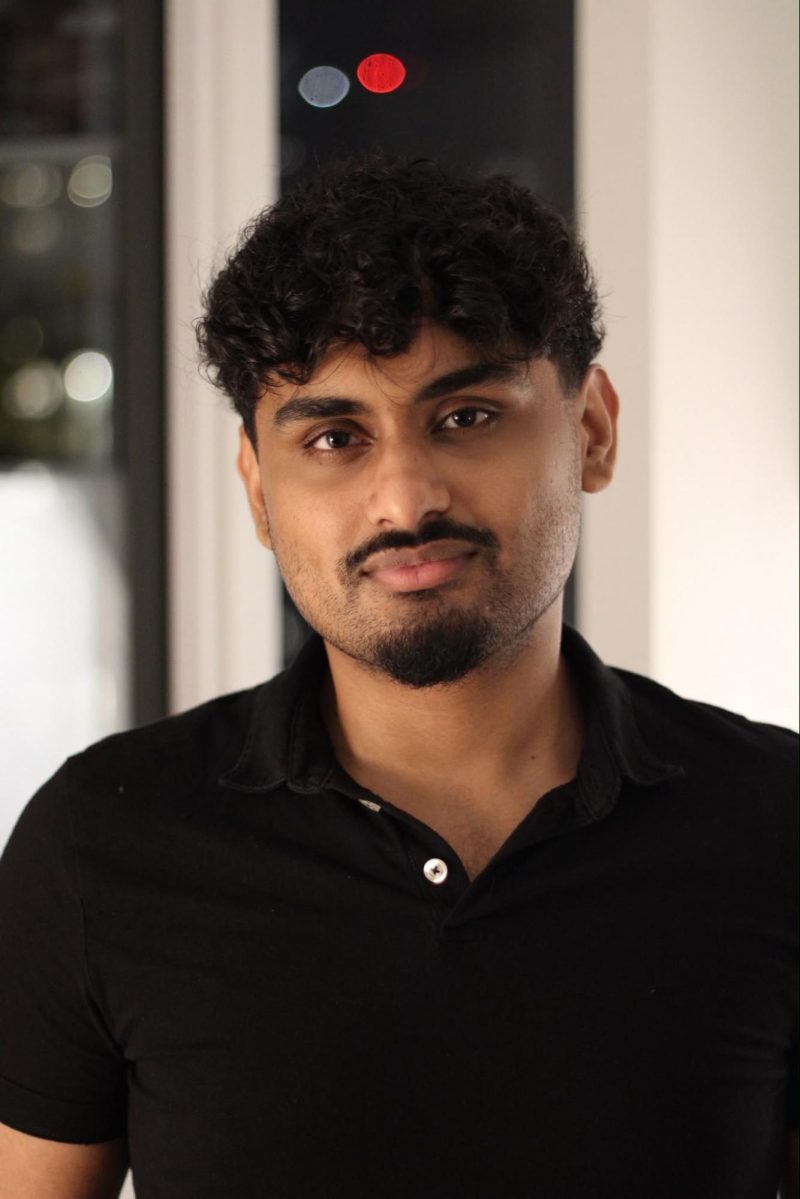
The engineer on the other end of that pager was Basil Yusuf. He owns the runtime topology, the storage model, the GPU scheduling, and the deployment pipeline under Mecka AI’s verification layer, which makes him, in practice, the person a stalled batch finds at whatever hour it stalls. He came to the job from Google. Before the shape of his systems makes sense, though, the assumption they overturn needs stating.
The Deal That Broke
The data-labeling industry grew up on a simple deal: machines do the fast work, humans check it. Scale AI turned that deal into a workforce of hundreds of thousands and a valuation to match, and nearly every data operation since has inherited the same shape. Human review sits on top as the layer you trust. Automation sits under it as the layer you audit.
Physical AI breaks the deal through plain arithmetic. The companies collecting first-person video of human work run at volumes where no human team could review everything. The question stops being how to check the machines’ work and becomes which machine checks it, and who watches the watchers. That second question is Yusuf’s job.
Three Watchers, One Infrastructure
The watchers at Mecka are three independent verification systems running on his infrastructure. One flags fake labeling tasks. A second checks whether a labeled action- a grasp, a pour, a fold- matches what the video actually shows. A third audits object labels against an open-vocabulary detector, a model that can name things it was never taught to. Each holds authority in its own domain. Human reviewers still exist, but as the exception path, called in when a machine’s confidence drops, rather than the gate every episode passes through.
The split of labor is worth stating plainly, because it mirrors how the work is really organized. Mecka’s machine-learning engineers researched the verification models. Saurab Dhir, a colleague who joined through an acquisition this year, built and trained the fraud-detection model. Yusuf’s layer is the one beneath: the distributed workflow orchestration, the GPU scheduling, and the cost-aware short-circuit logic that decides when a full model needs to run at all. A verifier that fires on every episode would bankrupt the pipeline it guards. The economics work only because the infrastructure knows when not to look.
How a Single Episode Gets Checked
A picture helps. Say an episode arrives labeled as a person opening a jar. The action verifier judges whether the pixels show a jar being opened rather than reached for or wiped. The object verifier checks that the thing in the hands is a jar at all. When both back the label with high confidence, the episode moves on, and no human ever sees it. When they disagree, or confidence sags, the short-circuit logic hands the case to a person. The goal is an audit that is always on and rarely costly.
A Belief Formed at Google
The instinct has a lineage. At Google, Yusuf built fault-tolerant infrastructure, including a zone-isolation test region that injected network faults on purpose to see what broke before customers could. Engineers formed by that work carry a specific belief, and Yusuf states it flatly: systems are defined by how they fail, and a pipeline nobody has watched fail is a pipeline nobody understands.
Scale is where the belief meets the floor. The June 11 failure was one of three hard limits Yusuf had to find and beat to push fraud scoring from single episodes up to batches of thousands, each one root-caused from a real terminated job rather than a load test.
What It Means for the Reviewers
What does it mean for the people? The labeling economy employs a great many human reviewers, and an architecture that makes them the exception path is also a claim about their future. The honest version is more tangled than displacement. Mecka’s business still leans on a large contributor and reviewer base; the machines check work humans are still paid to produce. But the scarce skill is shifting. In the human-review era, the prize was the careful worker. In the machine-verification era, it may be the worker whose judgment trains the verifier, the one consulted on the hard cases that teach the machine where doubt lives. That is a smaller workforce, differently skilled and differently paid, and the field has barely begun to say so out loud.
Who Grades the Graders
There is an uneasy recursion at the bottom of all this, and the engineers who build these systems tend to feel it first. A machine that grades machines is itself a machine someone must grade. Yusuf’s systems watch the labelers. Evaluation frameworks his colleagues built watch his systems. And above all of it sits the oldest quality check there is, a customer deciding whether the data was good enough to train a robot that works. The field spent a decade sure the human eye was the last line of defense. At the volumes physical AI demands, the last line is an architecture, and every data company will eventually have to answer whether it built that architecture on purpose or inherited it by accident.

Marcus Whitfield writes about developer tools, programming languages, and the software trends shaping how engineers build. Before joining DevX, he spent five years as a full-stack developer and two more running a small dev-tools newsletter that topped 10,000 subscribers.