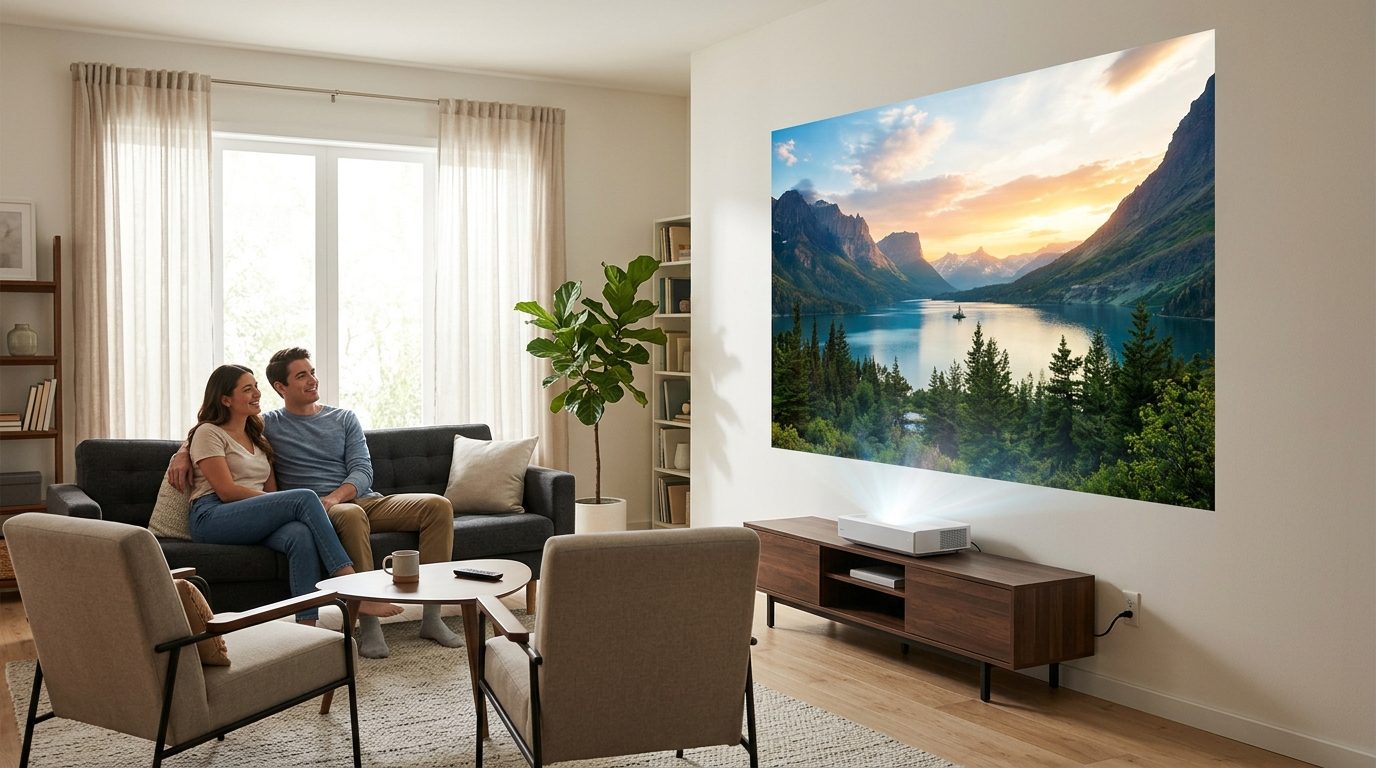
Ultra-short-throw projectors are offering households a simpler route to a large picture without ceiling mounts, long cables, or equipment placed behind viewers.
The devices sit on a cabinet or sideboard close to a wall. From that position, they can project an image far larger than most televisions. The setup may suit rooms where permanent installation is difficult or unwanted.
This practical design is the main reason for growing interest in the category. It reduces several common barriers linked to traditional home projectors while preserving the appeal of a cinema-sized display.
A Different Approach to Projection
Traditional projectors usually need space between the lens and the screen. That distance can require ceiling installation or a stand near the back of the room.
Such arrangements may also involve power and video cables running across walls or ceilings. Renters can face added restrictions because mounting hardware may require drilling.
Ultra-short-throw models change the room layout. Their optics create a large image from a position near the display surface.
“You can get a huge image from a cabinet or sideboard nestled right up against a wall.”
That placement keeps the main hardware at the front of the room. It also reduces the chance that someone will walk through the projected light and cast a shadow.
Installation Drives the Consumer Case
The format’s strongest selling point is convenience rather than projection alone. A large image becomes possible without redesigning the room around the equipment.
The main practical benefits include:
- No projector mounted above the seating area
- Fewer long cable runs across the room
- No hardware positioned behind the couch
- Easy access to connections and controls
These features can make the devices useful in apartments, shared homes, and multipurpose living rooms. Owners may also find front-mounted equipment easier to maintain than a ceiling unit.
The cabinet still requires careful positioning. Small changes in angle or height can affect image alignment because the projector sits so close to the wall.
A Large Image Still Requires Planning
A compact installation does not remove every home-cinema consideration. The wall or screen must provide enough clear space for the intended image size.
Furniture depth also matters. Although the projector sits near the wall, each model needs a specific distance to produce a given picture. Buyers should measure the cabinet and available wall area before purchase.
Room light can influence perceived image quality. A projector may face more difficulty than a television in a bright living room. Curtains, controlled lighting, or a suitable projection screen can help.
Viewers must also consider sound, available ports, and connected devices. Front placement can shorten cable routes to nearby media equipment, but each household will have different needs.
Projectors and Televisions Serve Different Priorities
Large televisions provide a familiar setup and can perform well during daytime viewing. However, screen size often affects cost, weight, delivery, and furniture requirements.
An ultra-short-throw projector offers another trade-off. It can create a very large picture while occupying relatively little visible space when switched off. Its performance depends more heavily on room conditions and accurate placement.
The category therefore fits consumers who place image size and installation flexibility above the simplicity of a standard television. It is less suited to buyers who expect strong results under uncontrolled daylight without added planning.
The central advantage remains clear: a large projected image no longer requires equipment across the room. Future adoption will depend on whether manufacturers can improve ease of setup, daytime performance, and value. For now, careful measurement and an honest review of room conditions remain the best first steps for prospective buyers.

Rashan is a seasoned technology journalist and visionary leader serving as the Editor-in-Chief of DevX.com, a leading online publication focused on software development, programming languages, and emerging technologies. With his deep expertise in the tech industry and her passion for empowering developers, Rashan has transformed DevX.com into a vibrant hub of knowledge and innovation. Reach out to Rashan at [email protected]