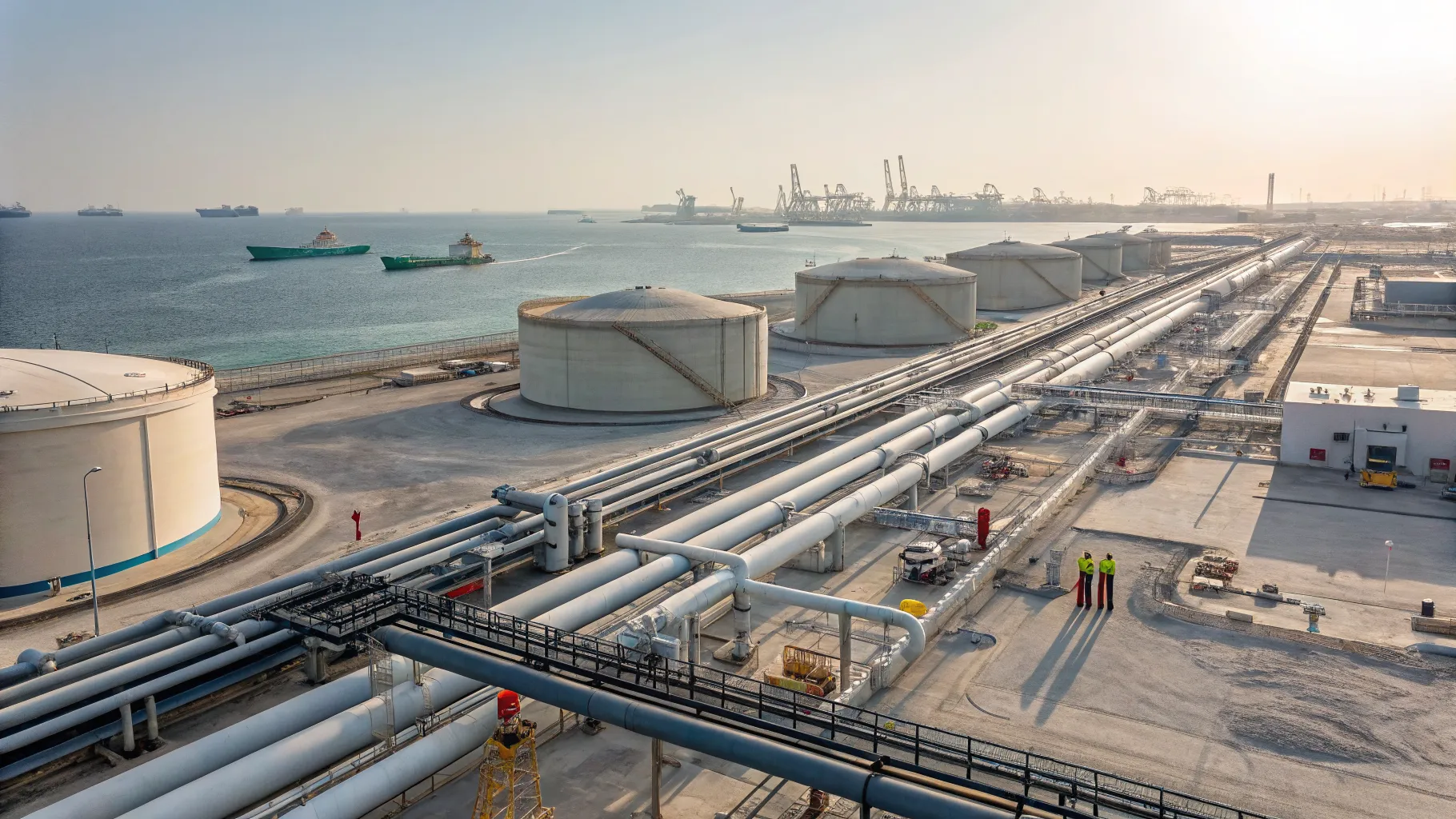
As extreme heat and rising demand strain utilities across the Gulf, water managers are warning that the region’s complex safety net depends on systems that never stop. The network spans desalination plants, pipelines, and storage tanks across coastal hubs. It is designed with redundancies, but outages can ripple fast if operations pause. The concern is urgent as summer peaks near and power grids face heavy loads.
The Gulf relies on energy-intensive desalination for much of its municipal supply. Plants run around the clock to meet demand and to maintain water quality. Utilities have added backup pumps, duplicate lines, and reserve tanks. Yet they agree that those layers work best only when power remains steady and crews can rotate maintenance on schedule.
A Safety Net Built on Redundancy
Engineers describe a system that anticipates failure and routes around it. Plants keep spare membranes or thermal units on standby. Main pipelines often have twin lines that can carry partial loads if one is down. Storage tanks provide a buffer for cities and industrial zones.
“The Gulf’s water system is built with layers of backup, but it relies on continuous operation to hold.”
That view reflects a common practice. Desalination equipment performs best under stable flows and pressures. Stopping and starting increases wear and can affect water quality. Operators prefer to shift loads across units rather than shut entire lines.
Power Dependence Is the Weak Link
The water sector’s reliance on electricity is absolute. A sudden grid fault can halt intake pumps, shut valves, and trigger plant trips. Restarting can take time, especially for thermal systems that must cool and heat in sequence.
Heat waves bring two risks at once. Demand for air conditioning rises, drawing more power from the grid. Warmer seawater can also reduce plant efficiency. Utilities are preparing for both by staging mobile generators and aligning maintenance with cooler months.
- Grid stability is critical for desalination uptime.
- Short outages can drain local storage faster than expected.
- Warmer seawater challenges plant performance and intake systems.
Storms, Fouling, and Other Physical Hazards
Coastal plants face hazards from sandstorms, algal blooms, and storm surge. These events can clog intakes and filters, cutting plant capacity even when power is stable. Operators track sea conditions and keep rapid-response teams on call. Some plants have added deeper or multiple intake points to reduce the risk of a single blockage.
Pipeline corridors present another concern. While many routes are duplicated, certain chokepoints remain. A break or contamination event at one junction can force rerouting over long distances, raising losses and delays.
Measures Underway to Close the Gaps
Utilities across the Gulf are expanding storage, adding interconnections, and testing new controls. Extra storage near end users helps absorb short disturbances without citywide notices. Intercity links allow operators to wheel water from plants that are still running to those experiencing faults.
There is growing interest in hybrid plants that pair thermal and reverse osmosis units. This gives operators flexibility under changing sea temperatures and grid conditions. Some facilities are piloting on-site solar with battery support to keep critical pumps alive during grid trips.
Demand management is also on the table. During peak hours, utilities can reduce nonessential industrial use, extend maintenance windows, or issue conservation notices. These steps buy time for crews to clear intake fouling or bring backup units online.
Debate Over How Much Is Enough
Some planners argue the current safety margin is adequate. They point to years of steady service, even during high demand. Others want more storage, more interlinks, and islandable power for key plants.
Consumer advocates push for clear public alerts and water quality updates during incidents. Business groups press for reliability to protect manufacturing and tourism. Environmental voices warn that overbuilding can raise emissions and costs if not paired with efficiency and reuse.
What to Watch Next
Analysts are tracking three signals. First, grid performance during peak heat, which will reveal if recent upgrades hold. Second, the speed of plant restarts after trips, a key test of training and design. Third, progress on wastewater reuse and leakage control, which cut the load on coastal plants.
Regional cooperation could help. Shared standards for emergency response and mutual aid can shorten outages. Transparent reporting on near-miss events would also guide smarter investments.
The message is clear. Redundancy helps, but continuity is the glue. Keeping power stable, intakes clear, and operators ready will decide whether the Gulf’s water supply stays steady through the hottest months and the next storm. The next few seasons will show if recent fixes are enough or if deeper changes are needed.
Related Articles

Senior Software Engineer with a passion for building practical, user-centric applications. He specializes in full-stack development with a strong focus on crafting elegant, performant interfaces and scalable backend solutions. With experience leading teams and delivering robust, end-to-end products, he thrives on solving complex problems through clean and efficient code.