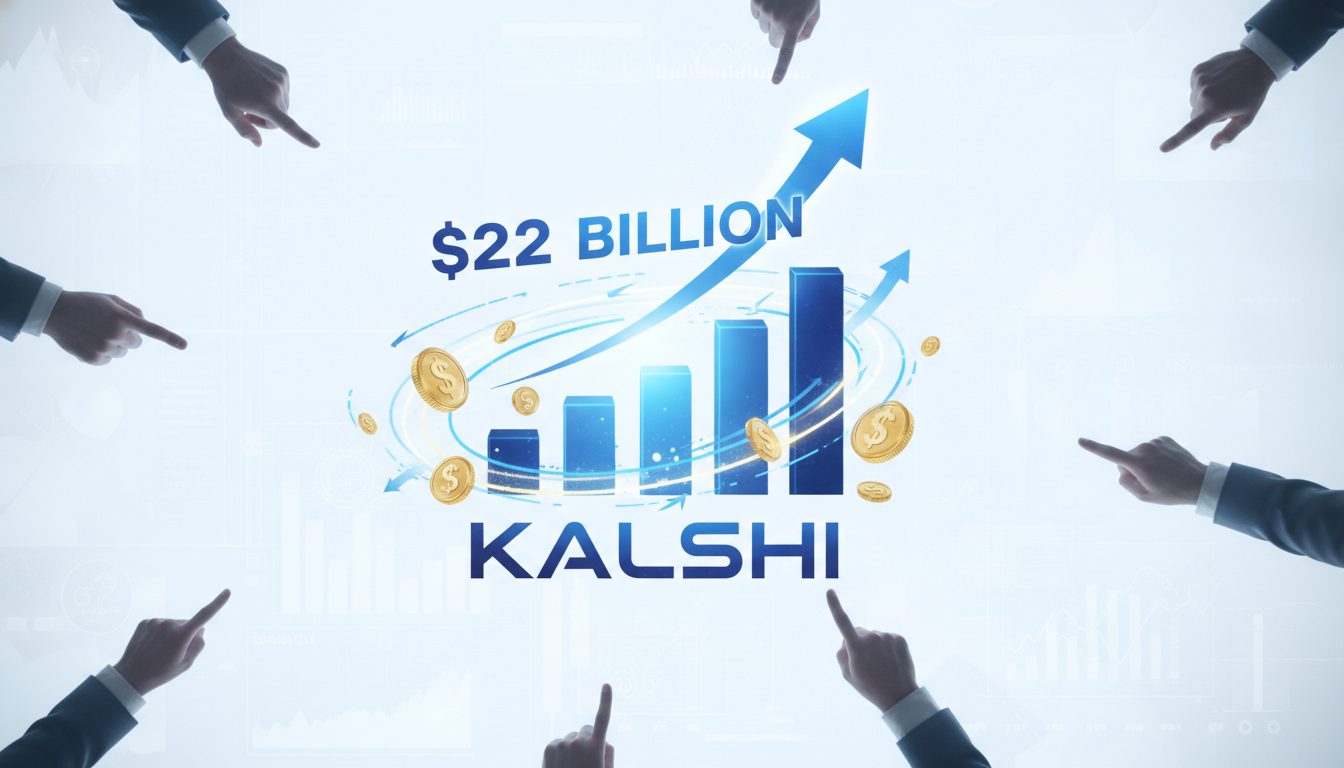
Kalshi is now valued at $22 billion after raising $1 billion in a Series F round, a move that signals a new phase for event-contracts trading. The jump in valuation comes as institutional activity on the platform has accelerated. The company said institutional volume rose 800% since November 2025, reflecting rapid interest from professional investors.
“Kalshi reached a $22 billion valuation after a $1 billion Series F, as institutional volume surged 800% since November 2025.”
Funding And Valuation
The latest round pushes Kalshi into the ranks of the most valuable private fintech firms. The size of the raise suggests deep investor confidence in the company’s market position and growth prospects. A Series F of this scale is uncommon, especially in a year when many late-stage deals have slowed.
Valuation jumps often reflect expectations for new products, geographic expansion, or stronger revenue visibility. While terms were not disclosed, the scale implies higher trading activity and a broader client base. It also gives Kalshi fresh capital to improve liquidity, strengthen risk controls, and grow its market-making network.
- Valuation: $22 billion
- New capital: $1 billion, Series F
- Institutional volume: up 800% since November 2025
Surge In Institutional Activity
The 800% rise in institutional volume points to a shift from retail-led trading to participation by funds, prop desks, and other professional players. That change can deepen liquidity and reduce spreads. It can also increase day-to-day volatility when events approach settlement.
Institutions are often drawn to event contracts for diversification and hedging. They may use markets tied to inflation releases, policy decisions, or seasonal factors to manage risk. The growth suggests these users are finding enough depth and product range to place larger positions.
Background On Event-Contracts Market
Kalshi operates a U.S. exchange focused on event contracts, sometimes called event futures. These contracts pay out based on whether a defined event occurs. The company launched after receiving federal approval to offer such markets, positioning itself as a regulated venue for trading real-world outcomes.
Event contracts have long attracted interest from traders seeking to express views on data releases, elections, weather, and other measurable outcomes. For years, the market remained niche. Regulated access, standardized contracts, and clearer risk rules have helped it gain wider adoption.
Regulatory And Market Implications
Growth at this scale raises fresh regulatory questions. Event markets must define where hedging ends and gaming begins. Clear contract design and position limits are central to addressing those concerns. Strong compliance systems will be essential as larger firms increase exposure.
For markets, the impact could be broad. More institutional flow can sharpen price discovery around key events. If spreads tighten, prices on these markets could become a reference point for risk managers and researchers tracking consensus expectations.
Skeptics warn that event markets can attract speculative surges near major headlines. They argue that retail traders may face disadvantages against faster, data-driven strategies. Supporters counter that regulated exchanges, with transparent rules and margining, can manage those risks and improve fairness.
What The Numbers Suggest
The combination of a $1 billion raise and an 800% volume increase suggests a flywheel. Higher volume often invites market makers. Better liquidity brings larger orders and more contract listings. The capital can fund technology upgrades and new product lines, further deepening participation.
Case studies from other asset classes show similar patterns. When institutions enter, markets typically see tighter spreads, larger top-of-book sizes, and more stable clearing. The challenge is maintaining market integrity during rapid growth.
What Comes Next
Investors will watch how Kalshi deploys the new funds. Priorities likely include expanding contract offerings, bolstering surveillance tools, and recruiting liquidity providers. Partnerships with data vendors and custodians could follow to support professional workflows.
Key signals to track include open interest across major contracts, average trade size, and the mix of retail and institutional flow. Another focus will be how the exchange handles high-impact events, including safeguards to manage crowding and sharp price moves.
Kalshi’s new valuation sets a high bar. If the company sustains growth while keeping markets orderly, it could cement event contracts as a mainstream tool for hedging and price discovery. The next few quarters will show whether the surge in institutional activity becomes a durable trend.

Senior Software Engineer with a passion for building practical, user-centric applications. He specializes in full-stack development with a strong focus on crafting elegant, performant interfaces and scalable backend solutions. With experience leading teams and delivering robust, end-to-end products, he thrives on solving complex problems through clean and efficient code.