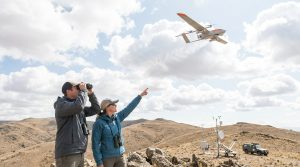
The Korea Aerospace Research Institute has released images showing a small gash on an unidentified surface, offering limited visual evidence of apparent damage. The brief disclosure did not identify the object, its location, the date of the images, or the cause of the mark.
The institute, South Korea’s main government aerospace research organization, shared the images as the primary evidence. Available information suggests the gash is limited in size. However, size alone does not show whether it presents a safety or performance risk.
Images Provide Few Answers
The clearest description of the damage focused on its modest scale.
“The Korea Aerospace Research Institute shared images that show the gash on the surface. It’s pretty small.”
No measurements were provided. The surface material and the depth of the gash also remain unknown. Those details would be needed to judge whether the mark is cosmetic or structurally important.
Images can document visible damage, but photographs have limits. Lighting, scale, camera angle, and image quality can affect how a mark appears. A small feature may also require closer inspection to determine whether cracking extends beneath the surface.
Assessment Depends on the Object
The importance of surface damage varies widely across aerospace systems. A shallow scratch on a protective outer layer may require monitoring rather than repair. Damage near a joint, seal, sensor, or heat-resistant area could demand greater attention.
Investigators would usually seek several basic facts before reaching a conclusion:
- The object and surface material involved
- The gash’s length, width, and depth
- Its location near any sensitive systems
- Whether the mark changed over time
- Evidence pointing to impact, stress, or handling damage
Without those findings, the released images should be treated as an initial observation rather than a full damage report. The description does not establish when the gash formed or whether it affected an active mission.
Institute Plays a Central Space Role
The Korea Aerospace Research Institute conducts research and testing tied to South Korea’s aviation and space programs. Its work has included launch vehicles, satellites, lunar research, and aerospace engineering.
That role gives its technical findings public importance. Even minor damage can attract attention because aerospace equipment operates under severe vibration, pressure, and temperature changes. Engineers often track small defects to see whether they grow under those conditions.
At the same time, a visible mark should not be assumed to signal a failure. Aerospace inspections regularly find limited wear or surface damage that falls within accepted safety limits. The proper response depends on measurements, material analysis, and the object’s operating history.
Further Disclosure Will Be Key
The images establish that a small gash is visible, but they do not settle its cause or importance. A fuller assessment would need to explain what was photographed, where the damage appeared, and how specialists evaluated it.
Future updates may show whether the institute plans more imaging, physical inspection, repair, or continued monitoring. Until then, the strongest conclusion is narrow: a small surface mark has been documented, while its technical and operational effects remain unconfirmed.

Senior Software Engineer with a passion for building practical, user-centric applications. He specializes in full-stack development with a strong focus on crafting elegant, performant interfaces and scalable backend solutions. With experience leading teams and delivering robust, end-to-end products, he thrives on solving complex problems through clean and efficient code.