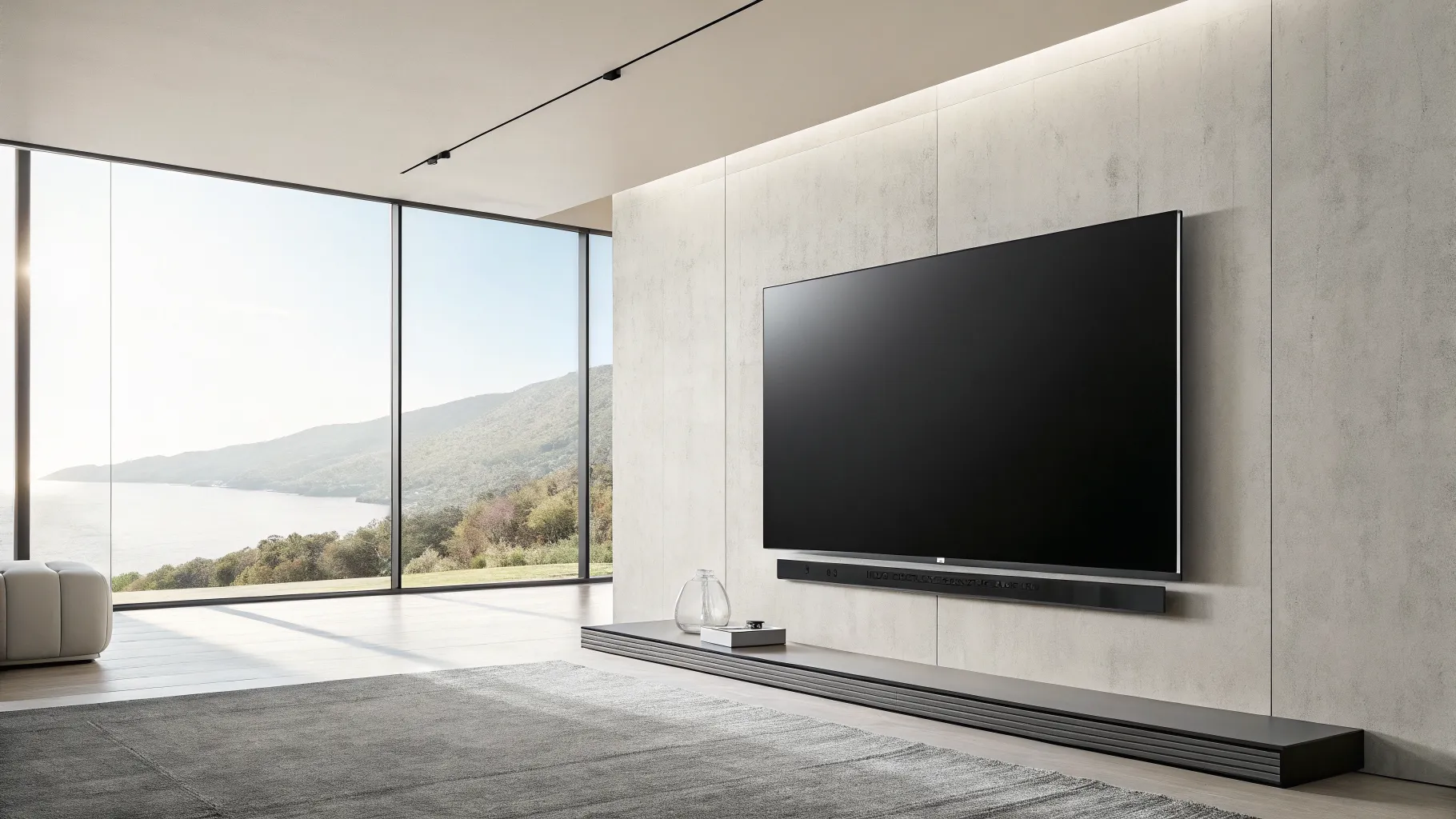
LG has spent years pushing the television closer to the wall, and in 2017 it took that idea to an extreme with an ultra-thin “wallpaper” OLED. The concept, born on the CES stage in Las Vegas, aimed to make the screen fade into the room while keeping the electronics out of sight. The effort speaks to a larger shift in home entertainment, where design, picture quality, and installation now hold equal weight.
Since 2017, LG’s been hard at work perfecting the wallpaper TV, a screen that practically blends into your space with all of its components crammed into an impossibly thin form factor.
From Showpiece to Living Room
LG’s first wallpaper model, shown publicly in early 2017, set a new bar for thin panels. The OLED sheet was only a few millimeters deep. It attached to the wall with magnets and connected to a separate soundbar unit that housed the inputs and power management. That design let the screen lie almost flat while moving weight and heat away from the panel.
Over time, LG refined the idea. Later “Gallery” models focused on flush mounting and cleaner cable runs. The goal stayed the same. Make a premium TV feel more like a framed picture than a device.
Design Goals and Engineering Trade-Offs
The wallpaper approach splits the system. The display stays light and thin. The heavy hardware moves to a bar or cabinet. This helps heat control and simplifies wall mounting for the panel itself. It also means one visible connection, often a slim ribbon cable, must carry power and data.
OLED technology made this path possible. Each pixel lights itself, so there is no thick backlight. That allows deep blacks, fine contrast, and a razor profile. The trade-off has been peak brightness and long-term wear, though newer OLED materials and heat spreaders have improved both.
A Market Shaped by Design
LG is not alone in chasing a screen that disappears. Samsung’s The Frame hides in plain sight with art displays and bezel options. Sony and others use OLED panels to offer flush installs and near-invisible mounting kits. Premium buyers want performance and clean lines.
Minimalist living rooms and open-plan spaces favor equipment that does not dominate the wall. Cable management, trim kits, and color-matched mounts now play a role in purchase decisions. For many shoppers, the test is simple. Does the screen look like part of the room when it is off?
Installation, Price, and Everyday Use
Wallpaper-style models demand careful installation. The panel is fragile. The mount surface must be flat. The control unit needs a nearby shelf or cabinet. Professional setup is common for these reasons.
Cost remains a barrier. Ultra-thin designs sit at the top of the price range. Buyers weigh that premium against simpler flush-mount TVs that deliver much of the same wall-hugging look.
- Pros: near-invisible profile, OLED picture quality, reduced wall bulk.
- Cons: higher price, careful mounting needs, reliance on a separate control unit.
What Comes Next
The push for cleaner walls will continue. LG has experimented with rollable OLEDs that vanish into a base. Transparent OLED prototypes hint at screens that blend with windows and glass partitions. MicroLED promises big, modular displays, though prices remain high.
Short term, expect thinner power-and-data tethers, brighter OLED panels, and mounts that hide hardware inside the wall. Software that shifts a dormant screen to art or ambient modes will also spread. These steps keep the TV present when needed and quiet when not.
LG’s wallpaper idea set a direction that rivals now follow. The company’s message is clear. A premium TV should deliver top picture quality and step out of the way. As homes rely on fewer visible devices, the winner may be the screen you barely notice until it lights up.

A seasoned technology executive with a proven record of developing and executing innovative strategies to scale high-growth SaaS platforms and enterprise solutions. As a hands-on CTO and systems architect, he combines technical excellence with visionary leadership to drive organizational success.