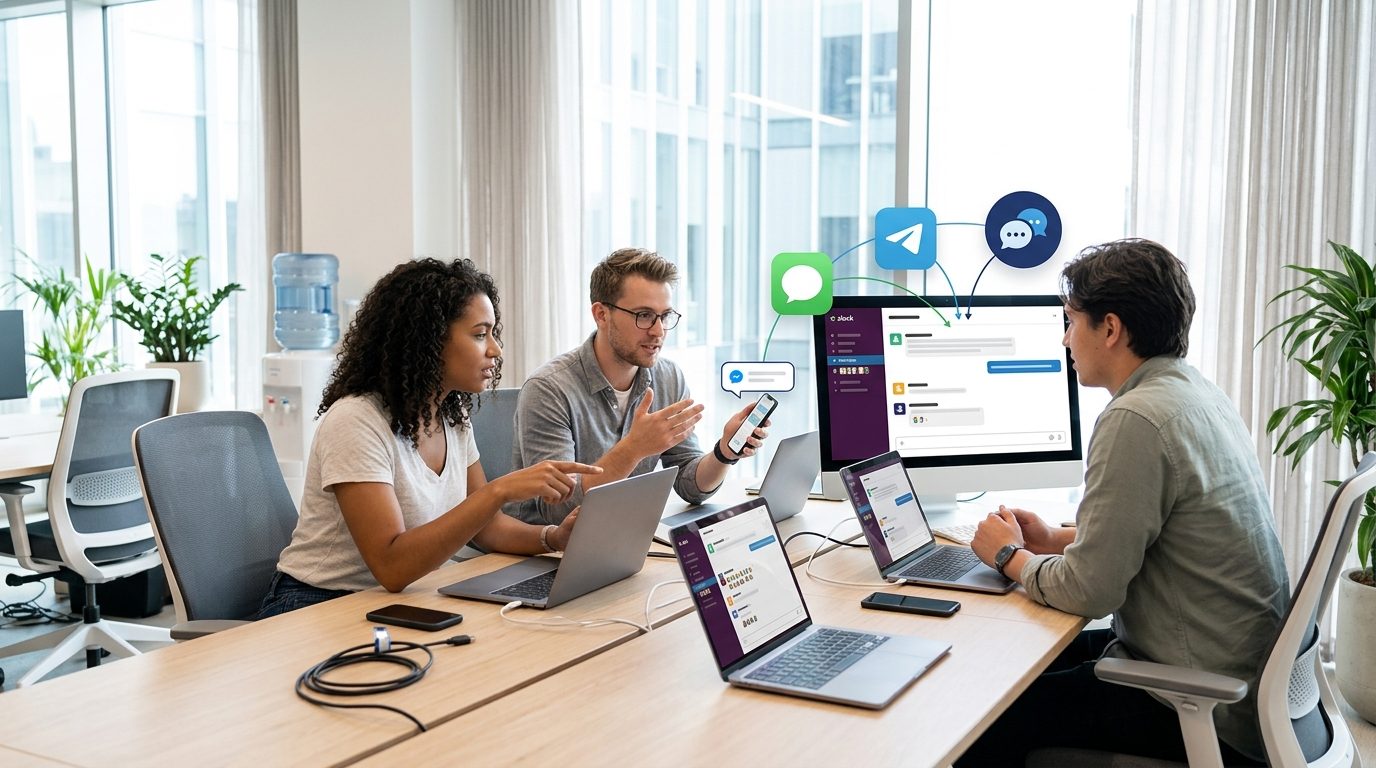
NanoClaw agents can now collaborate inside Slack while receiving messages through Telegram and WhatsApp, extending access across several workplace communication services.
The agents can work together in Slack channels and shared Slack Canvases. Human colleagues may also contact them outside Slack, allowing requests to move across the platforms that teams already use.
The approach targets a common workplace problem. Staff often divide discussions, documents, and tasks among several messaging apps. Cross-platform access could reduce the need to switch services before contacting an automated agent.
Collaboration Inside Slack
Slack channels provide shared spaces for team discussions. Slack Canvases add persistent pages where users can organize notes, links, plans, and other working material.
NanoClaw’s support for both formats suggests that its agents are designed for group work, rather than isolated conversations. Multiple agents can cooperate in channels and use shared Canvases as common workspaces.
“The NanoClaw agents can work together in channels and shared Slack Canvases.”
This model may help teams place agent activity closer to human discussions. It could also make automated work more visible to colleagues, depending on how access and records are managed.
Messages Move Across Platforms
The agents are not limited to Slack. Colleagues can message them through Telegram or WhatsApp, then use those services to send requests from outside the main workplace platform.
That flexibility may suit distributed teams, contractors, or employees who spend much of their day on mobile devices. It may also support urgent requests when Slack is unavailable or inconvenient.
- Agents can cooperate in Slack channels.
- They can use shared Slack Canvases.
- People can contact them through Telegram.
- WhatsApp messaging is also supported.
Cross-platform communication introduces practical questions, however. Companies will need clear rules for identity checks, permissions, data storage, and message retention. A request sent through a personal messaging account may require different controls from one made inside a managed Slack workspace.
Governance Will Shape Workplace Use
The central benefit is easier access. Employees can contact agents through familiar tools instead of relying on one application. Yet convenience alone will not determine whether businesses adopt the system widely.
Organizations will need to know what information agents can read, where conversations are recorded, and whether actions remain visible to administrators. They may also need procedures for correcting mistakes or stopping an agent’s work.
Shared spaces create another concern. An agent working across channels and Canvases could encounter material intended for different groups. Role-based permissions and clear audit records would help limit accidental exposure.
NanoClaw’s cross-platform design points to a broader shift in workplace automation. Agents are moving from standalone chat windows into the communication services used throughout the workday.
The next test will be operational. Businesses will watch whether NanoClaw can preserve context across apps without weakening security or oversight. If those controls prove effective, cross-platform agents could become useful colleagues for teams split among Slack, Telegram, and WhatsApp.

Rashan is a seasoned technology journalist and visionary leader serving as the Editor-in-Chief of DevX.com, a leading online publication focused on software development, programming languages, and emerging technologies. With his deep expertise in the tech industry and her passion for empowering developers, Rashan has transformed DevX.com into a vibrant hub of knowledge and innovation. Reach out to Rashan at [email protected]