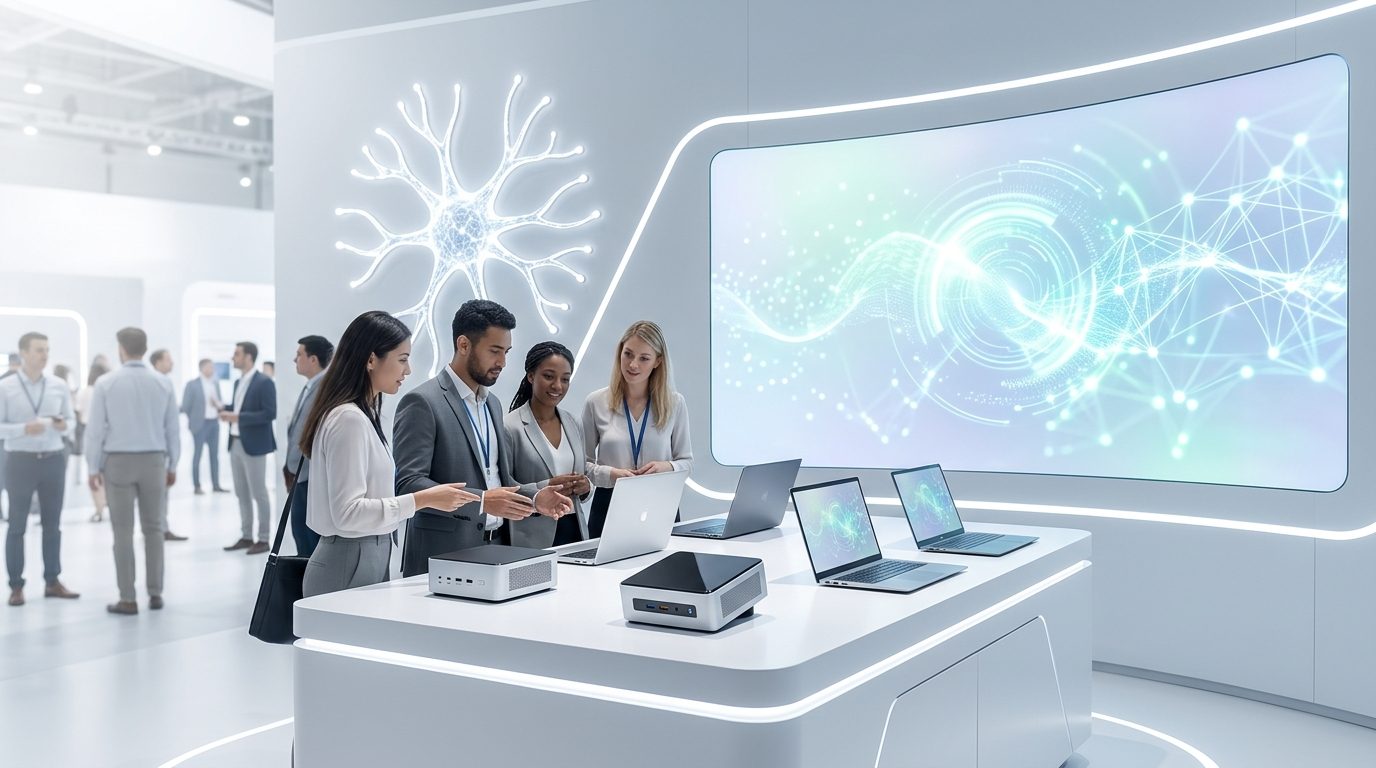
Nvidia and its hardware partners unveiled the first RTX Spark-powered laptops and mini PCs at IFA 2026, bringing local AI processing to smaller personal computers.
The systems are designed to run AI models directly on a user’s device. That approach can reduce reliance on remote data centers for some tasks. It may also give users more control over data, response times, and software costs.
The showcase marks Nvidia’s latest effort to place AI computing into everyday hardware. However, pricing, release dates, technical specifications, and participating manufacturers were not detailed.
Local AI Moves Into Smaller Devices
Many popular AI services process requests in cloud data centers. A user sends information over the internet, and remote computers generate the response.
RTX Spark systems shift at least part of that work onto laptops and compact desktop PCs. This model, known as local AI, can support tasks without sending every request to an outside service.
Potential uses include summarizing documents, generating images, assisting with software development, and searching personal files. The actual performance will depend on each computer’s memory, processing capacity, cooling system, and software support.
Local processing may offer several practical benefits:
- Lower delays for supported AI tasks
- Offline access to compatible models
- Greater control over sensitive files
- Less dependence on cloud subscriptions
Those advantages come with trade-offs. Advanced models often require large amounts of memory and electrical power. Running them on compact hardware can also create heat and shorten battery life.
Nvidia Expands Its AI Hardware Strategy
Nvidia built much of its recent growth around graphics processors used to train and operate AI systems. Large technology companies typically install those chips in data centers.
The RTX Spark debut points to a parallel strategy focused on personal computing. Nvidia and its partners appear to be adapting AI hardware for mobile and space-saving systems, rather than limiting it to servers or large workstations.
Laptops would make local models portable. Mini PCs could serve users who need a fixed desktop system without a full-sized computer tower. Both formats may appeal to developers, researchers, creators, and businesses testing private AI tools.
Hardware alone will not determine adoption. Buyers will need software that can install, manage, and update models without complex setup. Computer makers must also balance AI performance against price, noise, energy use, and portability.
Privacy and Cost Questions Remain
Keeping information on a device may help organizations limit exposure of confidential material. That could matter in health care, finance, legal work, and corporate research.
Local operation does not guarantee security. Devices can still be lost, compromised, or configured incorrectly. AI models may also produce inaccurate output regardless of where they run.
Cost will be another key issue. More capable processors and larger memory supplies often increase retail prices. Consumers will have to compare that expense with the recurring cost and convenience of cloud-based AI services.
What Buyers Should Watch
The IFA demonstration establishes RTX Spark as a new option for on-device AI, but the commercial details will shape its impact. Release schedules, battery tests, model compatibility, and independent performance reviews will show whether the systems can handle sustained workloads.
Nvidia’s partners will also need to explain how RTX Spark differs from existing AI-focused PCs. Clear benchmarks will be needed to compare speed, power consumption, privacy controls, and total cost.
For now, the first laptops and mini PCs signal that local AI is moving into more familiar computer designs. Their success will depend on whether they provide useful performance without unacceptable costs or technical limits. The next announcements from Nvidia and its partners should reveal how soon RTX Spark reaches buyers and which applications can make the strongest case for running AI at home or at work.

A seasoned technology executive with a proven record of developing and executing innovative strategies to scale high-growth SaaS platforms and enterprise solutions. As a hands-on CTO and systems architect, he combines technical excellence with visionary leadership to drive organizational success.