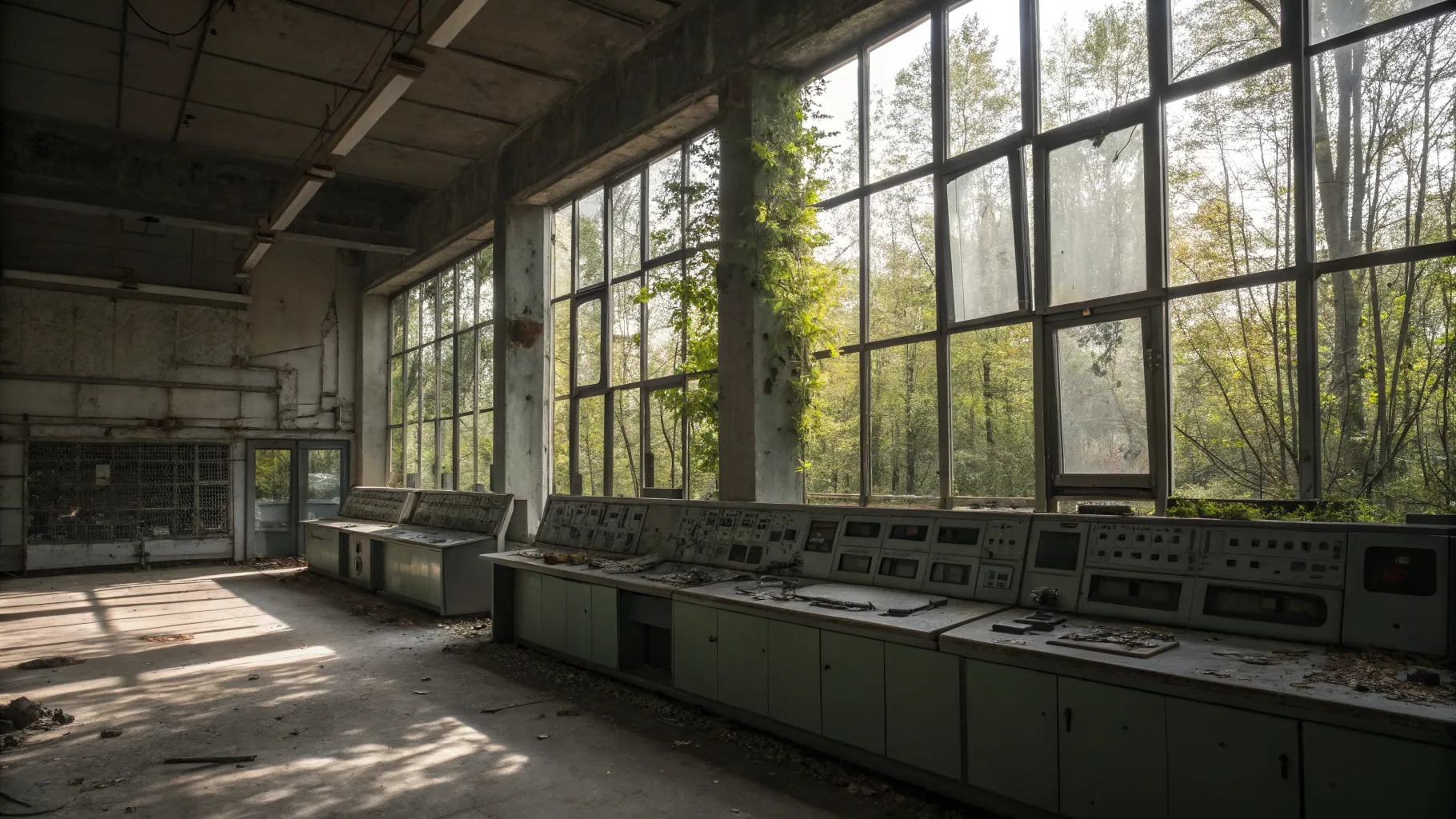
A new photography project is bringing rare views of deserted scientific facilities across the former Soviet Union to light, as photographer Eric Lusito releases a book built on years of travel and research. The work surveys sites that once powered major state programs and now stand silent, raising fresh questions about memory, secrecy, and preservation across a vast region.
Lusito’s effort spans multiple countries that emerged after the collapse of the USSR. He set out to record places where research once guided atomic, aerospace, and industrial ambitions. Many locations have been sealed for decades, while others were left to the elements after funding and missions faded in the 1990s.
“Eric Lusito crossed the former Soviet Union to explore vast scientific sites, some of which have been deserted for years, for his new book.”
A Journey Across Vanishing Institutions
The book traces a path through shuttered halls, control rooms, and test ranges—spaces shaped by state planning and military needs. Lusito’s images aim to show what remains when a complex system winds down: peeled paint on blast doors, empty laboratories, and archives that scatter when maintenance stops.
Sites from the Soviet era are spread across thousands of miles. Borders, language barriers, and local rules can make access difficult. Even so, Lusito sought to build a consistent narrative about a science network that once linked schools, factories, and defense programs.
From Secrecy to Exposure
For decades, many facilities operated in closed cities or under strict classification. Records were controlled, and maps were vague. After 1991, funding cuts, privatization, and shifting national priorities left some institutes without clear futures. Others adapted and survived. The book focuses on those that did not.
Photographs can reveal more than blueprints or reports. They show the scale of equipment, the layout of bunkers, and the everyday tools of work. They also reveal what neglect looks like over time. Rust and dust turn into a timeline of decline.
Preservation Versus Decay
Local officials and historians often face hard choices. Restoring large industrial and scientific sites is expensive. Many are far from major cities. Some still contain hazardous materials. Communities must balance safety, cost, and the value of keeping a difficult past visible.
Advocates for preservation argue that these places hold lessons about state planning, risk, and ambition. Critics point to limited budgets and more urgent public needs. The debate plays out town by town, often without national funding or clear legal status for protection.
- Restoration can safeguard rare equipment and records.
- Partial reuse—museums or education centers—can offset costs.
- Demolition may remove hazards but erase evidence of history.
Reading the Ruins
Lusito’s images arrive amid renewed interest in Cold War heritage and the long tail of deindustrialization. The work aligns with a broader effort to document places where science and the state met at immense scale. It also invites questions about whose stories get told when archives remain closed and staff have dispersed.
Photographs of empty corridors do not speak on their own. Context matters: which program operated here, who worked the night shift, how results moved from a lab bench to a factory line. The book’s value will rest on how it frames these questions and connects them to lived experience across the region.
What Comes Next
Experts say the future of these sites will depend on local archives, modest grants, and the will of communities to claim or refuse this past. Some locations may become small museums or study centers. Others will continue to decay, offering only brief windows to researchers and photographers who arrive before roofs fail or fences go up.
Lusito’s project adds evidence at a moment when much of this infrastructure is at risk of vanishing. By placing images from across several countries in one volume, the book offers a comparative view that single-site reports often miss.
The release highlights a wider conversation: how to record scientific work that once served a state that no longer exists, and how to weigh safety, cost, and history in the process. Readers should watch for local preservation efforts, the opening of related archives, and new research that ties visual records to firsthand accounts. The scenes may be still, but the questions they raise remain active and pressing.

Deanna Ritchie is a managing editor at DevX. She has a degree in English Literature. She has written 2000+ articles on getting out of debt and mastering your finances. She has edited over 60,000 articles in her life. She has a passion for helping writers inspire others through their words. Deanna has also been an editor at Entrepreneur Magazine and ReadWrite.