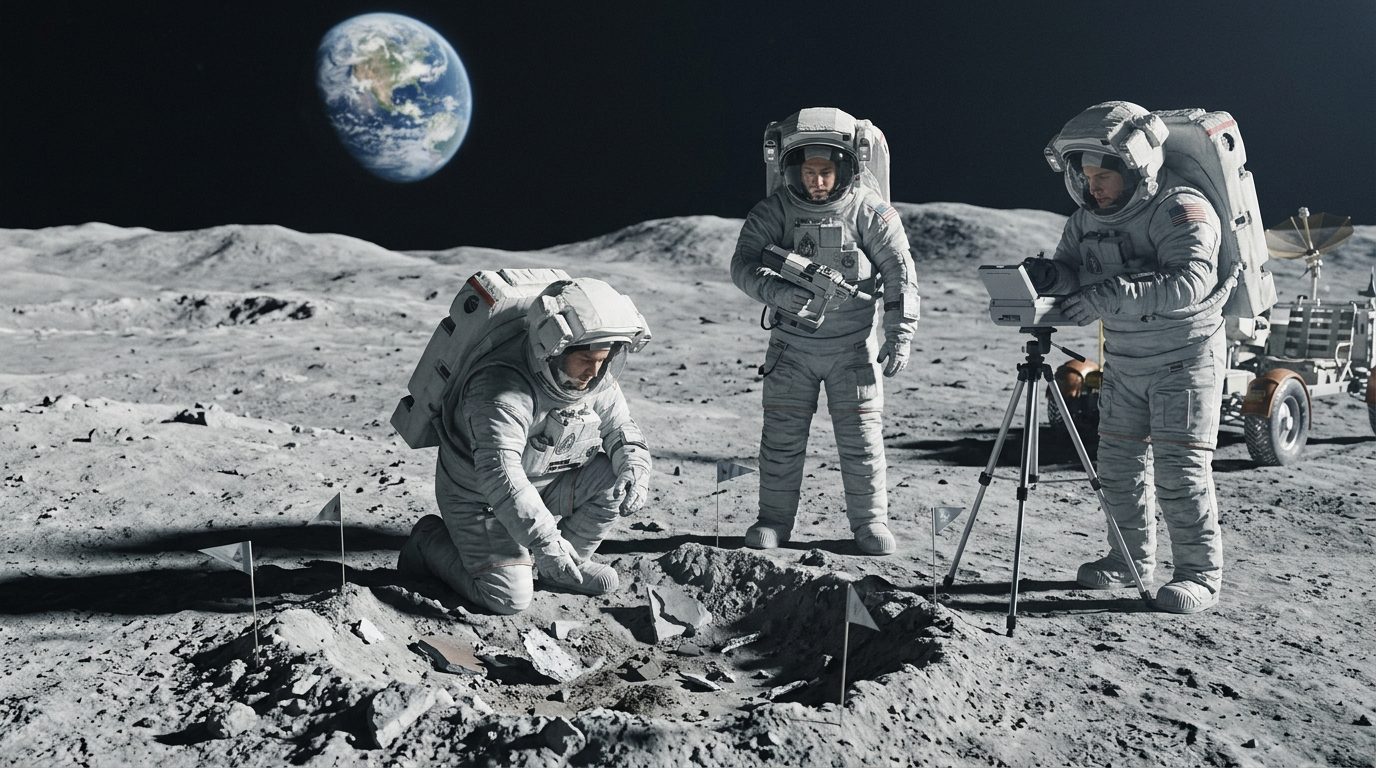
Scientists have concluded that a rocket linked to SpaceX struck the moon, matching an earlier prediction about its path. The reported impact occurred on the lunar surface, though the timing, location, and supporting observations were not specified.
The finding points to a rare accidental collision involving human-made space debris. It also raises questions about how governments and companies identify, track, and manage objects sent far from Earth.
Scientists Express Confidence in Impact
The central claim is direct and leaves little doubt about the scientists’ stated conclusion.
“Scientists say they’re certain that a SpaceX rocket has slammed into the moon as predicted.”
No researchers were identified, and no images, measurements, or crater data were provided. The basis for connecting the rocket to SpaceX also was not explained.
That missing information matters because identifying old rocket stages can be difficult. Tracking systems follow many objects near Earth, but coverage is less consistent in deep space and near the moon.
Researchers often reconstruct an object’s path from limited telescope observations. Small gaps in those records can create uncertainty about where a rocket came from and where it later traveled.
A Broader Space Debris Problem
Most public concern about space debris centers on Earth’s orbit. Dead satellites and discarded rocket stages can threaten working spacecraft, scientific missions, and crews aboard orbital stations.
Lunar debris presents a different issue. The moon has no dense atmosphere to burn up incoming hardware. An abandoned rocket stage can therefore reach the surface at high speed and form a crater.
Such an impact would not pose the same immediate risk as a collision near an occupied spacecraft. However, it can still provide researchers with useful information about the lunar surface.
Scientists may compare before-and-after images to locate a new crater. Its size and shape can help them study how the surface responds when struck by an object of estimated mass and speed.
Ownership Requires Careful Verification
The SpaceX attribution deserves separate scrutiny from the conclusion that a rocket hit the moon. A predicted collision can prove accurate even if the object’s original owner was identified incorrectly.
Investigators would normally seek several forms of evidence:
- Archived launch records and mission paths
- Telescope observations collected over time
- Orbital calculations showing the object’s route
- Lunar images revealing a fresh impact site
SpaceX launches spacecraft for commercial customers and government agencies. Once a rocket stage completes its mission, responsibility for tracking it may involve several organizations rather than one company alone.
The report did not include a response from SpaceX. It also did not state whether an independent space agency confirmed the impact or the rocket’s identity.
Tracking Rules May Face New Pressure
More missions are traveling to the moon for science, exploration, and commercial projects. That growth could increase calls for clearer records covering equipment left in distant orbits.
Shared tracking data could help researchers distinguish active missions from abandoned hardware. It could also reduce disputes over ownership when an object is discovered years after launch.
For now, the scientists’ certainty supports the prediction that a rocket reached the lunar surface. Yet the lack of named sources and published evidence limits independent review of the SpaceX attribution.
The next key step will be confirmation through orbital records or images of a new crater. Those findings could settle both where the rocket landed and who launched it.

A seasoned technology executive with a proven record of developing and executing innovative strategies to scale high-growth SaaS platforms and enterprise solutions. As a hands-on CTO and systems architect, he combines technical excellence with visionary leadership to drive organizational success.