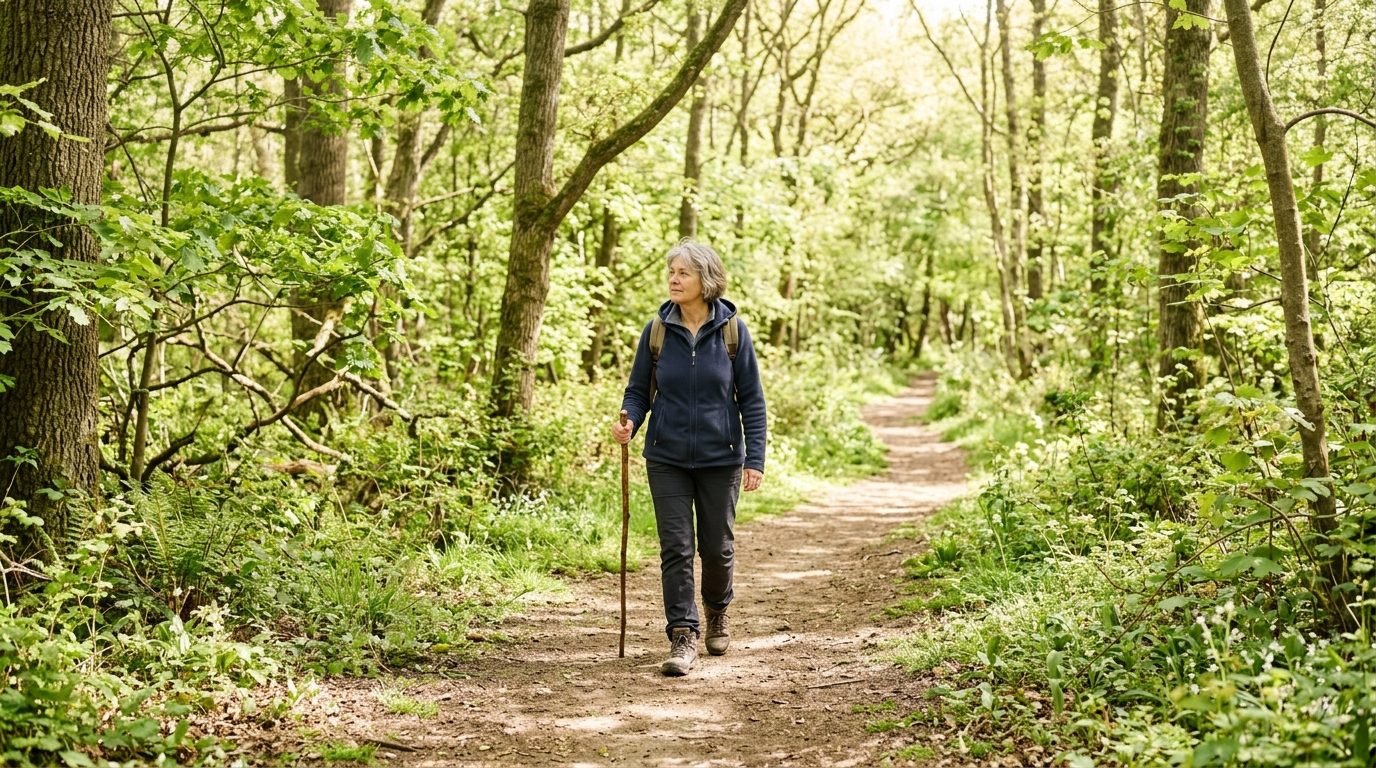
After living independently for the first time in 35 years, one person found direction through daily walks and quiet encounters with nature. The experience turned an empty home into the starting point for personal discovery.
The account offers a brief but timely look at adjustment after a major life change. It also shows how a simple routine can bring structure when familiar patterns disappear.
A Major Change After 35 Years
Living alone after more than three decades marks a sharp change in daily life. Shared habits, household sounds, and regular conversation may vanish at once.
The speaker did not explain what caused the transition. That missing context matters because solitude can follow separation, bereavement, relocation, or a personal choice. Each situation carries different pressures.
Still, the account centers less on the cause and more on the response. Walking became a daily practice during an unfamiliar period.
“I was living on my own for the first time in 35 years, walking every day. Nature reminded me how much there still is to be found in emptiness.”
The statement presents emptiness as more than absence. It becomes open space for attention, reflection, and renewed awareness.
Walking Creates Structure
Daily walking can divide long, unplanned hours into manageable parts. It gives a person a reason to leave home and observe changes outside.
In this case, the repetition appears important. The speaker was not describing a single dramatic trip. The discovery came through an ordinary action performed every day.
The routine may have offered several practical forms of support:
- A regular purpose outside the home
- Time for quiet thought without household distractions
- Contact with weather, plants, animals, and changing light
- A sense of movement during a period of personal change
These benefits do not erase grief, fear, or loneliness. Nor does the statement suggest that walking can replace social contact or professional care. Instead, it describes one accessible way of meeting silence without immediately trying to fill it.
Finding Meaning in Empty Space
The speaker’s reference to “emptiness” carries two meanings. It may describe living alone, but it may also refer to quiet places encountered outdoors.
Nature can shift attention from what has ended to what is still present. Small details, such as seasonal growth or changing skies, can become easier to notice when life slows down.
Yet solitude is not experienced equally. For some people, living alone brings freedom and control. For others, it increases isolation. Financial security, health, mobility, and access to safe outdoor areas can shape the outcome.
The account therefore should not be treated as a universal remedy. Its value lies in showing how one person formed a steady habit and found meaning within a difficult adjustment.
The lasting insight is practical: an empty period need not remain blank. Daily movement, close observation, and time outdoors may help turn disruption into discovery. What follows will depend on whether that private routine also supports connection, stability, and a workable new life.

Senior Software Engineer with a passion for building practical, user-centric applications. He specializes in full-stack development with a strong focus on crafting elegant, performant interfaces and scalable backend solutions. With experience leading teams and delivering robust, end-to-end products, he thrives on solving complex problems through clean and efficient code.