Will Lawrence, a cofounder of the Sunrise Movement, is recasting his climate credentials into a campaign message built around a call to pause new data centers in a key swing district.
His push comes as local officials across the United States weigh economic gains against rising power demand and land use tied to the rapid growth of artificial intelligence and cloud computing.
The timing signals a bet that concerns over grid strain, utility bills, and water use now resonate with voters beyond core climate circles.
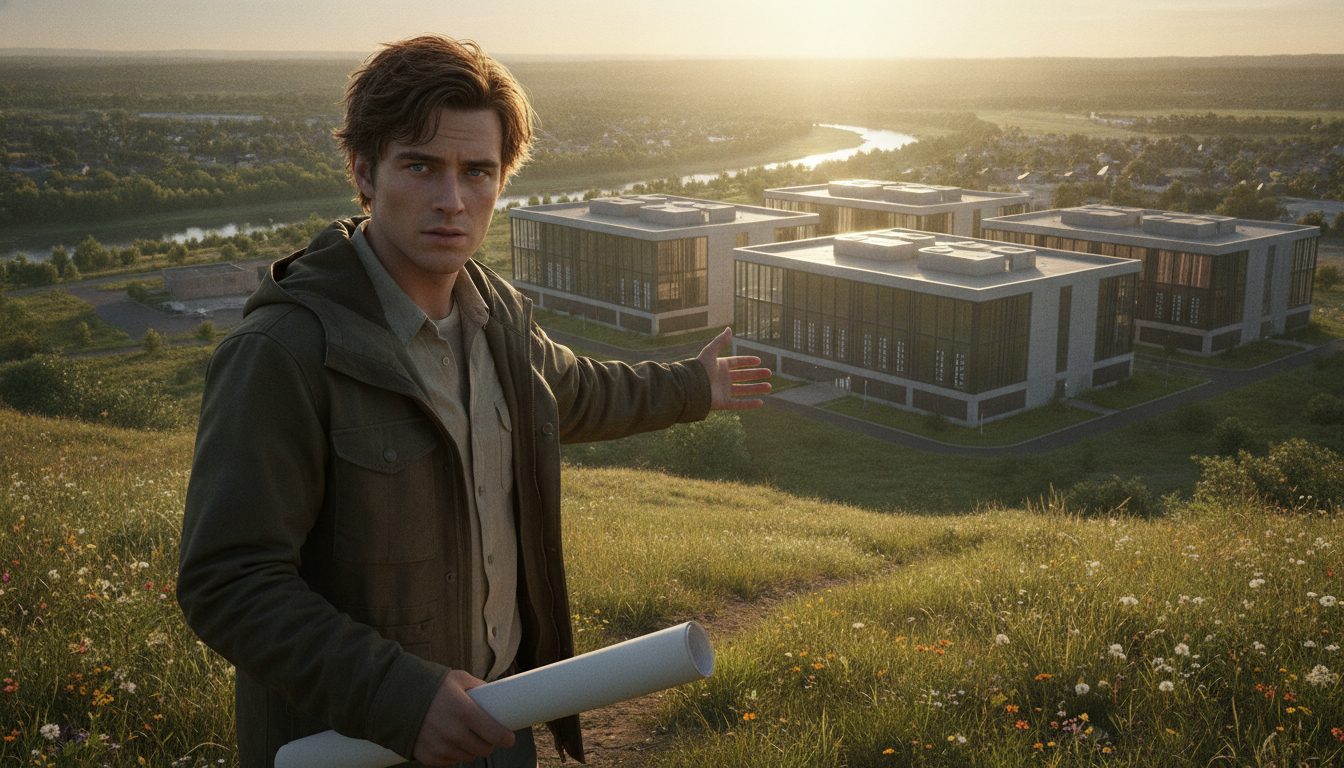
Climate activist Will Lawrence cofounded the Sunrise Movement. Now, he has shifted his focus in his attempt to compete for a swing-district seat by calling for a data center moratorium.
From Youth Climate Organizer to Candidate
Lawrence helped build the Sunrise Movement, which gained attention for organizing young people to press for aggressive climate policy.
The movement’s tactics, including protests and electoral mobilization, pushed climate into mainstream political debates in recent years.
His pivot to electoral politics places him in a growing group of climate advocates seeking to shape policy from within government.
By centering a data center moratorium, he is testing a message that links local quality-of-life issues to broader energy and technology trends.
Why Data Centers Are Drawing Scrutiny
Data centers have multiplied as companies race to expand AI training and cloud services.
Their growth has concentrated in regions with cheap power, tax breaks, and fiber networks.
Industry groups say the buildout supports high-wage jobs and anchors clean energy deals.
Local officials, however, face hard choices around siting, noise, traffic, and public subsidies.
- Electricity demand is rising in several states with large data center clusters.
- Communities report concerns about water for cooling and diesel backup generators.
- Permitting timelines and grid upgrades can add costs for ratepayers.
Analysts at international and U.S. energy agencies have warned that data center power needs could grow quickly this decade, with AI workloads adding new peaks.
Some utilities have revised load forecasts upward and accelerated plans for new generation, storage, and transmission.
The Case for a Moratorium
Lawrence is not alone in calling for a timeout.
Several local governments have adopted temporary pauses to study impacts or to write stricter rules on siting and energy use.
Supporters say a short halt gives planners room to set standards on energy efficiency, onsite batteries, and sources of power.
They also point to the need for clearer rules on water, storm runoff, and noise.
In many districts, residents want utilities to prove new facilities will not raise bills or slow reliability improvements.
Lawrence’s argument ties these local worries to a broader climate frame, asking whether today’s buildout is aligned with clean power goals.
Industry and Labor Push Back
Data center developers warn that moratoriums risk pushing investment to other regions or countries.
They highlight tax revenue for schools and services, construction careers, and permanent technical jobs.
Some labor groups support projects that come with project-labor agreements and training pipelines.
Companies also note progress on energy efficiency, such as advanced cooling and heat reuse.
They argue that long-term contracts with wind and solar can speed new clean generation.
Critics of a blanket pause prefer project-by-project reviews tied to firm energy and water limits.
Policy Options on the Table
Policy experts outline several tools that can meet growth while easing local impacts.
- Require new facilities to match power use with clean energy hourly, not yearly.
- Set caps on water withdrawals and favor air or hybrid cooling in stressed basins.
- Tie permits to investments in grid upgrades and energy storage.
- Create industrial zones with shared substations to reduce sprawl.
- Adopt noise and diesel limits with strict monitoring and penalties.
Some states are also looking at tiered electricity rates for large loads that reflect peak stress on the grid.
These rules seek to balance economic development with local protections.
Election-Year Calculus in a Swing District
Lawrence’s stance is a political test.
In a competitive district, voters often weigh pocketbook issues, job growth, and public services.
Framing a moratorium as a pause for standards rather than a ban could appeal to moderates who want growth with guardrails.
Opponents are likely to cast it as anti-business or risky for regional competitiveness.
The outcome may hinge on whether he can show that stronger rules deliver both clean power progress and stable household bills.
It could also depend on whether local utilities present clear plans for meeting rising demand without delays or cost spikes.
Lawrence’s profile as a climate organizer may energize young voters while drawing scrutiny from industry-backed groups.
It sets up a clear policy debate that goes beyond party lines.
As pressure on grids mounts, more communities will seek a template that protects ratepayers, supports jobs, and aligns with clean energy goals.
Lawrence has put that question at the center of his bid, and the district’s verdict may shape how other candidates approach the next wave of AI-driven growth.

A seasoned technology executive with a proven record of developing and executing innovative strategies to scale high-growth SaaS platforms and enterprise solutions. As a hands-on CTO and systems architect, he combines technical excellence with visionary leadership to drive organizational success.