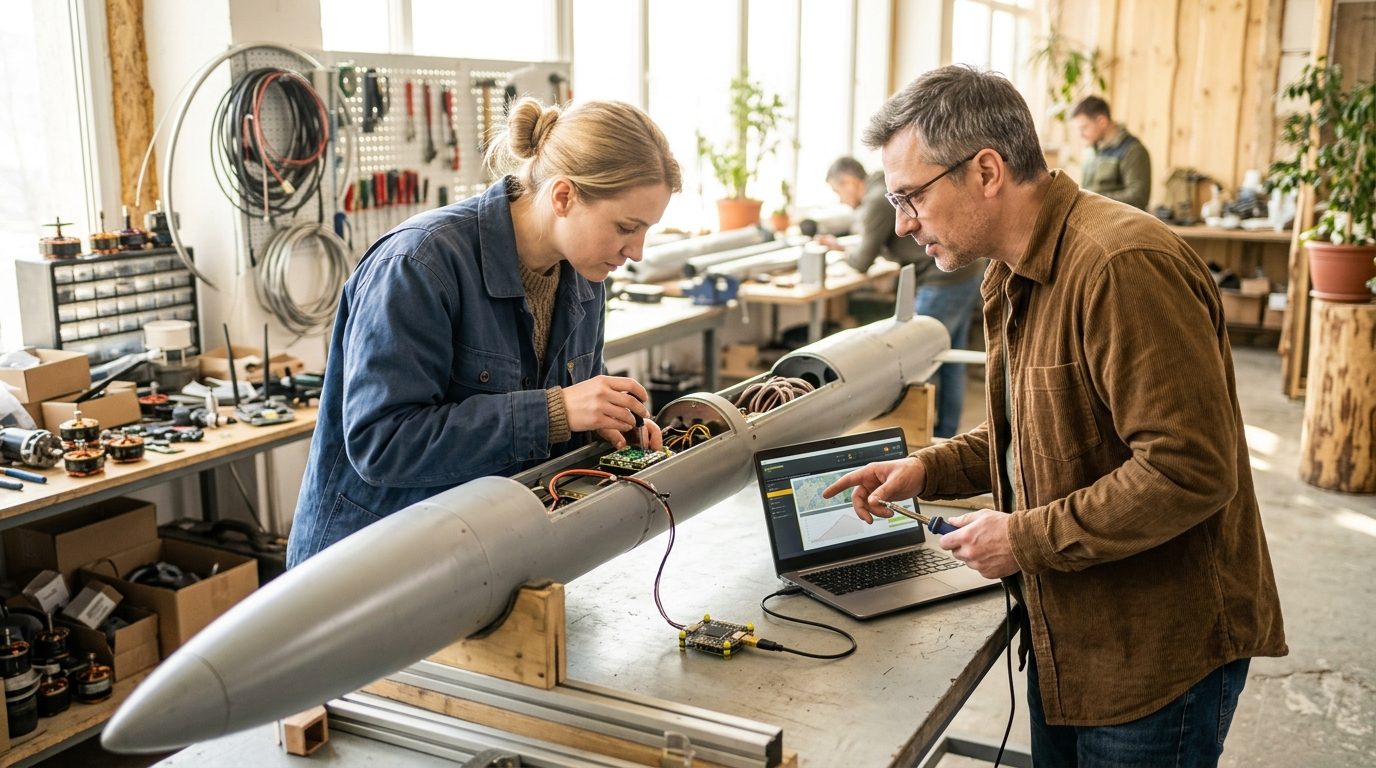
Ukraine’s latest cruise missile reportedly uses an open-source flight-control system found in consumer drones, linking low-cost civilian technology with advanced weapons development.
The installation shows how widely available software can reduce barriers to building military hardware. It may also shorten development cycles for countries and armed groups with limited access to traditional defense suppliers.
Few technical details were disclosed. The flight-control system and missile were not identified, and no performance data was provided. Still, the reported use points to a broader shift in how weapons can be designed and produced.
Consumer Technology Enters Missile Design
A flight-control system helps an aircraft maintain stability, process navigation data and respond to commands. Consumer drones depend on such systems to manage movement and keep aircraft on course.
Open-source software makes its underlying code available for review and modification. Developers can adapt it for different aircraft, sensors and control systems without creating every feature from the start.
“An open-source flight-control system found in consumer drones has been installed in Ukraine’s latest cruise missile.”
That reported transfer from commercial drones to a cruise missile is significant. It suggests that some functions once tied to specialized military software can now be supported by civilian products.
However, flight-control software is only one part of a missile. Propulsion, navigation, communications, manufacturing quality and warhead integration still require substantial engineering skill and testing.
Lower Costs Create Wider Security Risks
The central concern is accessibility. Cheap hardware and public software can allow smaller defense teams to test ideas faster and replace expensive systems with commercially available alternatives.
The same access can support national defense under wartime pressure. Ukraine has had strong incentives to develop weapons quickly, especially when established supply chains are strained or foreign support is uncertain.
Yet open access creates risks outside state-run programs. Technology designed for hobbyists, researchers and commercial operators can be modified for military purposes. That makes export controls harder to apply when key tools are already available online.
- Public code can reduce early research costs.
- Consumer parts may speed prototypes and repairs.
- Shared software can spread technical knowledge across borders.
- Civilian developers may have little control over military reuse.
Open Source Raises Accountability Questions
Open-source projects often rely on global communities. Contributors may improve reliability or fix faults without knowing how every user will deploy the software.
This creates a difficult policy question. Restrictions intended to stop weapons development could also harm peaceful drone research, education and commercial work. Meanwhile, code can be copied, stored and redistributed more easily than physical equipment.
Defense planners may respond by reviewing the security of commercial drone systems and tracking how civilian technology moves into military production. Software communities could also face pressure to change licensing rules, although licenses alone may not prevent misuse.
A Sign of Faster Weapons Development
The report offers no basis for judging the missile’s accuracy, range or battlefield impact. An open-source controller does not prove that a weapon is effective, reliable or easy to manufacture at scale.
Even so, the installation reflects a clear trend: military development no longer depends only on closed systems from large contractors. Public code and inexpensive electronics can support parts of projects once reserved for wealthy states.
The next questions will concern performance, production numbers and safeguards around dual-use technology. Governments must balance access to useful civilian tools against the growing chance that the same tools will appear in increasingly capable weapons.

A seasoned technology executive with a proven record of developing and executing innovative strategies to scale high-growth SaaS platforms and enterprise solutions. As a hands-on CTO and systems architect, he combines technical excellence with visionary leadership to drive organizational success.