


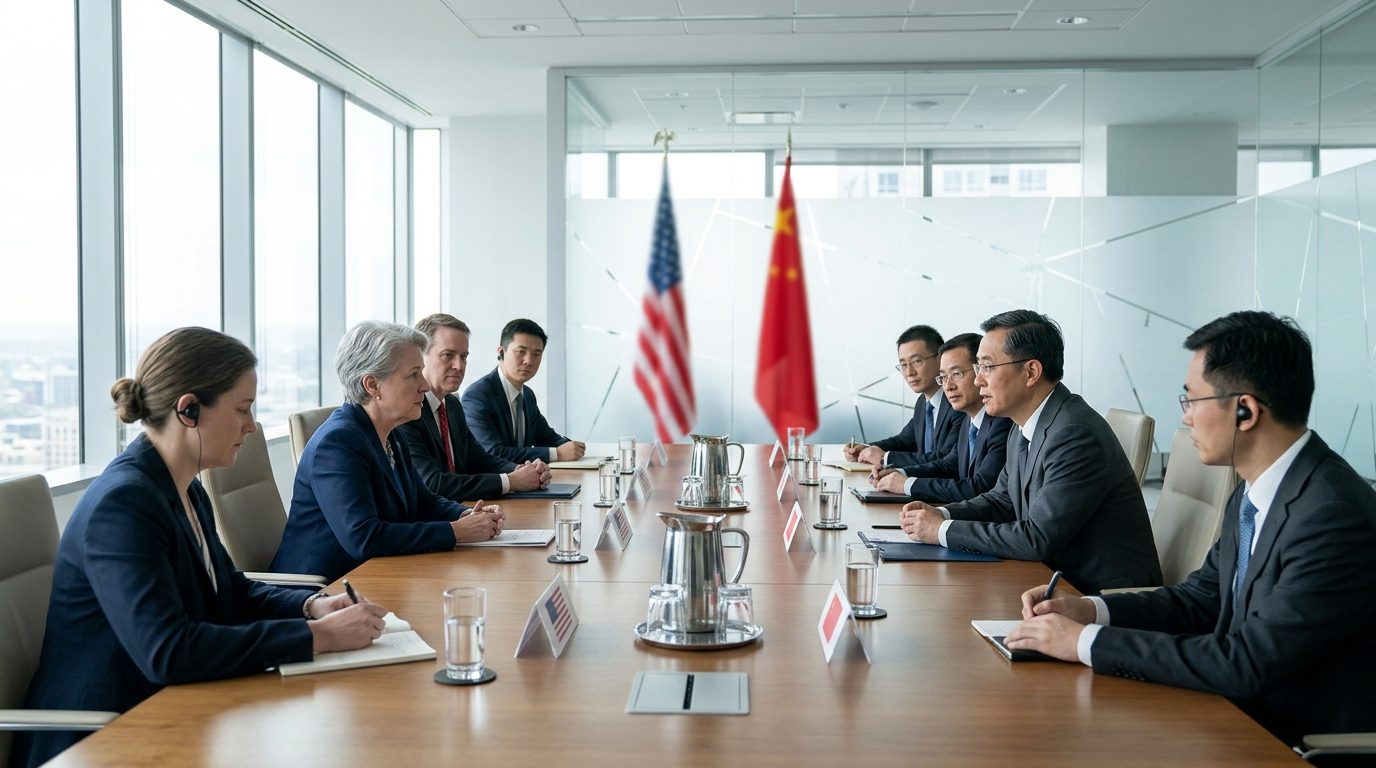
The United States and China are preparing to discuss artificial intelligence safety risks in mid-September, according to two sources briefed on the plans.
The proposed dialogue comes as advanced AI systems gain stronger reasoning and content-generation abilities. Officials face growing pressure to limit risks before those systems become harder to monitor or control.
The meeting would bring the two global powers into direct talks on a technology tied to national security, economic growth, and international influence. Its timing and agenda could still change.
Frontier AI Raises Shared Concerns
The talks are expected to focus on frontier AI, a term used for highly capable general-purpose systems. These models can produce text, software code, images, and other content.
More capable systems may support scientific research and improve productivity. They can also create safety threats if they behave unpredictably, enable cyberattacks, or help users develop dangerous materials.
Washington and Beijing approach AI as strategic competitors. Each country wants to develop leading models, computing systems, and commercial applications. Both governments also have reasons to prevent severe accidents or misuse.
The expected discussion could cover several shared concerns:
- Methods for testing advanced models before release
- Controls that reduce access to dangerous capabilities
- Channels for reporting serious AI incidents
- Ways to prevent misunderstanding during a crisis
These subjects are sensitive because safety measures can reveal information about model design, computing resources, or government planning.
Cooperation Meets Strategic Rivalry
AI talks would take place amid wider tensions between the two countries. Technology controls, trade restrictions, military competition, and cybersecurity disputes have strained relations.
The United States has restricted China’s access to some advanced semiconductors and chipmaking equipment. American officials view high-end computing as important to both civilian AI development and military modernization.
China has pursued domestic chip production and its own AI industry. Beijing has also introduced rules covering recommendation systems, synthetic media, and generative AI services.
Those competing policies may limit how much either side is willing to disclose. Still, a narrow safety dialogue could help officials separate shared technical risks from broader disputes.
The planned talks come as “rapidly advancing frontier AI capabilities reach a global tipping point,” according to the report.
What the Dialogue Could Achieve
An initial meeting is unlikely to produce a binding agreement. Its more immediate value may be establishing terms, identifying areas of concern, and creating reliable communication between officials.
Such contact could reduce the chance that one country misreads the other’s AI activities. It may also support future discussions about testing standards, human control, and the military use of autonomous systems.
Major differences are likely to remain. The countries may disagree over regulation, access to advanced chips, data controls, surveillance, and acceptable uses of AI in defense.
Other governments and technology companies will watch the planned meeting closely. Any common principles adopted by Washington and Beijing could influence wider international safety efforts.
The key test will be whether the dialogue produces a continuing process rather than a single exchange. Regular meetings, clear incident channels, and limited technical cooperation would signal progress. Without those steps, the talks may offer reassurance but little practical protection against fast-developing AI risks.

Rashan is a seasoned technology journalist and visionary leader serving as the Editor-in-Chief of DevX.com, a leading online publication focused on software development, programming languages, and emerging technologies. With his deep expertise in the tech industry and her passion for empowering developers, Rashan has transformed DevX.com into a vibrant hub of knowledge and innovation. Reach out to Rashan at [email protected]






















