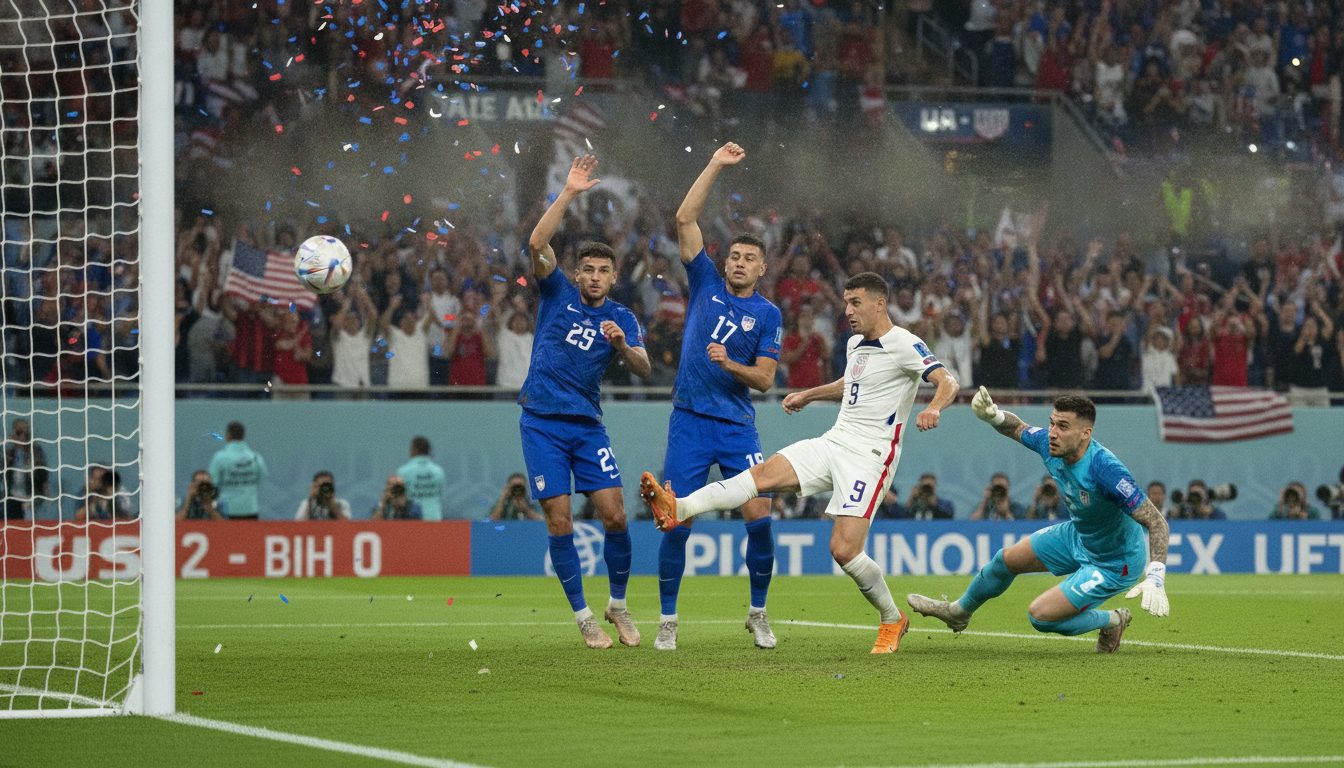
A precise free kick lifted the United States to a two-goal cushion against Bosnia and Herzegovina, changing the tone of a tense match and rewarding steady pressure. The strike came from the edge of the box, brushed the wall, and beat the Bosnian goalkeeper. It gave the team of the Stars and Stripes its second goal and breathing room in a game that had been tight.
The moment arrived in open play near the penalty area, after a foul on a US attacker. A subtle first touch set the shot. The ball arced over the barrier and dipped just inside the post. The finish was clean. The reaction was instant relief from the US bench and a pause of disbelief from Bosnia’s back line.
A Turning Point Built on Set Pieces
The United States has invested time in dead-ball situations, and the payoff was clear. The foul drew defenders into a crowded arc. The shooter waited for the wall to jump and drove the ball into the gap. The keeper reacted late and could not adjust in time.
“Con un toque sutil en un cobro de una falta en los linderos del área, supera a la barrera y vence al portero bosnio, para marcar el segundo del equipo de las Barras y las Estrellas.”
The Spanish-language call captured both the technique and the stakes. The touch was light. The execution was sharp. The placement left little chance for a save.
Pressure, Field Position, and Discipline
The United States had pushed Bosnia deep for long spells. That pressure invited fouls in risky areas. The second goal reflected that balance between patient buildup and swift punishment. The midfield recycled possession and kept Bosnia pinned. When the chance came, the set-piece team used a rehearsed pattern.
For Bosnia, the lapse will sting. The wall was set, but the timing of the jump gave away space. The goalkeeper’s view was crowded. The defenders reacted a beat late after the shot cleared the wall. Small margins decided a key play.
Coaching Choices Show Their Value
The staff’s emphasis on set pieces has become a theme in recent camps. Selecting a left-footed option from the right side encouraged a bend toward the far post. Teammates blocked runners without fouling. The routine reduced chaos and created a clear shooting lane.
Players have spoken about trusting the process in these moments. The repetition matters. The finish showed calm and belief under pressure. The two-goal lead allowed the US to manage tempo and shape for the rest of the half.
What It Means for Both Sides
For the United States, a second goal brought control and signaled growth in game management. The team turned territory into a decisive moment. For Bosnia, the lesson is clear. Avoid cheap fouls near the box and adjust the wall’s timing.
- Set-piece execution can swing tight matches.
- Field position and discipline shape late-game outcomes.
- Prepared routines reduce pressure on individual brilliance.
Looking Ahead
Set pieces will remain a key lever in matches between evenly matched teams. The United States will seek more chances from wide free kicks and corners, where rehearsed runs can create mismatches. Bosnia will review wall setup, goalkeeper positioning, and second-ball reactions to avoid repeat damage.
Fans may remember the clean arc of the shot, but the build-up matters too. The foul came from sustained possession and movement that forced errors. That blend of patience and sharp execution will guide the United States as tougher tests arrive.
The final takeaway is simple. Close games swing on detail. On this night, a calm touch from the edge of the box delivered separation and showed why preparation counts.

Kirstie a technology news reporter at DevX. She reports on emerging technologies and startups waiting to skyrocket.