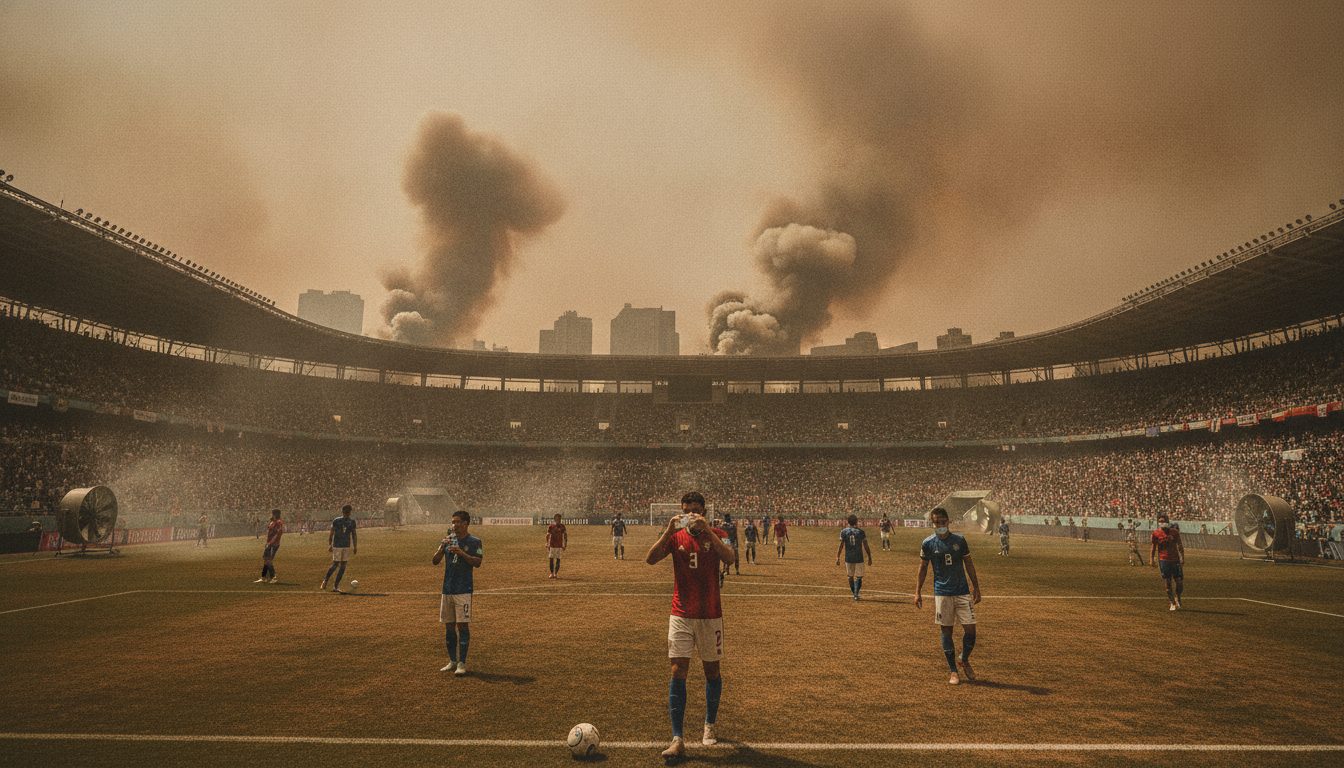
A tournament already battling high temperatures now faces a second threat. Organizers, teams, and fans are preparing for possible wildfire smoke during key matches across North America.
Matches have unfolded in summer conditions, with heat and humidity testing players and supporters in the United States, Canada, and Mexico. Health officials and venue operators are now tracking air quality forecasts as wildfire season peaks. The goal is to keep games safe while limiting disruption to a tight schedule.
This year’s World Cup has faced sweltering heat and humidity. Now it may need to deal with wildfire smoke.
Heat Hazards Push Player Welfare To The Fore
Medical staff have stressed hydration, shade, and scheduled cooling breaks. Referees can pause play for water breaks when conditions rise to risky levels. Teams have adjusted training times, choosing earlier mornings or late evenings.
High humidity reduces the body’s ability to cool through sweat. That raises the risk of heat exhaustion. Doctors watch for cramps, dizziness, and confusion. Recovery windows between matches matter more when heat stress builds across days.
Fans face similar dangers. Stadium operators have added misting stations, free water refill points, and extra medical staff. Public messages advise hats, light clothing, and steady fluid intake.
Smoke Threat Brings New Variables
Wildfire smoke can travel far, affecting air far from an active fire. Fine particles can irritate lungs and eyes. People with asthma or heart disease are most at risk.
Air quality index levels guide decisions. Many events review practice or match plans when readings move above 100. Restrictions grow tighter as numbers rise. At very poor levels, officials can delay or relocate activity.
Venue managers monitor conditions hourly. Contingency plans include shifting kickoff times, adding indoor recovery spaces, and altering warmups. Teams can use high-filtration masks during transit and light training.
Policies, Precedents, And What Triggers A Delay
Football authorities have heat protocols that allow cooling breaks and, in extreme cases, stoppage. Similar logic applies to smoke, where visibility and health standards guide choices.
- Cooling breaks can occur in each half when conditions warrant.
- Medical staff can request on-field checks at any time.
- Air quality above unhealthy levels can prompt delays or venue changes.
Other leagues in North America have paused games during severe smoke in recent summers. Those cases offer a playbook: move start times, shorten activities around the match, and keep constant liaison with health agencies.
Logistics And Competitive Balance
Any change to match timing affects travel, rest, and training cycles. Coaches weigh the cost of moving sessions versus the benefit of safer air or cooler conditions. A delay can help player safety but may compress recovery for the next round.
Fans face ticket, transit, and lodging hurdles if start times shift. Broadcasters must juggle windows across time zones. Organizers say clear, early communication is key to reducing confusion.
Climate Signals And The Future Of Scheduling
Hotter summers and longer fire seasons have become more frequent across North America. Sports bodies are reevaluating summer events in some cities. Options include earlier seasonal windows, more night matches, and flexible backup sites.
Stadium design is also in focus. Shade canopies, reflective roofing, and improved ventilation help reduce heat. Filtration upgrades can ease smoke exposure indoors, including locker rooms and media areas.
Player And Fan Health Guidance
Health experts recommend simple steps on match days.
- Check local air quality and heat advisories before travel.
- Hydrate early and often. Avoid heavy alcohol use in heat.
- Use high-SPF sunscreen and seek shade when possible.
- For sensitive groups, carry inhalers and consider N95 masks if smoke appears.
The tournament’s next tests will come from the sky and the thermometer. Organizers have tools to manage heat and smoke, but timing and severity will decide the scale of response. Fans should watch official channels for schedule changes, and teams will keep adapting plans to protect health. The larger question is whether future global events will move to cooler months or build in greater flexibility. For now, vigilance, clear rules, and rapid communication remain the best defense.

Deanna Ritchie is a managing editor at DevX. She has a degree in English Literature. She has written 2000+ articles on getting out of debt and mastering your finances. She has edited over 60,000 articles in her life. She has a passion for helping writers inspire others through their words. Deanna has also been an editor at Entrepreneur Magazine and ReadWrite.