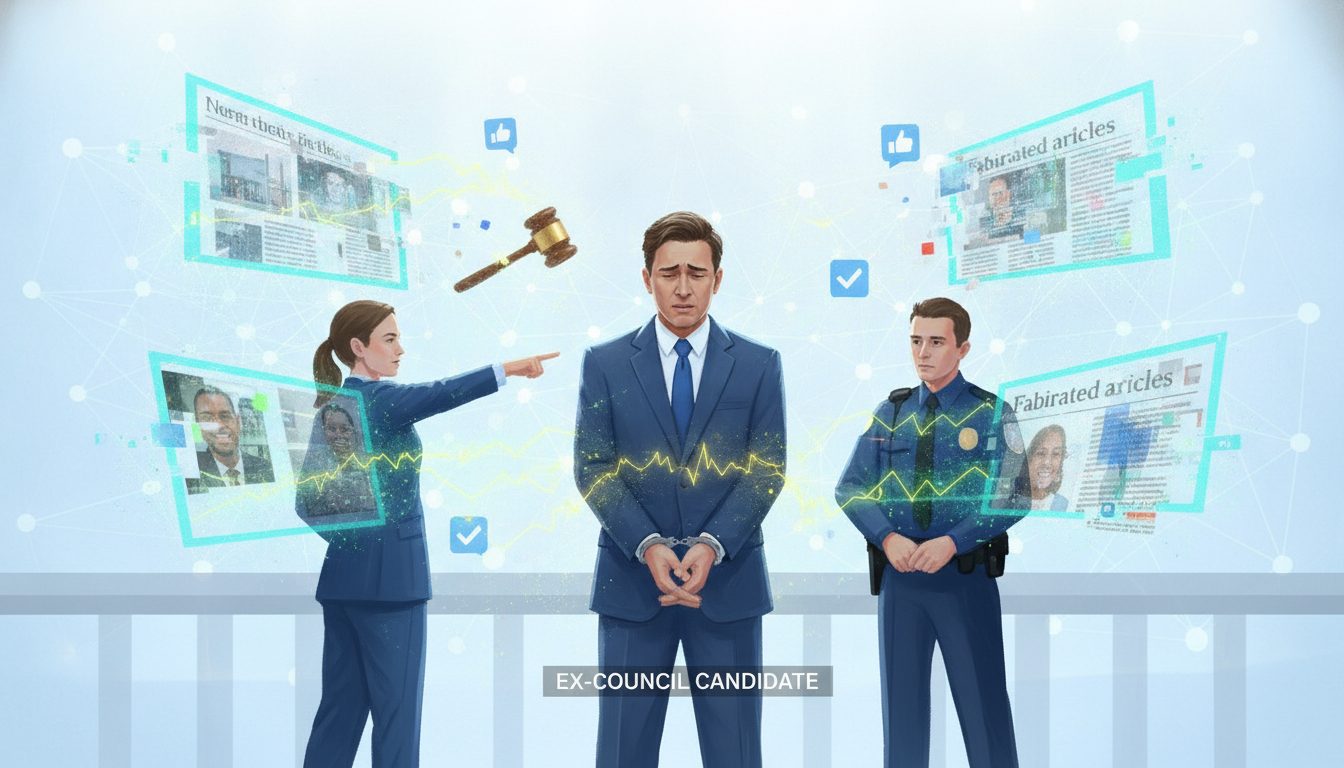
A former New York City Council candidate has been charged with forgery after prosecutors said he used artificial intelligence to push fake endorsements and fabricated news articles on social media. The case, filed in New York, spotlights growing worries over AI-fueled misinformation in local races and the pressure on platforms and prosecutors to respond.
Authorities say the political hopeful tried to boost his profile by inventing support that did not exist. The posts appeared designed to mislead voters about his credibility and media coverage. The allegations add urgency to efforts by states and platforms to set rules for AI in campaign content.
Allegations Center on AI-Made Posts
“A former New York City Council candidate has been charged with forgery over allegations he used artificial intelligence to post fake endorsements and news articles on social media.”
Investigators allege the candidate relied on AI tools to produce realistic but false materials. The posts mirrored the style of media coverage and public statements, according to the charge. Prosecutors argue that the intent was to pass off fabricated items as genuine to help the campaign.
Forgery laws, traditionally applied to documents, can also cover digital artifacts when they are presented as authentic records or statements. While the legal test varies by jurisdiction, key questions often include intent to deceive and potential harm. If the case proceeds, it could clarify how courts weigh AI-generated content under existing statutes.
How AI Is Changing Campaign Tactics
Politicians and operatives now have access to tools that can create convincing images, video, audio, and text in minutes. That raises the risk of false claims spreading before moderators or reporters can verify them. Local contests are especially vulnerable because media coverage is thinner and voters may have fewer reliable sources.
Social platforms have updated policies to restrict deceptive synthetic media, but enforcement remains uneven. Posts can travel widely through private messaging and small community groups. Once seen, they are hard to correct.
A Broader Pattern of Political Deepfakes
The New York case arrives amid a surge of AI-aided political content in the United States. In early 2024, New Hampshire officials investigated an AI-generated robocall that imitated the president’s voice and urged voters to skip a primary. The incident showed how cloning and automated outreach can be combined to target voters at scale.
Several states have moved to require labels on AI-generated political ads or to ban certain deceptive uses close to elections. Federal regulators have signaled interest in rulemaking, though comprehensive national standards are still developing. Election officials and watchdogs warn that even brief exposure to a convincing fake can shape opinions.
Free Speech, Fraud, and the Law
Courts have long balanced political speech protections with laws against fraud and false endorsement. This balance becomes harder with AI tools that imitate the tone and appearance of trusted sources. While satire and opinion are generally protected, passing off fabricated endorsements as real can meet the threshold for deception.
Legal experts say prosecutors will likely focus on proof of intent and the authenticity signals used in the posts. If logos, bylines, or names of real organizations were used without permission, that could strengthen a fraud or forgery claim.
What Voters Should Watch For
- Check the source. Visit official accounts and websites to confirm endorsements or coverage.
- Look for disclosures on images, audio, and video, and be cautious if something seems off.
- Search for the same story from reputable outlets before sharing.
- Use reverse image search and AI-detection tips from trusted digital literacy groups.
What Comes Next
The case could become an early test of how aggressively local prosecutors pursue AI-driven deception in campaigns. A conviction might encourage more filings under existing fraud and forgery laws, while an acquittal could prompt lawmakers to write clearer standards.
For candidates, the message is clear: digital tactics carry legal risk when they cross into fakery. For platforms, rapid detection and labeling will remain a challenge. And for voters, skepticism and verification are now part of civic life.
As the legal process unfolds, observers will watch for guidance on how courts treat AI-generated endorsements and fabricated articles. With more elections ahead, the outcome will shape how campaigns, platforms, and regulators respond to synthetic content in the months to come.

Deanna Ritchie is a managing editor at DevX. She has a degree in English Literature. She has written 2000+ articles on getting out of debt and mastering your finances. She has edited over 60,000 articles in her life. She has a passion for helping writers inspire others through their words. Deanna has also been an editor at Entrepreneur Magazine and ReadWrite.