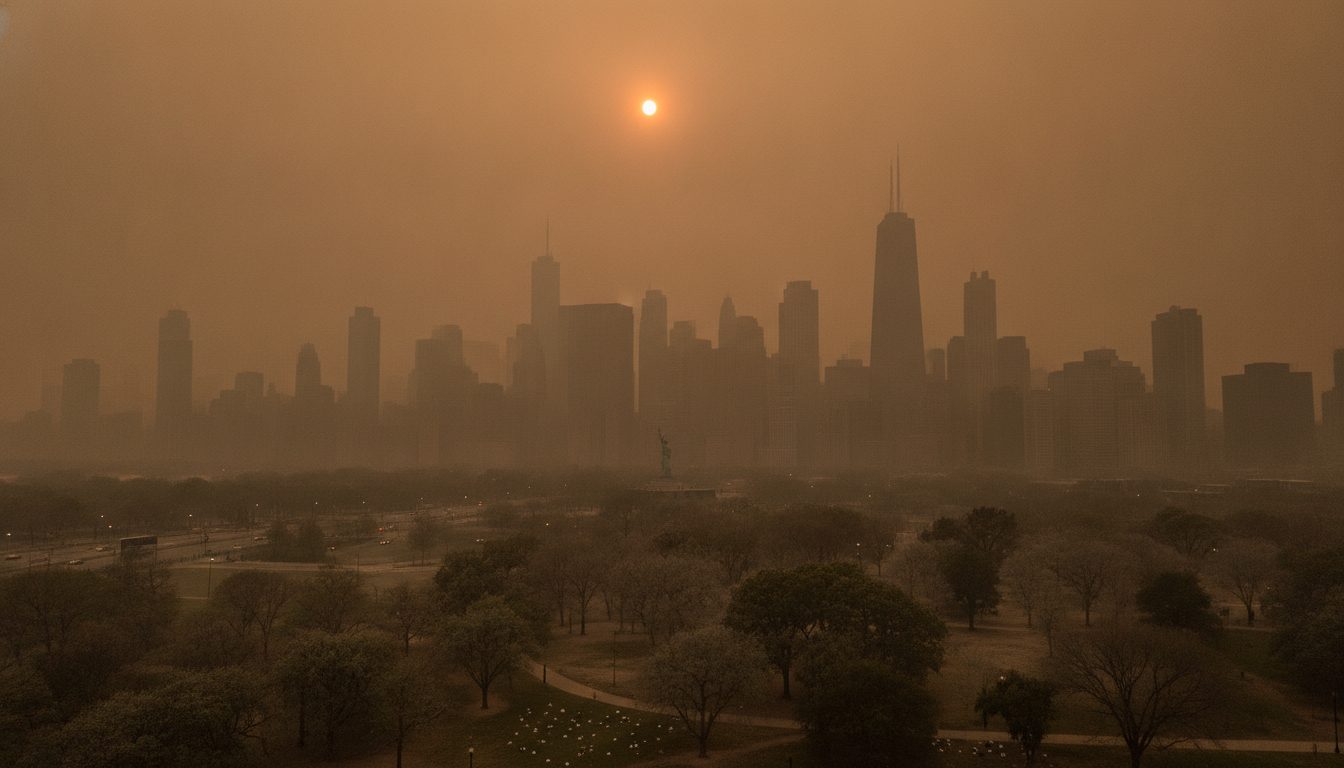
Smoke from more than 100 Canadian wildfires is pushing into the United States, sending air quality sliding in multiple regions and prompting public health warnings. The cross-border haze, carried by shifting winds, has turned the US into one of the places with the worst air on the planet this week. Officials warn that conditions can change quickly as the fire season intensifies and weather patterns move the smoke.
The US is home to some of the most polluted air on the planet as smoke from 120 out-of-control Canadian wildfires drifts across the border.
The smoke has spread across large parts of the country at different times, from the Upper Midwest to the Northeast. Visibility has dropped in some areas, and the smell of burning wood has returned in others. Health agencies urge people to limit outdoor activity when smoke densities rise.
Why Smoke From Canada Reaches the US
Wildfire smoke can travel hundreds or even thousands of miles. Upper-level winds steer it across borders. When the air sinks, fine particles move down to the surface and reduce air quality.
Canada is seeing large, hard-to-control fires in multiple provinces. Dry vegetation and warm temperatures can help fires spread. When many fires burn at once, the smoke load grows and transport into the US becomes more likely.
What the Air Quality Index Means
Officials use the Air Quality Index, or AQI, to show health risk from pollution. During smoke events, fine particles called PM2.5 drive the index higher. These tiny particles can reach deep into the lungs.
- AQI 0 to 50: Good.
- AQI 51 to 100: Moderate.
- AQI 101 to 150: Unhealthy for sensitive groups.
- AQI 151 to 200: Unhealthy for most people.
- AQI 201 and higher: Very unhealthy to hazardous.
When AQI rises above 100, children, older adults, and people with heart or lung disease face higher risks. At higher levels, healthy adults can also feel effects such as coughing, throat irritation, or shortness of breath.
Health Advice As Smoke Moves In
Public health experts recommend simple steps to reduce exposure. Stay indoors when smoke is thick. Keep windows closed and use filtered air if possible. Avoid heavy outdoor exercise during high AQI periods.
Well-fitted N95 masks can reduce inhalation of fine particles when outside. Drivers should use recirculation settings in vehicles to limit smoky air intake. People with asthma or heart disease should follow care plans and keep rescue medication close.
Wider Impacts on Daily Life and Services
Smoke can affect flights, outdoor work, sports, and public events. Schools and employers may adjust schedules when the AQI climbs. Some cities may open cleaner air centers to help those without home filtration.
Utilities and transportation agencies often scale back maintenance work that requires heavy outdoor labor. Public safety officials watch for traffic hazards as visibility shifts.
Why Fires Are Getting Harder to Control
Fire seasons in North America have trended longer over recent decades. Warmer temperatures can dry out forests and grasslands. Drought conditions make fuels more flammable. More people now live near wildland areas, which increases risk and complexity for firefighters.
Scientists have linked rising temperatures to a higher chance of extreme fire weather. That can mean faster fire growth and more smoke production. When many fires ignite at once, resources stretch thin and suppression becomes more difficult.
Cross-Border Coordination and Next Steps
US and Canadian agencies share satellite data, smoke forecasts, and fire behavior models. This helps decision-makers issue alerts and plan operations. Emergency managers use outlooks to prepare for changing smoke patterns.
Residents can track conditions through official air quality maps and local alerts. Forecasts can shift in a few hours as winds turn, so frequent checks are wise. Communities that plan ahead with cleaner air shelters and public messaging tend to reduce health impacts.
What to Watch in the Days Ahead
Smoke intensity depends on three things: how hot and active the fires are, which way the wind blows, and whether the smoke sinks to the surface. Any change in one of these can improve or worsen air quality.
For now, public health remains the central concern. The return of thick smoke shows how far-reaching wildfire impacts can be. Clear communication, flexible work and school plans, and personal protective steps can lower risk until the air improves.
The immediate focus is on monitoring AQI, protecting vulnerable groups, and supporting firefighting efforts. Longer term, investments in forest management, community preparedness, and clean indoor air can help reduce harm during future smoke events.

Senior Software Engineer with a passion for building practical, user-centric applications. He specializes in full-stack development with a strong focus on crafting elegant, performant interfaces and scalable backend solutions. With experience leading teams and delivering robust, end-to-end products, he thrives on solving complex problems through clean and efficient code.