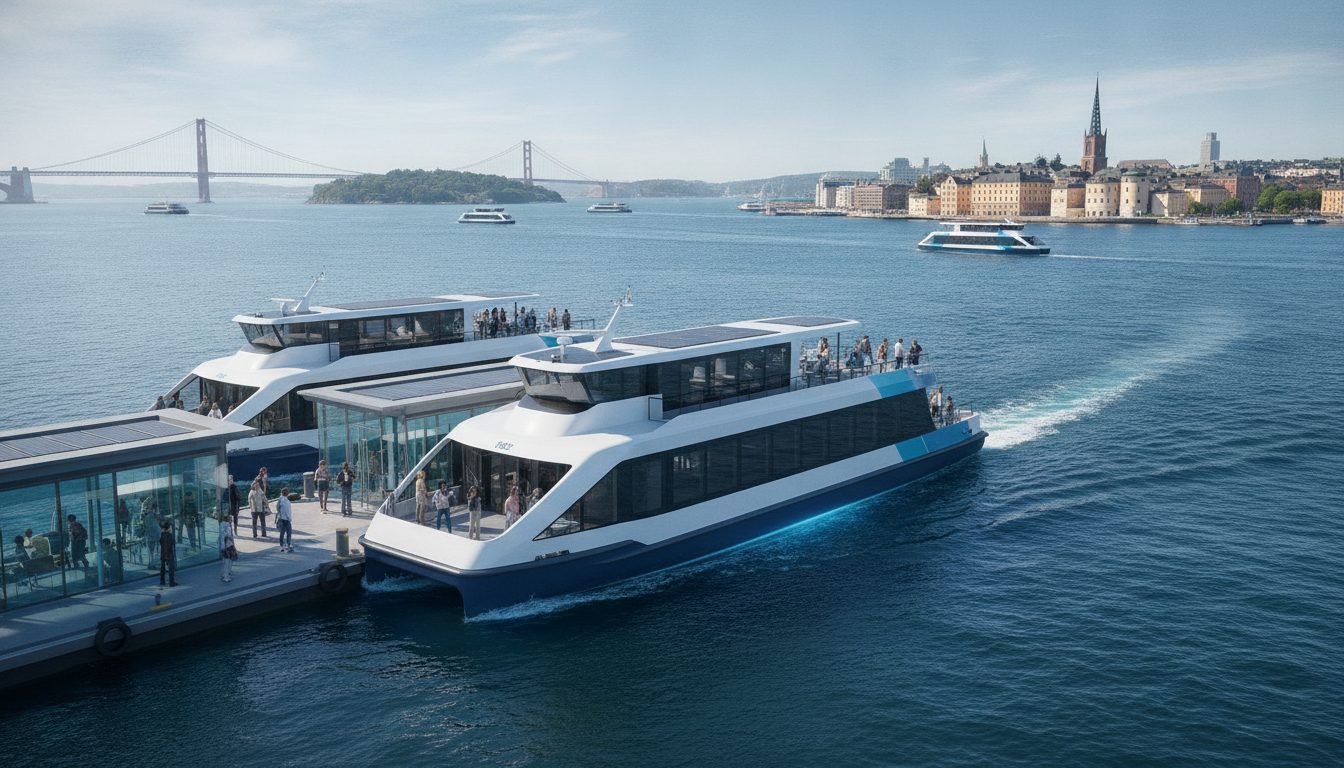
A new wave of electric ferries is moving from pilot projects to daily passenger service, signaling a shift in how cities move people over water and cut emissions. From San Francisco Bay to the waterways of Stockholm, agencies and start-ups are launching revenue routes, betting that quiet, zero-emission vessels can compete with diesel on speed, cost, and reliability. The push comes as urban leaders search for fast climate gains in transport and cleaner air along busy waterfronts.
“From San Francisco to Stockholm, a new generation of electric ferries is entering passenger service, marking a tipping point for green maritime technology.”
Why Ferries Are Going Electric Now
Maritime transport has long relied on diesel engines that emit soot and greenhouse gases. Coastal cities are under pressure to meet climate targets and to reduce noise near neighborhoods. Batteries have improved, charging hardware has matured, and operators have years of lessons from early Nordic routes. Together, these trends are pushing electric ferries into regular service rather than limited trials.
Norway’s national and county routes paved the way over the past decade, proving that short, frequent crossings are well suited for batteries. Similar projects followed in Denmark and the Netherlands. City networks are the next frontier, where tighter air rules and short routes can make electrification practical today.
City Spotlights: San Francisco and Stockholm
On San Francisco Bay, public and private operators are rolling out zero-emission boats on commuter links. Agencies have tested new charging setups at piers and are weighing a larger shift as vessels age out of diesel service. Trials have also included hydrogen fuel-cell boats, which, like battery-electric craft, promise cleaner rides and lower noise.
Stockholm has begun running an electric hydrofoil commuter ferry that glides above waves to cut drag and energy use. The route aims to match bus times while offering a smoother trip. Local officials say the service could reduce congestion on bridges and lower emissions on busy corridors.
What Passengers and Cities Gain
Early riders report quieter cabins and less vibration than on older diesel craft. Shoreline communities see potential health gains from lower soot and fewer fumes. City agencies, facing tight budgets, are assessing lifetime costs as fuel prices swing and maintenance bills for older engines rise.
- Lower local air pollution near docks and dense neighborhoods.
- Quieter operations that reduce noise along waterfronts.
- Predictable energy costs when charging from the grid.
Costs, Charging, and Grid Questions
Upfront prices for electric ferries remain higher than for diesel boats, driven by batteries and charging gear. Operators say total costs can level out over time due to cheaper energy and fewer moving parts to maintain. The business case depends on route length, daily cycles, and the ability to charge during layovers.
Ports are adding fast chargers at terminals, but grid capacity can be a bottleneck. Utilities and agencies are working on smart charging plans that use low-demand hours. Some routes use battery swapping or on-dock energy storage to avoid peak grid pulls.
Performance and Range
Electric ferries perform best on short to medium routes with frequent stops. Advances in hull design, such as hydrofoils, cut energy needs and extend range. Cold weather and heavy seas can reduce efficiency, so operators plan buffers and backup charging. Dispatch data from early services suggests on-time performance can match diesel when charging is built into schedules.
Industry Impact and Supply Chain
Shipyards are retooling for electric builds, and battery suppliers are adapting packs for marine safety rules. Standardized charging connectors are spreading, which can lower costs and speed deployment. Insurers and regulators are updating guidelines for battery safety, firefighting, and crew training.
As orders grow, suppliers expect economies of scale. Smaller cities may benefit from second-generation designs that use modular parts and shared charging standards across fleets.
Multiple Views on the Path Ahead
Environmental groups back rapid rollouts in urban centers, citing immediate health gains. Labor groups want strong training programs as systems change. Some operators warn against one-size-fits-all rules and support a mix of battery-electric and other zero-emission options for longer routes.
Analysts say the next two to three years will show whether operating savings meet expectations. If they do, replacement cycles could shift most short urban routes to electric power.
Electric ferries are moving from promise to practice on real routes in major cities. The latest launches show that zero-emission boats can fit into daily schedules and rider habits while improving air and sound quality along the water. The key tests now are scaling charging, managing grid needs, and proving long-term costs. Watch for more cities to convert short crossings first, followed by busier trunk lines as vessels and chargers mature.

A seasoned technology executive with a proven record of developing and executing innovative strategies to scale high-growth SaaS platforms and enterprise solutions. As a hands-on CTO and systems architect, he combines technical excellence with visionary leadership to drive organizational success.