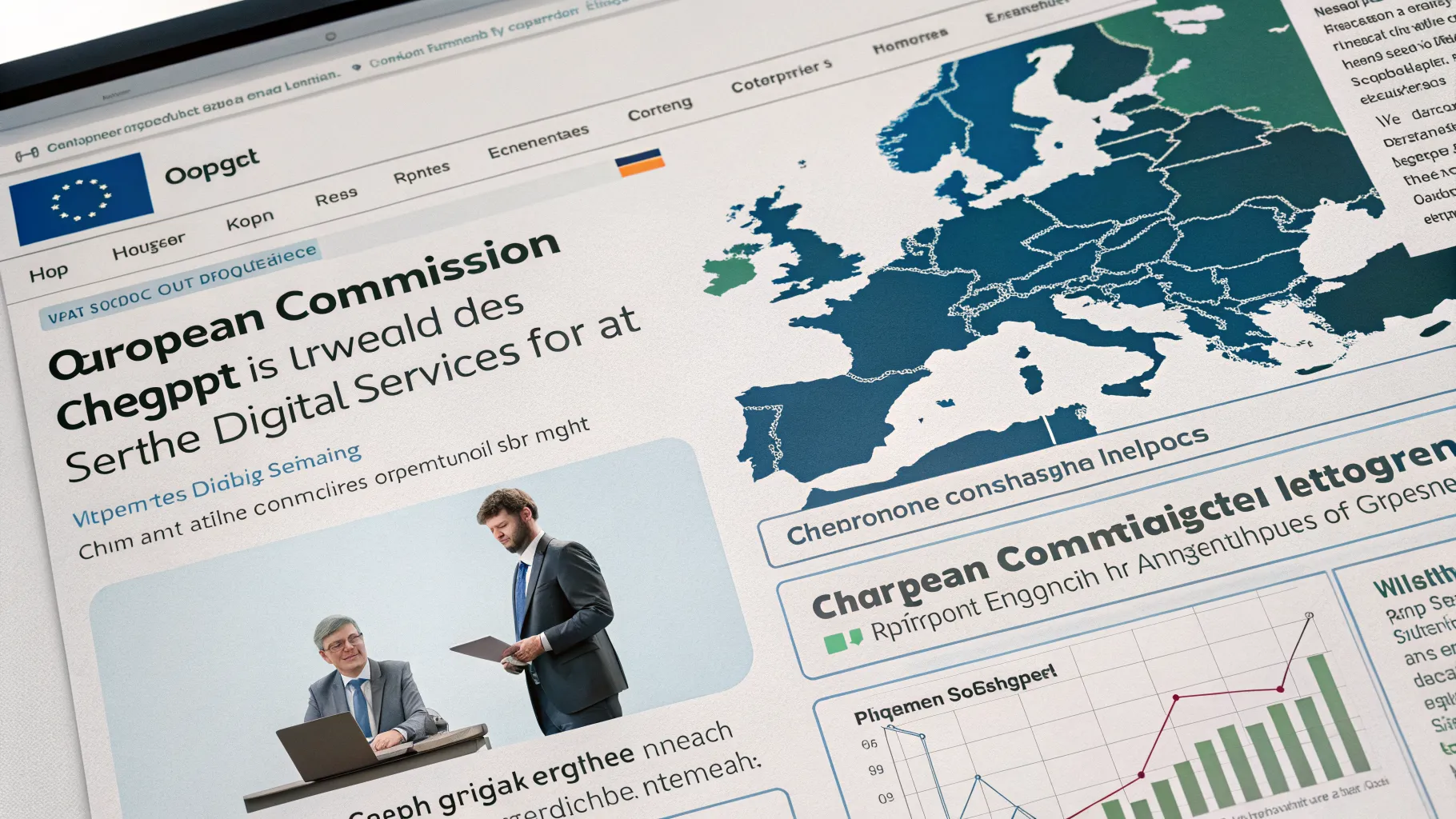
The European Commission is reviewing whether OpenAI’s ChatGPT should be treated as a large online search engine under the Digital Services Act. The move follows user figures that exceed the EU’s threshold for stricter oversight. The review, announced Friday in Brussels, could place new legal duties on the fast-growing AI service and reshape how it operates in Europe.
“The European Commission on Friday said it was analysing whether OpenAI’s ChatGPT should be considered a large online search engine under the rules of the Digital Services Act (DSA), after it reported user numbers above the threshold.”
The threshold at issue is 45 million monthly active users in the EU. Services above that mark can be labeled “very large” and face tighter rules on risk management, transparency, and oversight. The Commission did not set a timeline for its assessment.
What the DSA Requires of Very Large Services
The Digital Services Act, in force across the EU, sets safety and transparency rules for online services. It adds extra duties for very large platforms and very large search engines because of their reach and influence. Google Search and Bing received that label in 2023. Social platforms such as Facebook, Instagram, TikTok, and X were also designated.
If ChatGPT is labeled a very large online search engine, it would face tougher obligations similar to those search services. These are designed to limit systemic risks, improve transparency, and protect users, especially minors.
- Regular risk assessments and steps to reduce risks like misinformation and harmful content
- Greater transparency on how algorithms rank, recommend, or present results
- Access for vetted researchers to study systemic risks
- Independent audits and public reporting
- Clear terms and user choice features for recommendation systems
Violations can draw fines of up to 6% of global revenue. Repeat and serious breaches may lead to stronger enforcement actions.
Is ChatGPT a Search Engine?
The key question is whether an AI chatbot that answers questions qualifies as a search service under EU law. Traditional search engines crawl and index the web to return ranked links. ChatGPT generates text based on training data and user prompts, though it can retrieve current information and cite sources in some modes.
Legal experts say the definition matters because it sets which rulebook applies. If classified as a search engine, ChatGPT would face duties tailored to information retrieval and ranking. If treated as a different type of service, a separate set of rules could apply.
OpenAI has promoted ChatGPT as a general-purpose assistant, not a search engine. Yet many users rely on it for answers they might once have sought on Google or Bing. The Commission’s review reflects how fast user behavior is shifting and how laws must adapt to new services that blur old lines.
Industry Impact and Stakeholder Concerns
Designation would raise compliance costs and could change product design. It may require clearer labeling of sources, stronger guardrails on harmful content, and more insight into how the system ranks or presents facts. It could also trigger requests for researcher access to study systemic risks linked to AI-generated answers.
Consumer groups have pressed for more transparency into how generative AI handles news, health, and political content. They argue that answers that look authoritative can spread errors at scale. Developers and startups warn that heavy compliance could slow product updates and favor incumbents with larger legal teams.
Search rivals are watching closely. If ChatGPT is regulated as a search engine, similar AI assistants could face the same label. That would push the sector toward common rules on disclosure, auditing, and user controls.
What Happens Next
The Commission will assess ChatGPT’s user base, features, and role in information access. If it decides to designate the service as a very large online search engine, enhanced duties would apply after a set compliance period. The agency can also seek more data from providers to verify user numbers and evaluate systemic risks.
This review comes as the EU also advances separate rules for artificial intelligence. While those address model risks and safety, the DSA focuses on how large online services manage content and protect users. The two regimes could overlap for major AI services operating at scale.
The decision will signal how Europe plans to regulate AI tools that now function like search for millions. If the label is applied, users could see clearer disclosures and more controls. Providers may need to publish more about how answers are produced and ranked.
For now, companies building AI assistants should prepare for closer scrutiny. The Commission’s focus on user numbers and real-world impact suggests more services could come under the very large category soon. The next steps will show whether conversational AI will be held to the same rules as traditional search.
Related Articles
- OpenAI Was Right to Ax Sora
- OpenAI Begins Testing Ads In ChatGPT
- ChatGPT Ads Risk Repeating Old Mistakes
- OpenAI Revenue Surges To $20 Billion

Senior Software Engineer with a passion for building practical, user-centric applications. He specializes in full-stack development with a strong focus on crafting elegant, performant interfaces and scalable backend solutions. With experience leading teams and delivering robust, end-to-end products, he thrives on solving complex problems through clean and efficient code.