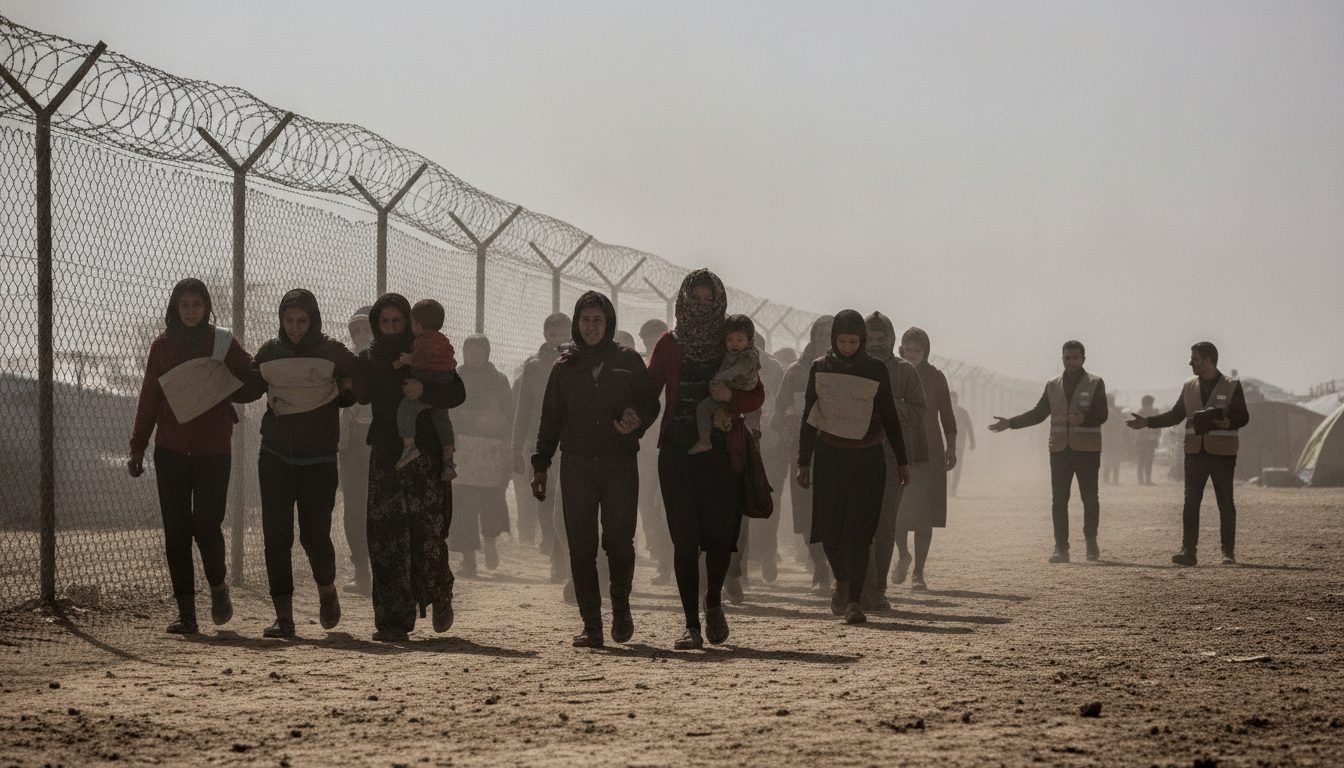
As detainees walk free in large numbers, a stark picture is emerging of hidden abuse inside guarded compounds once believed to hold only men. Aid groups say female survivors are now reporting gender-based violence that went unrecorded for months, if not years. The reports follow recent releases of tens of thousands of people from multiple sites, according to humanitarian workers familiar with the evacuations.
The accounts suggest a pattern of sexual assault, forced labor, and coercion in facilities designed for mass detention. Locations remain undisclosed due to security risks, but rights monitors say the trend is not confined to a single country. The scale of the releases, and the number of new testimonies, has turned a quiet concern into an urgent protection crisis.
Hidden Women in “Male-Only” Compounds
For much of the conflict period, many compounds were described as holding men and boys. That assumption shaped how monitors prioritized access, resources, and legal advocacy. It also limited searches for women and girls.
“As tens of thousands are freed, female survivors are increasingly reporting gender-based violence in the compounds, previously thought to hold mainly men.”
Humanitarian protection officers say such misclassification is common in fast-moving conflicts. Women detained in the same compounds as men are often kept in separate wings, basements, or outbuildings. Poor lighting, restricted access, and threats of punishment can keep them out of sight during external visits.
Rights lawyers note that mislabeling these centers as male-only can have legal consequences. If women are not recorded as detainees, they are excluded from official registers and oversight. That erases evidence trails and weakens future prosecutions.
Survivor Accounts and Corroboration
Survivors describe repeated assaults, denial of health care, and retaliation for speaking up. Several report being forced to exchange sexual favors for food, soap, or water. The patterns match past findings from UN investigations into detention-related abuse during conflicts in Africa, the Middle East, and Eastern Europe.
Medical teams conducting post-release screenings have documented injuries consistent with sexual violence and prolonged restraint. Trauma clinicians caution that many survivors delay disclosure. Fear of stigma, along with threats from former guards, can suppress reporting for months.
Some officials linked to the compounds have rejected claims of systemic abuse, characterizing incidents as isolated misconduct. Human rights observers counter that the volume and similarity of testimonies point to organized control, not random acts.
Why the System Missed It
Experts cite three main gaps that allowed female detainees to remain invisible. First, restricted access for independent monitors limited unannounced inspections. Second, poor data collection separated detention figures by male categories only. Third, emergency aid pipelines focused on food and sanitation, while failing to prioritize confidential reporting channels for women.
- Access: Monitors faced blocked visits or staged tours.
- Data: Registers excluded women and girls, leaving them off case files.
- Protection: Few private spaces existed for safe disclosure.
Advocates argue that any mass detention site must presume mixed populations unless proven otherwise. They call for same-day screening by trained female staff, private intake areas, and secure transport to shelters.
Aid Response and Legal Hurdles
Emergency teams are scaling services, but demand exceeds capacity. Survivors need immediate medical care, access to post-exposure treatment, and counseling. Many also require safe relocation to avoid reprisals.
Legal accountability remains a steep climb. Prosecutors need custody records, chain-of-command evidence, and forensic exams. Delayed access to sites makes all three harder. Still, lawyers are gathering medical documentation, testimonies, and patterns of command to build cases.
Regional civil society groups have pressed for independent inquiries with subpoena power. They ask foreign donors to tie funding to cooperation with investigators. Some governments have signaled openness to external review. Others insist internal probes are sufficient.
What to Watch Next
Observers are tracking whether new releases include full access for health and legal teams. They are also watching for the preservation of physical evidence inside compounds, such as restraints, logs, and surveillance records. The next few weeks are critical for time-sensitive medical care and evidence collection.
Advocates recommend swift steps now:
- Deploy mobile clinics with sexual assault response capacity.
- Fund safe shelters and rapid relocation for high-risk survivors.
- Guarantee confidential reporting and witness protection.
- Secure detention records and authorize independent inspections.
The latest accounts signal a broader failure to identify and protect women in detention. As survivors speak out, the priority is clear: deliver care without delay, document abuses, and secure credible investigations. Whether authorities support that process will shape justice, deterrence, and safety for those still unaccounted for.

Rashan is a seasoned technology journalist and visionary leader serving as the Editor-in-Chief of DevX.com, a leading online publication focused on software development, programming languages, and emerging technologies. With his deep expertise in the tech industry and her passion for empowering developers, Rashan has transformed DevX.com into a vibrant hub of knowledge and innovation. Reach out to Rashan at [email protected]