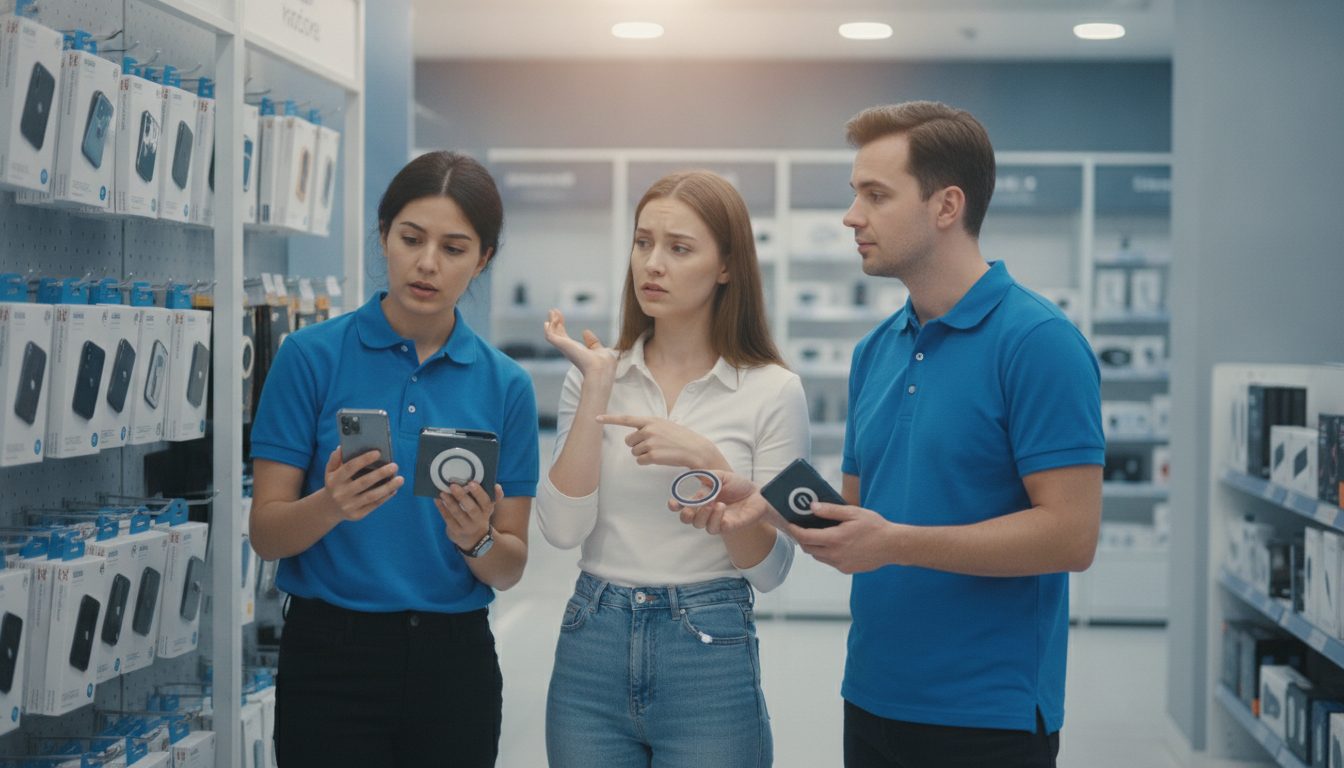
Shoppers are asking why vendors sell magnetic wallets, chargers, and mounts for phones that do not ship with built-in magnets. The short answer is that accessory makers have built a work-around business, and a standards shift may soon make the confusion fade.
The debate has flared in stores and online this year as vendors push magnetic gear to owners of Android devices that lack native magnetic rings. Many users see mixed results, while companies see strong demand for cases, stick-on rings, and mounts that promise easier charging and mounting.
How Magnets Enter Phones That Aren’t Magnetic
Most non-magnetic phones can still use magnetic accessories with help from add-ons. Cases with embedded metal or magnets, adhesive rings, and thin plates make a phone “magnet-ready.” They do not change the phone’s hardware. They create a magnetic target on the outside of the device.
Alignment for wireless charging is a big draw. A ring helps center the phone on a charger to reduce misalignment and heat. Mounting is the other goal. A firm snap to a car mount or stand is quick and tidy.
But not every ring works with every device. Thick cases can weaken the hold. Some metals can block wireless charging coils. And if a phone’s camera housing is large, a one-size ring may sit too high or low for a tight lock.
What Buyers Are Saying
“Magnetic accessories for non-magnetic phones. Make it make sense!”
That frustration reflects a wider complaint: labels often read “MagSafe compatible” without explaining that a separate ring or case is required on Android phones. The result is returns, weak snaps, or chargers that do not top up as fast as expected.
Retail staff report frequent questions about whether a ring will hurt NFC payments or wireless charging. The answer varies by product. Rings placed away from the coil and made from the right materials tend to be fine, but trial-and-error remains common.
The Business Case for Magnetic Gear
Accessory makers say the demand is real. Magnets turn a phone into a hub for wallets, batteries, tripods, and car mounts. Each add-on creates another sale. Vendors expand the addressable market by selling rings and “conversion” cases so owners do not need a new phone.
For retailers, magnetic ecosystems are sticky. A buyer who adds a ring is more likely to return for a wallet, a battery pack, and a mount. That stack can cost far more than a single case.
Critics argue that the pitch can be confusing. Packaging often stresses compatibility without clear warnings about the need for an adapter. Some cases weaken over time as adhesive wears down or as heat loosens the bond between a ring and the shell.
Safety, Performance, and Fit
Magnets do not erase modern phone storage, but placement matters. A poorly placed ring can interfere with wireless charging or reduce charging speed. Strong magnets near a compass sensor can affect navigation in rare situations.
Manufacturers advise checking for:
- Coil alignment: the ring should center on the charging coil.
- Case thickness: thick or soft shells reduce holding force.
- Adhesive quality: heat and sweat can loosen weak glue.
- Metal choice: some plates block charging or get hot.
Wallets and battery packs add weight. A weak mount may drop a phone on rough roads. Users should test the hold with a gentle shake before daily use.
A Standard That Could End the Confusion
A new wireless charging standard called Qi2 brings a magnet ring and better alignment to a wide set of devices. Phones that support Qi2 can snap to chargers using a common layout. That could make many third-party rings and plates unnecessary on future models.
Analysts expect mixed adoption at first. Older phones will still need cases or stick-on rings. New phones that add Qi2 could make magnetic charging faster to set up and easier to explain on a shelf. Pricing pressure may follow as more chargers and mounts work across brands.
What Shoppers Can Do Now
Until standards settle, careful shopping helps. Buyers should:
- Confirm whether their phone supports any magnetic alignment natively.
- Choose rings and cases designed for their exact model.
- Check return policies and test charging and mounts at home.
- Avoid products that hide coil-coverage diagrams or material details.
Magnetic accessories for non-magnetic phones make sense when an adapter is part of the plan and the setup is done right. As Qi2 rolls out, the promise of clean alignment and clear labeling may finally match the marketing. For now, consumers should read carefully, test early, and watch for phones that add the new standard out of the box.

Rashan is a seasoned technology journalist and visionary leader serving as the Editor-in-Chief of DevX.com, a leading online publication focused on software development, programming languages, and emerging technologies. With his deep expertise in the tech industry and her passion for empowering developers, Rashan has transformed DevX.com into a vibrant hub of knowledge and innovation. Reach out to Rashan at [email protected]