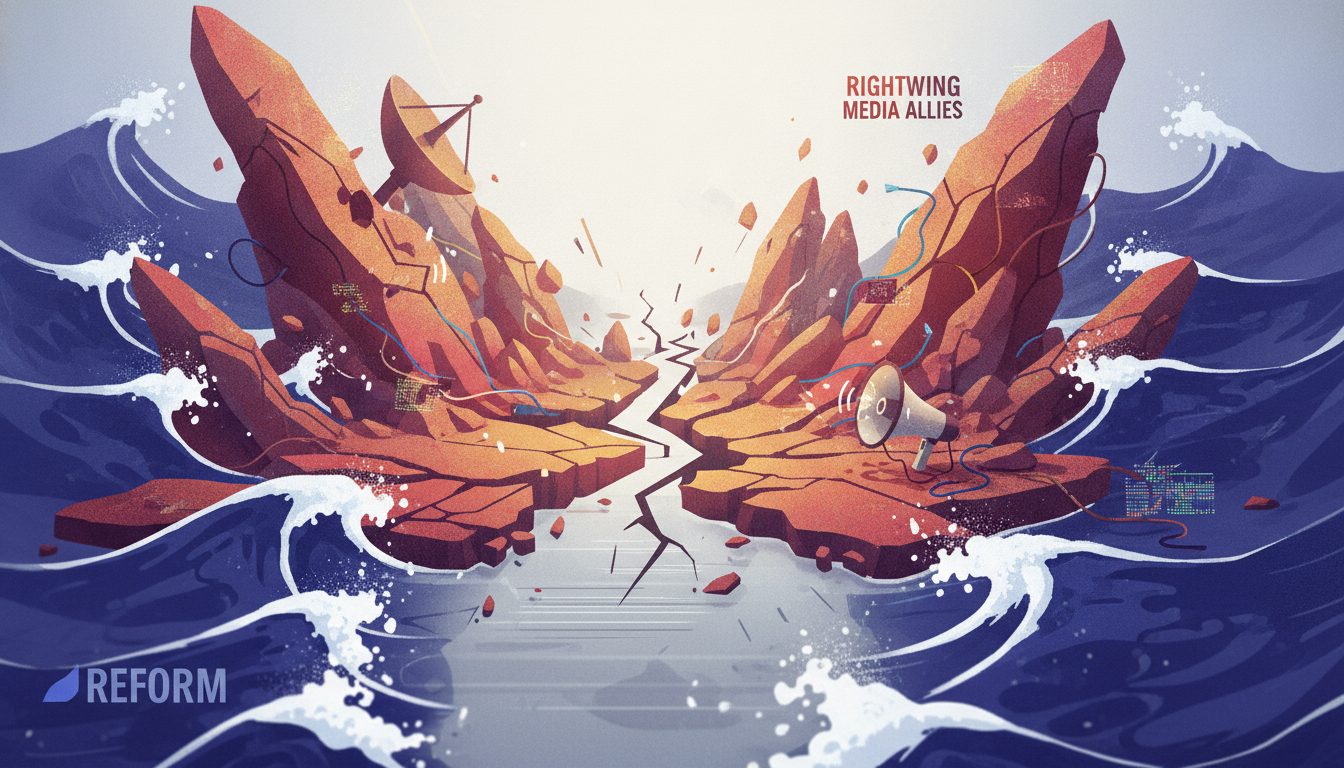
A public rupture between Reform and friendly outlets on the right has spilled into view, just as the party’s media support appears to cool. The dispute arrives at a delicate point for the party’s communications strategy, with previously sympathetic coverage turning more critical in recent days. The shift highlights rising tensions over message control, accountability, and how far a populist message can stretch when friendly platforms raise tougher questions.
The confrontation centers on Reform’s response to recent scrutiny, and the tone of coverage that followed. Party figures had long relied on airtime, interviews, and editorial support from right-leaning platforms. Now the relationship is strained, and the fallout could shape how the party reaches its voters in the weeks ahead.
“Strong confrontation” comes at a fragile moment for Reform’s relations with rightwing media as coverage turns negative.
Background: From Alignment To Friction
Reform built visibility by aligning with outlets that share a focus on immigration, tax policy, and skepticism of established parties. That alignment delivered frequent appearances and a favorable frame for its core messages. In return, media brands gained sharp debates and strong audience engagement.
This arrangement worked while incentives overlapped. It frayed as Reform’s poll numbers and profile grew, inviting closer examination. With higher stakes, the tone shifted from cheerleading to scrutiny. Reports and commentary that once echoed party lines now probe strategy, candidate vetting, and policy detail.
Insiders describe a communications team that is striving to maintain message discipline, while presenters and editors insist on tougher interviews and clearer answers. The gap has widened into a visible dispute.
Inside The Media Rift
The central friction point is control. Party aides want predictable formats and clear topics. Producers and hosts are pushing for unscripted exchanges that test claims and expose gaps. That is standard in competitive media markets, but it lands harder when prior coverage was supportive.
Negative framing can quickly compound on digital platforms. Critical clips circulate faster than set-piece speeches. Headlines emphasize stumbles rather than set out policy. For a party that trades on message simplicity and repetition, that shift bites.
Reform figures argue that the tone has swung too far and risks alienating audiences who want straight talk on costs, migration, and public services. Editors counter that audiences expect accountability from any party seeking national influence. Both views reveal a shared understanding, that credibility depends on withstanding scrutiny.
What The Shift Means For Campaign Strategy
The rift changes the party’s media math. Earned media from sympathetic platforms becomes less reliable. More resources may move to direct channels like email, short video, and rallies, where the party controls framing and timing.
That shift carries trade-offs. Direct channels reach core supporters, but cross-over exposure is harder without friendly panels and prime-time slots. Voter persuasion typically requires repetition across multiple sources. If once-sympathetic outlets go cool, the cost of breaking through rises.
- Expect fewer long, live interviews and more pre-recorded clips.
- Watch for tighter talking points and shorter press availabilities.
- Look for increased focus on issues where the party polls strongest.
Balancing Accountability And Access
Right-leaning outlets face their own calculation. A reputation for soft segments can hurt trust with viewers, especially as complex issues demand detail. Tougher interviews preserve credibility, but risk freezing out a party that still draws audience interest.
Some editors are likely to pursue a middle path, pairing pointed questions with ample time for responses. Others may pivot to analysis shows that weigh claims after-the-fact, reducing reliance on live exchanges that can spiral.
For Reform, the immediate task is to show steadiness under pressure. Clear costings, reliable spokespeople, and timely corrections can tamp down negative cycles. For media allies, the message is similar: hold the line on standards while preserving fair access.
What To Watch Next
Several markers will indicate whether relations stabilize. First, the tone of next week’s interviews will show if both sides dial back. Second, whether the party widens its media mix, including neutral or skeptical outlets, will suggest a more durable strategy. Third, audience response to tougher segments will guide editorial choices.
The dispute has revealed a basic test for both sides. A growing party must adapt to scrutiny. A trusted outlet must keep standards even when it agrees with a guest’s aims. The coming weeks will show if they can meet in the middle.
For now, the latest turn signals a cooler phase. The party’s message still has a large audience, but delivery is shifting. The outcome will hinge on discipline, openness to questions, and whether coverage can return to policy substance instead of friction over format.

Rashan is a seasoned technology journalist and visionary leader serving as the Editor-in-Chief of DevX.com, a leading online publication focused on software development, programming languages, and emerging technologies. With his deep expertise in the tech industry and her passion for empowering developers, Rashan has transformed DevX.com into a vibrant hub of knowledge and innovation. Reach out to Rashan at [email protected]