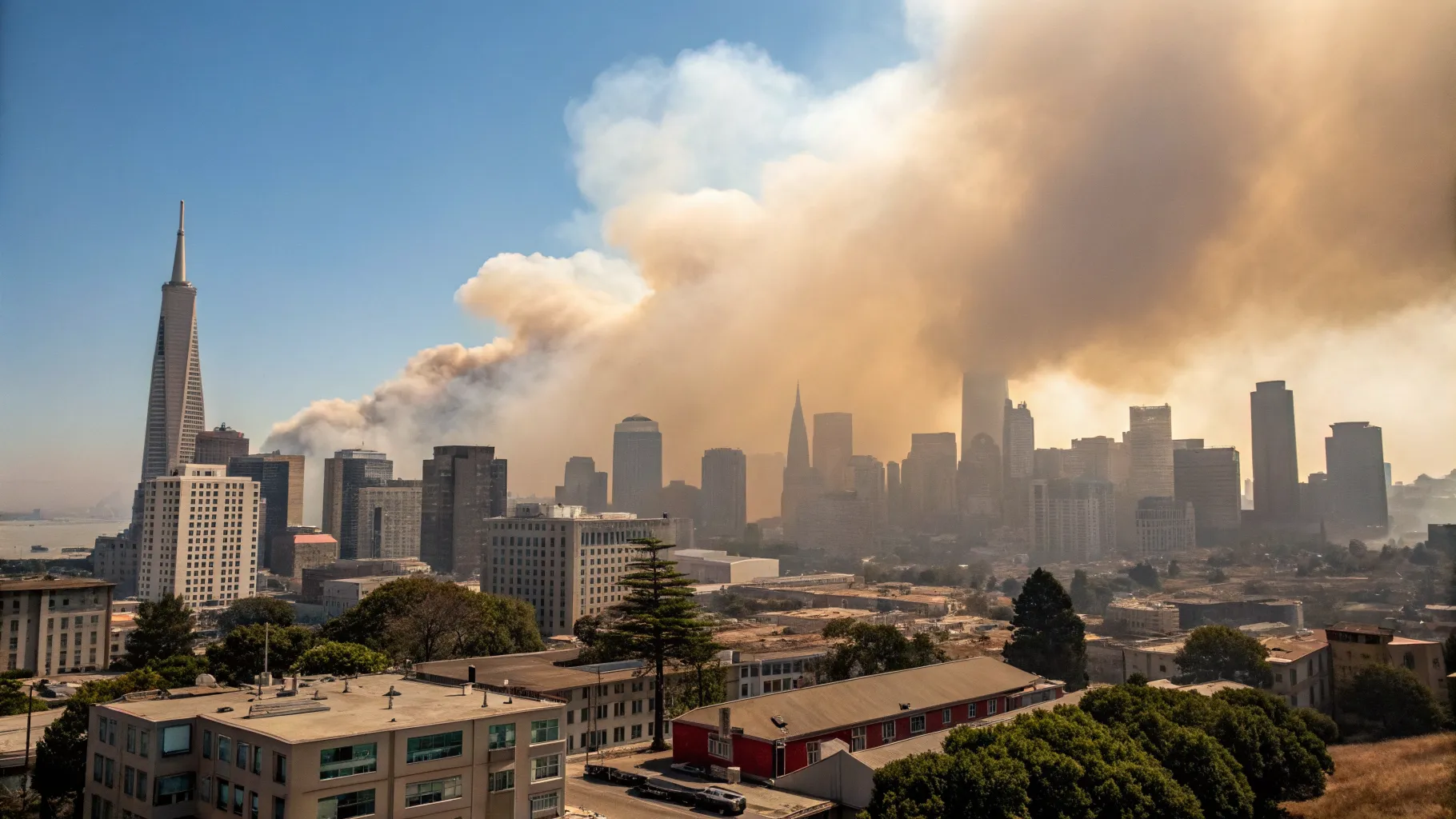
Smoke from increasingly large wildfires is erasing years of cleaner air gains across the United States, according to new research that links a rise in smog to the recent surge in fire activity. The study finds that progress built over more than a decade is slipping as smoke drives higher ozone levels across wide regions during peak fire season.
“A new study finds that smoke from larger wildfires is reversing more than a decade of American improvements in smog.”
The finding lands as communities from the West Coast to the Northeast face longer, hotter summers, with smoke now a seasonal threat. It raises urgent questions for public health, environmental policy, and state air agencies that have long relied on emissions cuts from traffic and industry to clean up skies.
Why Smog Is Rising Again
Ground-level ozone, often called smog, forms when nitrogen oxides and volatile organic compounds react in sunlight. For years, tighter rules on vehicles, power plants, and fuels pushed ozone downward in most cities. Those steps followed decades of action under the Clean Air Act, which helped cut key pollutants linked to smog.
Wildfire smoke changes the picture. Large fires inject chemicals and fine particles into the air that can fuel ozone formation over vast areas. Plumes can travel hundreds or even thousands of miles, boosting smog on days with intense sun and stagnant air. The study’s main contribution is to tie that chemistry to a measurable loss of the gains made since the late 2000s.
A Shift With National Reach
While Western states endure the heaviest smoke, recent fire seasons have spread the problem nationwide. In 2020 and 2021, major fires across California, Oregon, and Washington sent smoke into the Rockies and the Plains. In summer 2023, Canadian fires blanketed the Midwest and East Coast, forcing air quality alerts from Chicago to New York.
State monitors recorded spikes in both fine particles and ozone on severe smoke days. The study indicates those events are no longer rare outliers. Instead, they are frequent enough to push seasonal averages higher and increase the number of days that exceed health standards.
Health Risks and Who Is Most Exposed
Doctors warn that higher smog can trigger asthma attacks, worsen chronic lung disease, and strain the heart. Children, older adults, outdoor workers, and people with asthma or COPD face the greatest risk. Even healthy adults can experience coughing, chest tightness, or shortness of breath on bad air days.
- Smog irritates airways and reduces lung function.
- Smoke adds fine particles that can enter the bloodstream.
- Repeated exposure raises the risk of ER visits and hospitalizations.
Public health officials have urged people to check daily air forecasts, limit strenuous outdoor activity during alerts, and use well-fitted masks or indoor air cleaners when smoke is thick.
Policy Tensions and Next Steps
The findings create a policy dilemma. State air plans target tailpipes, refineries, and power plants because those sources are within regulatory reach. Wildfires, driven by weather, drought, and overgrown forests, are harder to manage. Federal ozone standards do allow “exceptional event” waivers for some wildfire days, but recurring smoke still worsens long-term averages that determine community health risk.
Researchers and state officials point to several steps that could help:
- Invest in forest management to reduce extreme fire behavior.
- Strengthen early warning systems for smoke and heat.
- Expand clean energy and zero-emission transport to offset smoke-driven setbacks.
- Support home filtration and clean-air shelters in high-risk areas.
Energy and manufacturing groups may argue that tougher local emissions rules cannot prevent wildfire-driven smog, and that costly new controls will yield smaller gains. Health advocates counter that steady cuts from controllable sources still reduce peak ozone on mixed smoke days and protect people most at risk.
What the Science Signals
The study aligns with a growing body of research linking warmer, drier conditions to larger, more frequent fires. Scientists say those fires release compounds that speed ozone formation downwind, often on the hottest days when smog is already likely. That mix can tip communities back over federal health benchmarks, even after years of progress.
Meteorologists also note that prolonged heat waves and stagnant air trap pollution near the ground, extending smog episodes. If those patterns continue, planners expect more days with unhealthy air across late summer and early fall.
The new findings mark a turning point for air quality planning. Years of steady improvement are now at risk from a factor that crosses borders and state lines. The immediate task is to protect people on the worst days with clear alerts and access to clean indoor air. The longer task is to cut fire risk and continue local pollution cuts so smoke has less to amplify. Readers should watch for updated state air plans, expanded smoke forecasting, and budget debates over forest treatment and community protection as the next fire seasons approach.

Rashan is a seasoned technology journalist and visionary leader serving as the Editor-in-Chief of DevX.com, a leading online publication focused on software development, programming languages, and emerging technologies. With his deep expertise in the tech industry and her passion for empowering developers, Rashan has transformed DevX.com into a vibrant hub of knowledge and innovation. Reach out to Rashan at [email protected]