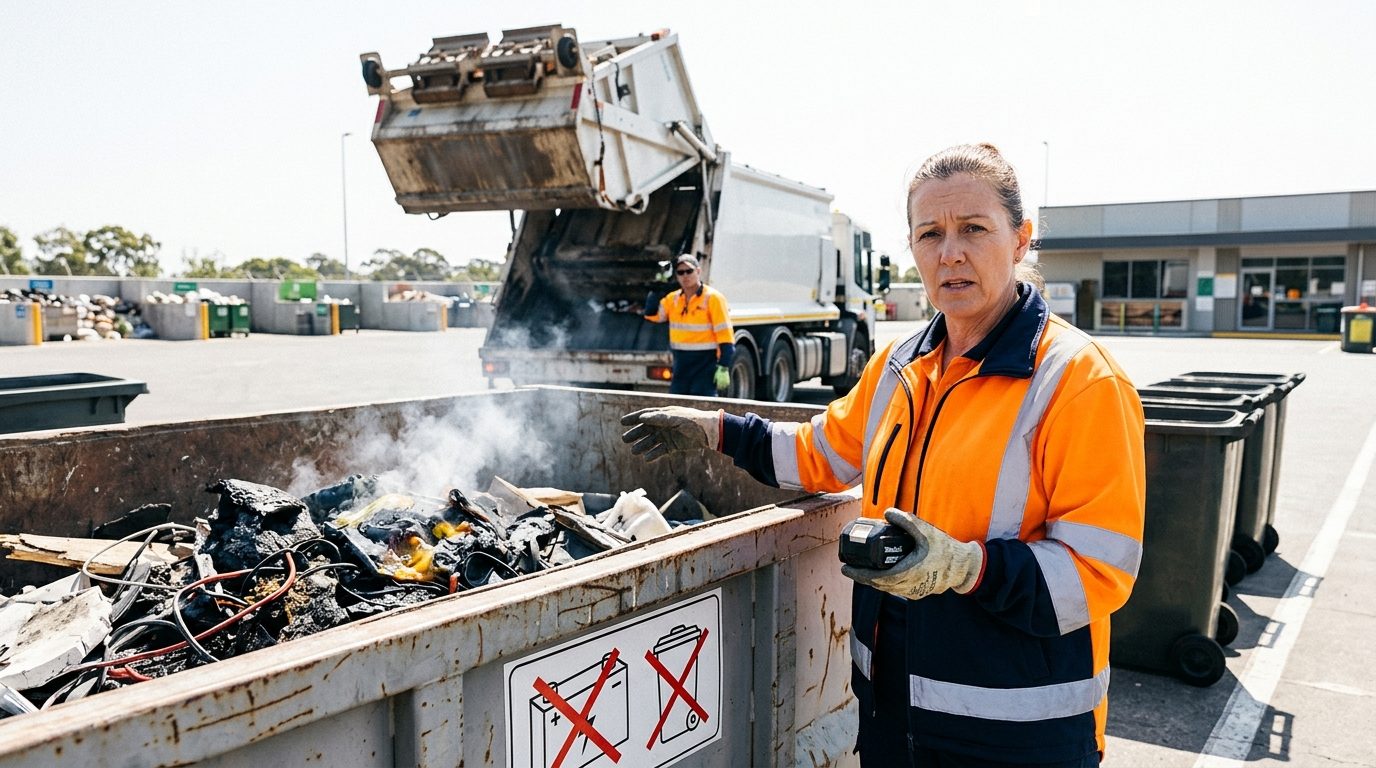
An authority has warned households never to place batteries or battery-powered products in domestic waste bins. The advice seeks to prevent fires during collection, transport and waste processing.
The warning applies to loose batteries and products that contain them. These can include mobile phones, electronic toys, power tools, laptops and disposable vaping devices.
“Batteries or battery-powered items should never be put in household waste bins.”
The authority did not provide local incident figures or identify a specific collection area. However, its message sets a clear rule for residents: batteries require a separate disposal route.
Why Batteries Create a Fire Risk
Many rechargeable products use lithium-ion batteries. These batteries store substantial energy in a small space. They can become unstable if crushed, punctured, overheated or damaged.
Household waste passes through several stages after collection. Rubbish may be compressed inside a truck, unloaded at a transfer site and handled by sorting machinery.
Those steps can damage a hidden battery. A damaged cell may release heat, smoke or flames. Nearby paper, plastic and other waste can then catch fire.
Battery fires can also be difficult to control. A damaged unit may reignite after appearing to cool, increasing the risk to collection crews and site workers.
Common Products Can Be Easily Missed
Loose household batteries are often easy to identify. The greater challenge comes from electrical goods with batteries sealed inside their cases.
Items that may need separate handling include:
- Rechargeable tools and small household appliances
- Phones, tablets, laptops and wireless accessories
- Electronic toys, toothbrushes and personal care devices
- Disposable vaping products and portable chargers
A device may still carry stored energy even when it no longer works. A flat battery can also retain enough charge to create a hazard if damaged.
Small products pose a particular disposal problem because they fit easily inside a normal bin. Residents may also mistake them for ordinary plastic or metal waste.
Separate Disposal Is the Key Message
The authority’s instruction places responsibility on households to keep batteries out of general rubbish. Residents should use approved battery collection or electrical recycling services available in their area.
Local arrangements can differ. Some communities provide battery drop-off points, while others accept electrical items at recycling centres or through retailer collection programs.
People should check official local guidance before leaving an item for collection. They should not dismantle damaged devices unless qualified instructions say it is safe.
Where a battery can be removed safely, keeping it separate from the device may help local recycling services. Exposed terminals may require protection under local disposal guidance.
Waste Safety Depends on Early Separation
The warning also points to a wider issue for the waste sector. Collection systems are designed around residents placing materials in the correct stream before pickup.
Once a battery is hidden inside a bag, workers may have no practical way to spot it. Sorting equipment often handles large amounts of mixed material, leaving little chance for safe removal before damage occurs.
Clear labels on battery-powered goods may help consumers identify disposal risks. Retailer take-back services and convenient collection points can also reduce the temptation to use household bins.
The immediate advice is simple: keep every battery and battery-powered item out of household waste. Residents should identify an approved local service instead.
Future safety efforts will depend on clear public guidance and accessible recycling options. For households, careful separation at the point of disposal remains the most direct way to protect workers, vehicles and waste facilities.

A seasoned technology executive with a proven record of developing and executing innovative strategies to scale high-growth SaaS platforms and enterprise solutions. As a hands-on CTO and systems architect, he combines technical excellence with visionary leadership to drive organizational success.