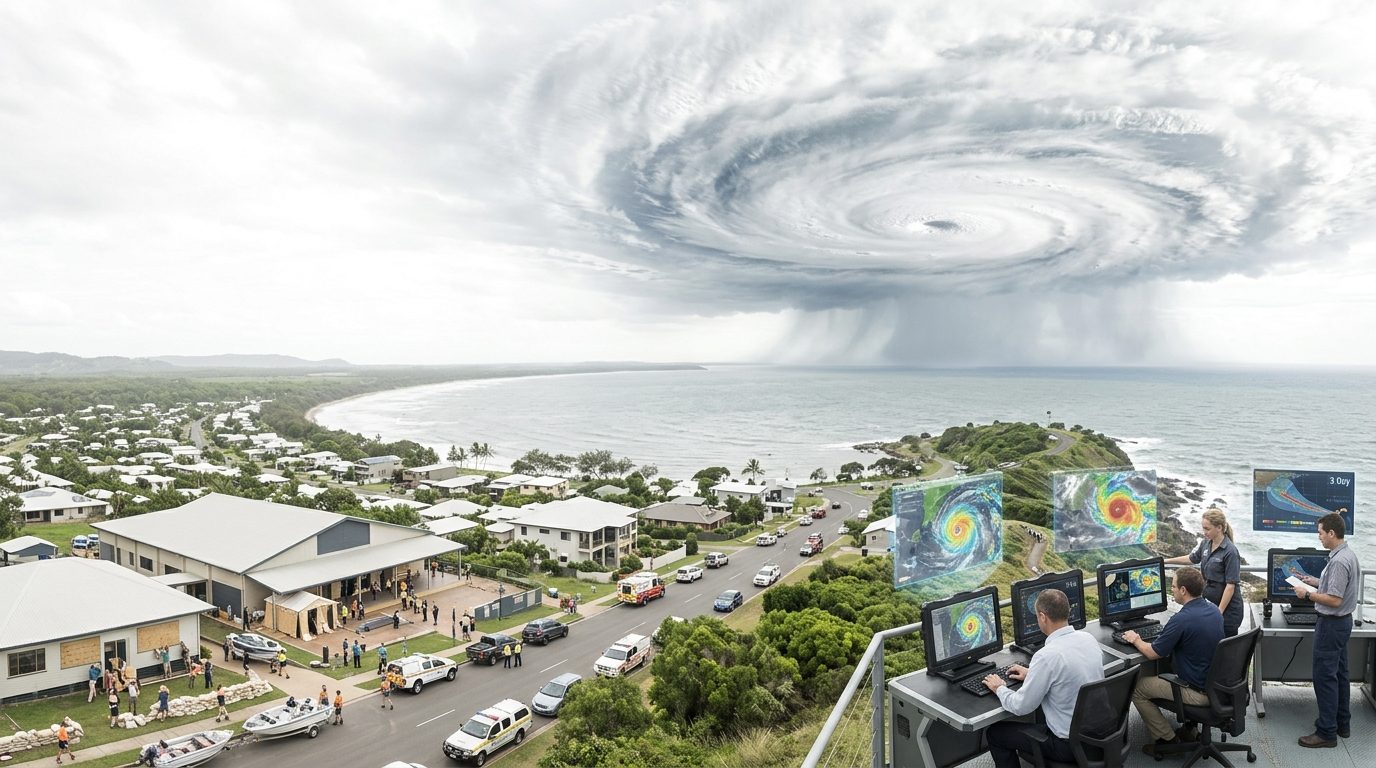
A DeepMind artificial intelligence model can predict cyclones three days in advance with accuracy that earlier systems reach only one day later. The reported gain could give communities more time to prepare for destructive winds, flooding, and storm surges.
The advance centers on forecast timing. At a three-day lead, the model reportedly matches the accuracy that previous methods achieve at two days. That extra day may help emergency officials issue clearer warnings, move supplies, and plan evacuations.
Why One Additional Day Matters
Cyclone forecasts guide decisions across emergency management, transportation, energy, agriculture, and insurance. Forecast quality often falls as the prediction period grows. A system that retains accuracy at longer lead times can therefore offer practical value.
For coastal communities, 24 hours can affect whether residents have enough time to leave safely. Local authorities can also use the added time to open shelters and protect hospitals.
Earlier notice may support several urgent tasks:
- Positioning rescue teams and medical supplies
- Closing ports, airports, schools, and exposed roads
- Securing power networks and communications equipment
- Warning fishing fleets and offshore workers
The benefit depends on reliable communication and public trust. Even an accurate forecast has limited value if warnings arrive late or fail to reach vulnerable residents.
AI Takes a Larger Role in Forecasting
Traditional weather prediction relies on physics-based computer models. These systems process observations from satellites, aircraft, ocean sensors, and weather stations. They then calculate how the atmosphere may develop.
AI models take a different approach. They learn patterns from large collections of past weather data and use those patterns to produce forecasts. Such systems can often run faster than traditional simulations, though speed alone does not ensure accuracy.
DeepMind’s reported result suggests machine learning may help narrow a persistent forecasting gap. Cyclones can change direction or strength quickly, and small errors can shift the area placed at greatest risk.
The central finding is a direct comparison: the AI model reaches a three-day prediction standard that earlier models achieve one day later. That does not mean every cyclone will be forecast perfectly. It indicates better performance at a specific lead time.
Testing Will Determine Operational Value
Forecasters will need more evidence about how the model performs across different oceans, seasons, and storm types. Track accuracy is only one measure. Intensity, rainfall, wind fields, and storm surge are also critical.
Rare events present another challenge. AI systems learn from historical records, yet the strongest or least common storms may have few close examples. Changing climate conditions may also produce patterns that differ from older data.
Independent testing should compare the model with official forecasting systems over many storms. Researchers will also need to explain uncertainty, since emergency agencies rarely act on a single predicted path.
Human Forecasters Remain Central
The model is more likely to support meteorologists than replace them. Human experts review several forecasts, assess local conditions, and communicate risk to governments and the public.
A useful operational system must also perform consistently and deliver results on schedule. Agencies will need clear procedures for handling disagreements between AI output and established models.
DeepMind’s reported one-day gain points to a meaningful improvement in cyclone warning time. The next test is whether that accuracy holds across real storms and supports better public decisions. If it does, earlier forecasts could reduce disruption and help save lives, especially in regions where evacuation and relief operations require more time.

Deanna Ritchie is a managing editor at DevX. She has a degree in English Literature. She has written 2000+ articles on getting out of debt and mastering your finances. She has edited over 60,000 articles in her life. She has a passion for helping writers inspire others through their words. Deanna has also been an editor at Entrepreneur Magazine and ReadWrite.