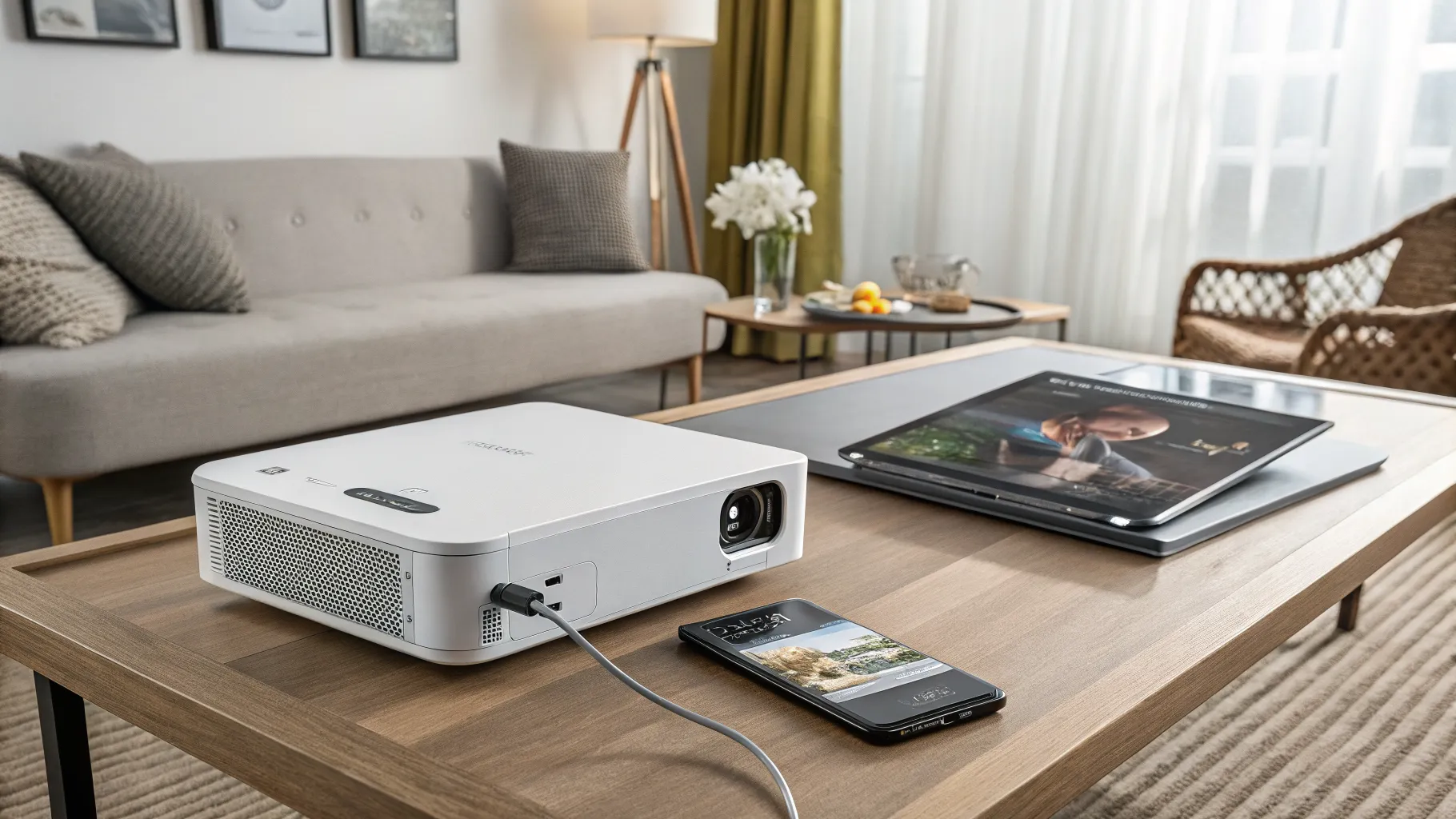
Portable projectors are shedding their fiddly reputations as new models bundle software, controls, and compact hardware into grab-and-go packages built for casual viewing. The shift, led by brands adding streaming platforms and rethinking form factors, aims to make movie nights easier in places where a TV will not fit.
Two recent examples illustrate the change: a Yaber portable projector with built-in Google TV and Aurzen’s tri-fold Zip pico projector. Both target people who want quick setup and fewer cables. The trend points to a broader push to simplify projection while keeping image quality and battery life in check.
From Niche Gadget To Everyday Companion
“Portable projectors nothing new, but as the tech has steadily improved in recent years, they’ve become great tools for comfy viewing in TV-unfriendly places.”
Early portable projectors struggled with dim images, loud fans, and clunky menus. Users often had to carry extra dongles and speakers. Recent improvements in LED light sources and more efficient chips changed expectations. Lighter units now promise faster boot times and quieter cooling. Built-in streaming software reduces the need for extra devices.
The rise of small apartments, van life, and outdoor gatherings has also expanded demand. People want a screen that appears only when needed, then packs away. That use case favors compact hardware that plays content without extra setup steps.
All-In-One Designs Gain Ground
“Lately, we’ve seen a push toward smarter, more self-contained designs, including Yaber’s portable projector with built-in Google TV and Aurzen’s own tri-fold Zip pico projector, both of which try to cut down on the fiddly setup that usually comes with projector ownership.”
Integrating a platform like Google TV means built-in apps, voice search, and updates. It removes the need for a streaming stick and a spare outlet. For travel or small rooms, that simplicity matters. The remote and interface are consistent with many living room TVs, which lowers the learning curve.
Aurzen’s tri-fold Zip takes a different path. The pico design focuses on extreme portability. A foldable shell can protect the lens and help with positioning. That approach favors quick projection on a wall or ceiling, with minimal fuss.
Usability Now Sits At The Center
The biggest hurdle for casual owners has been setup. A typical checklist included power, HDMI, audio, keystone, and focus. Newer models try to reduce that stack. Automatic keystone and autofocus speed the first picture. Wireless casting handles ad‑hoc sharing from phones. Internal batteries support short sessions without hunting for outlets.
Not every need is solved. Brightness remains a trade-off in smaller units, especially in daylight. Audio can sound thin without external speakers. And app performance can vary by model. Still, fewer accessories and faster starts are clear wins for casual use.
How These Devices Fit Different Needs
The two approaches suggest distinct buyers. An integrated Google TV model suits people who stream most content from apps. It is close to a travel TV experience. A tri-fold pico favors portability first. It slips into a bag and comes out for quick clips or a small-group movie night in a dark room.
- Choose brightness and battery life based on typical viewing time and light conditions.
- Check autofocus, auto keystone, and app support for quicker setup.
- Consider audio needs; a 3.5 mm jack or Bluetooth can help.
- Look at weight and size if travel is frequent.
What Comes Next
Expect more models to bundle mature streaming platforms and smarter setup tools. As chips get more efficient, battery life and brightness could improve without larger cases. Better microphones and remotes may bring voice control on par with living room devices.
Competition will likely center on three fronts: image quality in dim rooms, reliable software updates, and quiet operation. Brands that ship stable apps and fast boot times may win on convenience alone. Accessories could matter less as integrated features improve.
For now, the direction is clear. Portable projection is moving from hobby gear to everyday video. People want simple movie nights on a wall, a sheet, or a ceiling. Devices that start quickly, stream natively, and pack away cleanly are setting the pace.
The message for buyers is straightforward. Match the projector to the setting and routines. If app streaming and a familiar interface rank first, integrated options like the Yaber unit make sense. If travel size leads, a compact design like Aurzen’s tri-fold Zip stands out. Expect more choice soon, with fewer cables and fewer steps between pressing power and pressing play.

Kirstie a technology news reporter at DevX. She reports on emerging technologies and startups waiting to skyrocket.