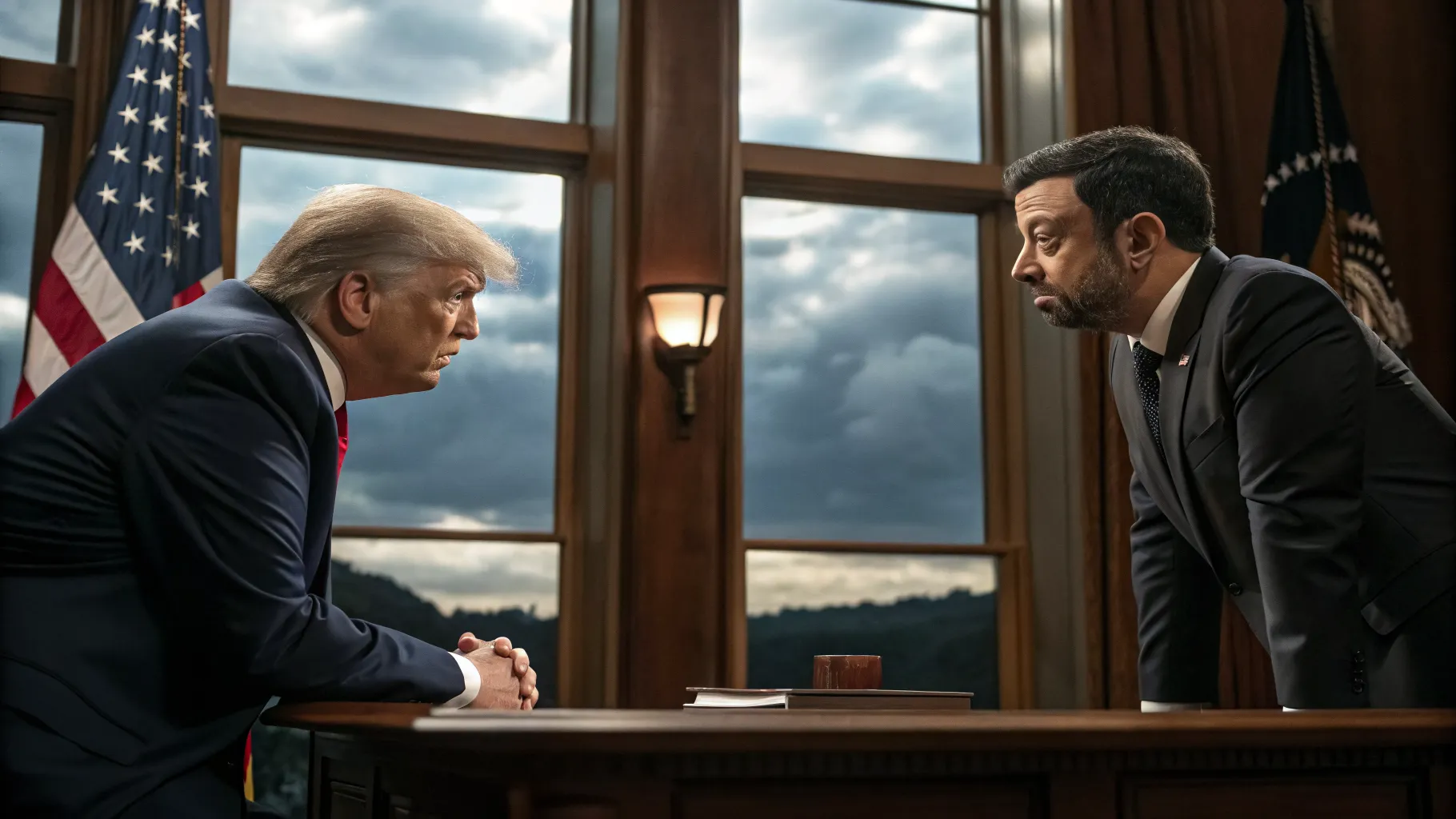
An assertion that the Trump administration pressed ABC to fire late-night host Jimmy Kimmel while allies at the Federal Communications Commission weighed challenges to ABC’s station licenses has raised fresh concerns about political interference in media oversight. The claim, if accurate, would place a White House and a federal regulator at the center of a dispute over press freedom and broadcast law.
The allegation suggests that the pressure campaign targeted ABC and Kimmel, a frequent critic of former President Donald Trump, and that a move to scrutinize the broadcaster’s licenses could follow. The FCC is an independent agency, but during the Trump years it was led by a Republican majority. ABC and Kimmel have both drawn attention for sharp political monologues and satire that often focused on the administration.
“At the same time the Trump administration is pressuring ABC to fire Jimmy Kimmel, the Trump-aligned FCC is planning to challenge ABC’s station licenses.”
Neither ABC nor the FCC has publicly confirmed such a plan. Legal scholars say any direct retaliation against critics in the press would face serious First Amendment hurdles.
What Is at Stake
Broadcast licenses are held by local stations, including those owned and operated by ABC in major cities. The FCC reviews these licenses on a set schedule. Challenges can be filed by the public or interested parties. They must present evidence that a station failed to serve the public interest or violated FCC rules.
Late-night shows like Jimmy Kimmel Live! are protected by free speech. The “equal time” law does not apply to news or talk programs. Courts have warned against government actions that punish speech based on viewpoint.
Legal and Regulatory Context
The FCC is structured to operate at arm’s length from the White House. Its decisions must be grounded in statute, rules, and the record of a given case. A license cannot be pulled over political disagreements alone. It requires proof of serious misconduct or repeated rulebreaking.
In practice, license challenges are rare and often fail. Stations typically address compliance issues before renewal. When sanctions occur, they tend to involve technical or public file violations, indecency findings, or failures to respond to FCC inquiries.
Experts note that singling out a broadcaster over critical commentary would invite court review. Any sign of viewpoint-based action could be struck down.
Reactions and Competing Views
Media law analysts caution that even the threat of a license fight can chill speech. “If a host faces job pressure backed by a regulatory cloud, that sends a message to every newsroom,” one First Amendment attorney said.
Regulatory veterans push back on claims of coordinated retaliation. “The FCC has a formal process. Commissioners vote on the record, not on tweets or private requests,” a former agency official said.
ABC’s critics often argue the network’s political coverage skews against conservatives. Supporters counter that satire and commentary are long-standing parts of American broadcasting, protected so long as stations meet public service rules.
Historical Parallels and Trends
Past presidents have clashed with broadcasters. In 2017, Trump publicly suggested challenging the licenses of major TV networks after critical coverage. Those calls did not result in license losses. Courts and the agency’s procedures acted as guardrails.
License renewal outcomes show a steady pattern: most stations are renewed, sometimes with fines. Content-based penalties are unusual and face high legal bars. In recent renewal cycles, enforcement has focused on children’s programming logs, public files, and technical compliance rather than political speech.
- License challenges require documented evidence of rule violations.
- Viewpoint-based retaliation is vulnerable in court.
- Renewals typically proceed unless there is clear misconduct.
Potential Impact on Industry and Viewers
Any aggressive move against ABC’s licenses would spark a broad response from media groups and civil liberties advocates. Networks could spend years in litigation, raising costs and uncertainty. Local affiliates, many not owned by ABC, could see collateral effects if advertisers grow wary.
For viewers, the practical risk is disruption to local ABC service if a station faced sanctions, though that outcome is rare. More likely would be cautious editorial decisions as companies try to avoid regulatory fights.
Late-night TV has become a forum for political debate. Tightening the screws on one host could shift norms across the format. But strong First Amendment protections make lasting government limits on such speech unlikely.
The claim of pressure on Kimmel and potential license challenges sets up a test of legal and institutional checks. The next steps to watch are any formal filings at the FCC, public statements from commissioners, and responses from ABC and its parent company. If a case materializes, courts will be central. For now, the episode highlights how political power and media oversight can collide—and how the law is designed to keep them apart.

Senior Software Engineer with a passion for building practical, user-centric applications. He specializes in full-stack development with a strong focus on crafting elegant, performant interfaces and scalable backend solutions. With experience leading teams and delivering robust, end-to-end products, he thrives on solving complex problems through clean and efficient code.